
Beginner Guides
Basic Knife Anatomy & Terminology
Knifemaking has its own vocabulary, and a lot of guides (including this one) assume you already know it. Here’s every term you’ll actually run into…
Blade Design
Drop point, clip point, skinner, tanto, and more, what each knife blade shape is actually good for and how to pick the right one for the job.
3 min readWritten by Rich LinvilleFree to read
Blade shape, the profile of the blade when viewed from the side, determines what a knife is actually good at. A shape built for skinning game handles very differently from one built for stabbing or general utility work. Here are the shapes that come up most often and what each one is for.
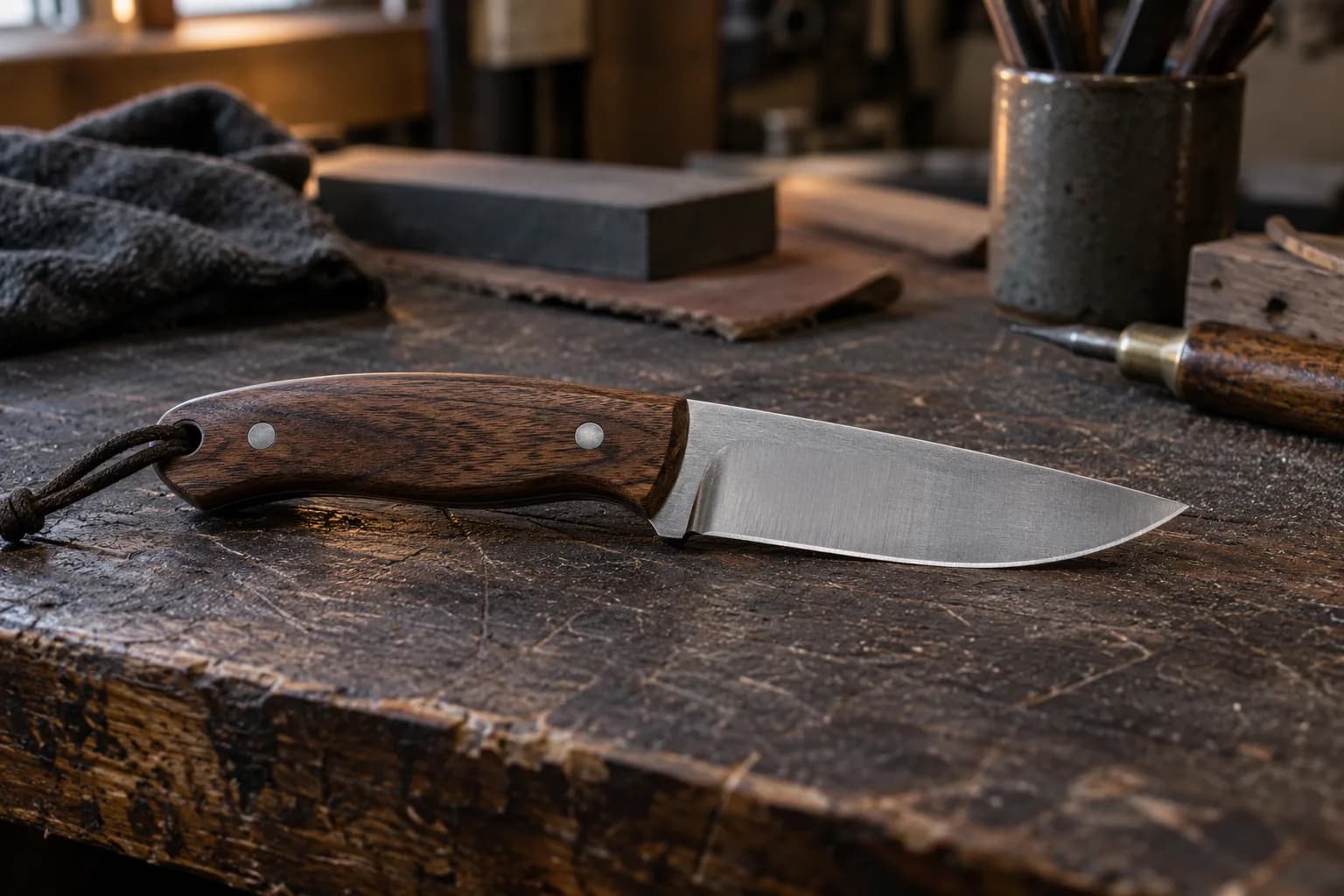
The spine curves gently down toward the tip, keeping the point in line with the centerline of the blade. It’s the most versatile shape in general use, strong point, good control, works well for cutting, slicing, and light piercing without being specialized for any one task. A drop point is the standard recommendation for a first knife.
The spine has a concave “clipped” section near the tip, dropping the point lower and making it sharper and more piercing-focused than a drop point. Classic on Bowie-style knives. The thinner point is more effective for piercing but slightly more fragile than a drop point’s point.
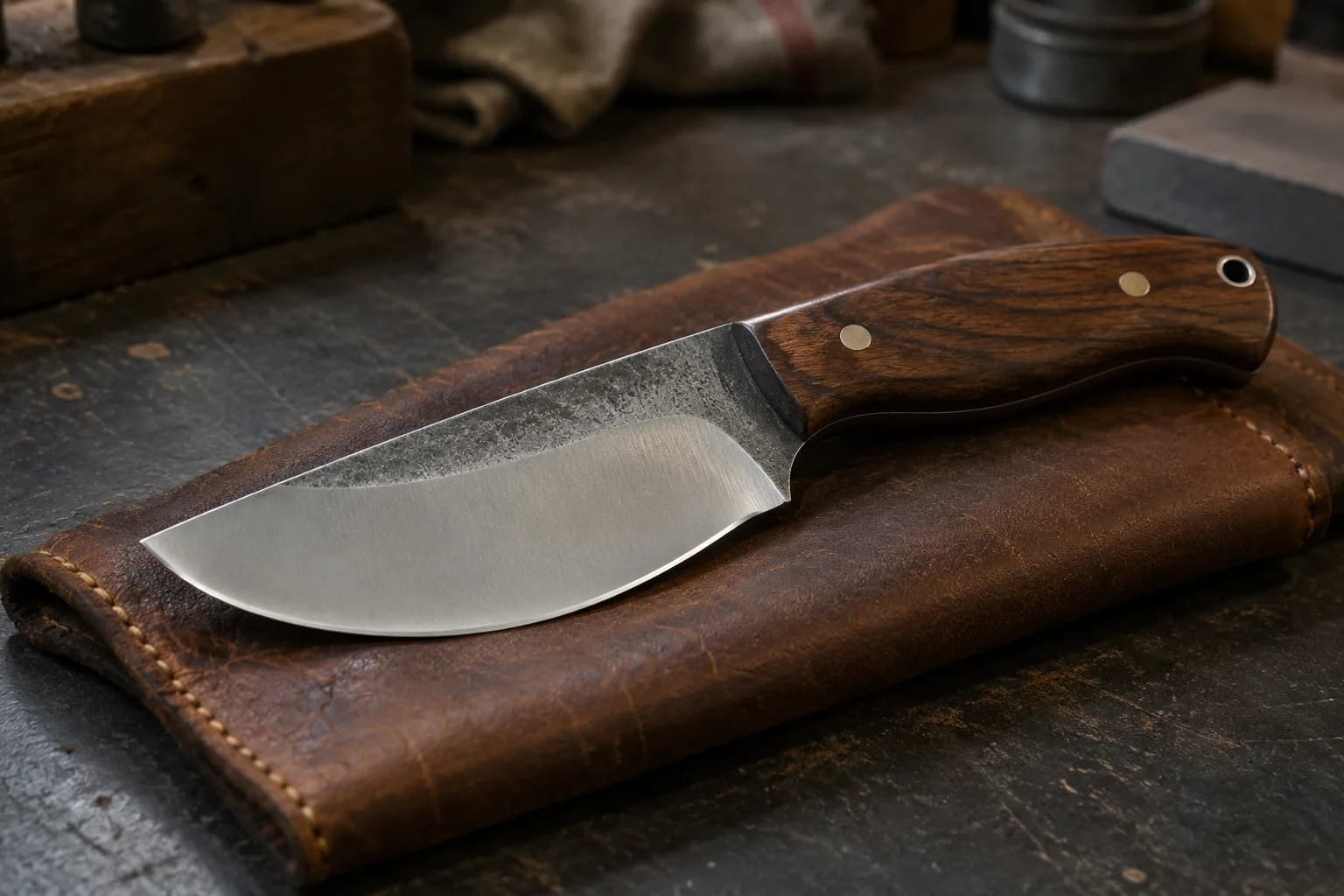
A wide, deeply curved belly with a shorter, less prominent point. Built specifically for the pulling, slicing motion of removing hide from game, not for piercing or fine detail work. A dedicated hunting-knife shape, not a general-purpose one.
A high, angular point formed by a straight secondary edge meeting the primary edge at a sharp angle, instead of a continuous curve. Built for a very strong point, good for piercing through tough material, at the cost of a less efficient slicing belly than a curved blade shape.
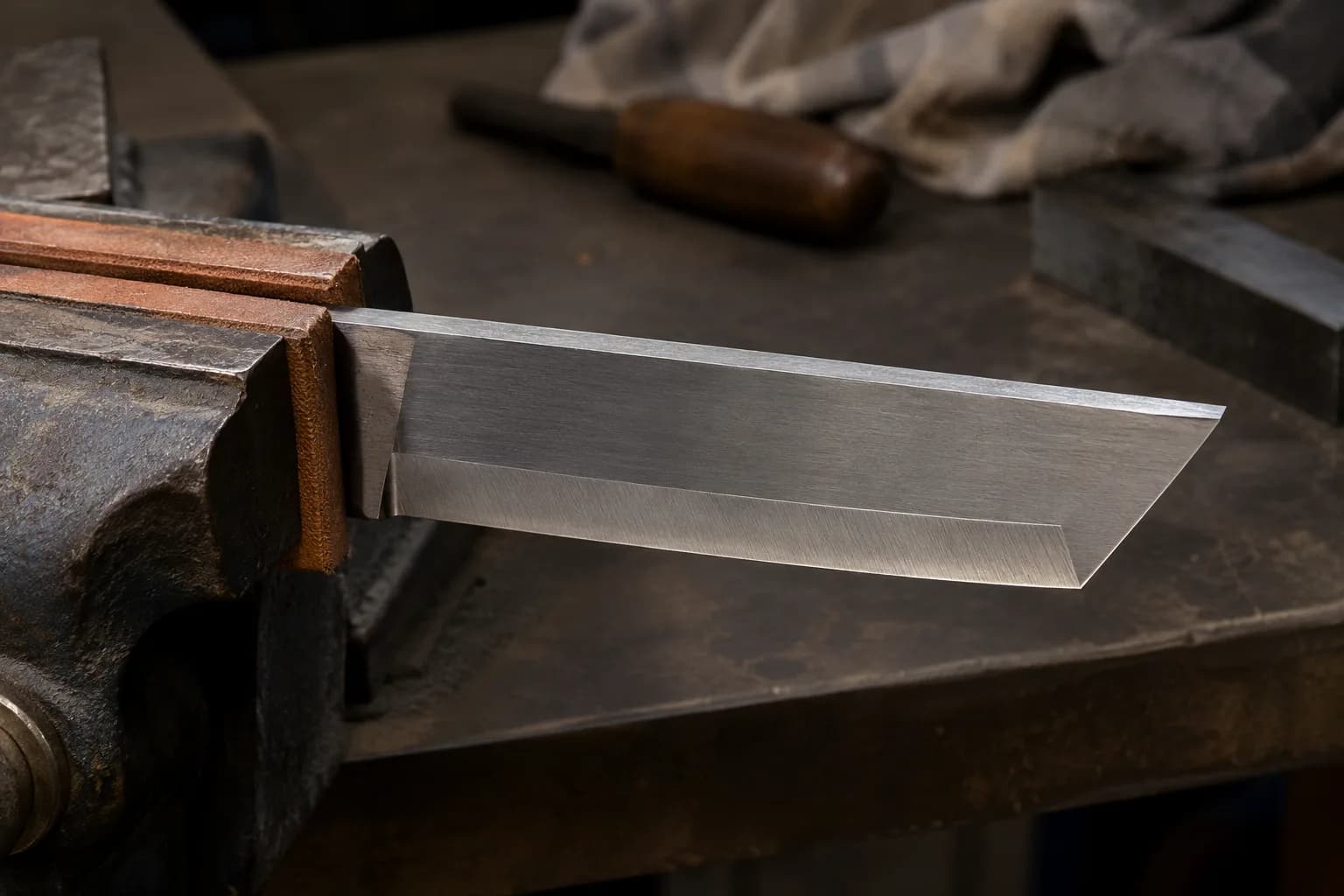
A straight edge with a spine that curves down to meet it, keeping the point low and in line with the edge. Common on utility and EDC knives because the straight edge and controlled point are well-suited to precise cuts (opening boxes, fine trim work) with less risk of accidental stabbing than a sharper point shape. Sheepsfoot has a completely flat, unsharpened spine to the point; wharncliffe has a more gradual curve.
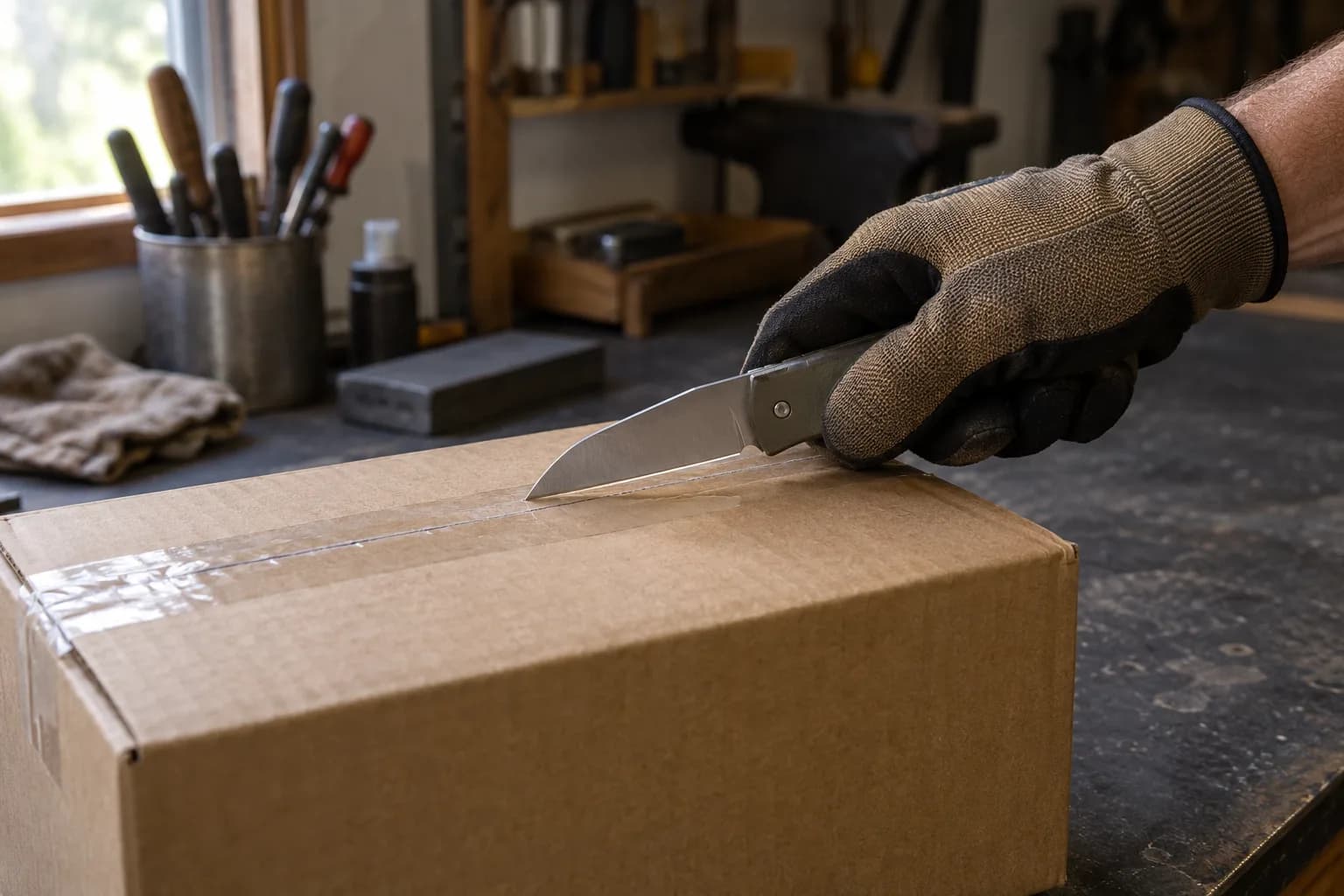
The spine curves upward so the tip sits above the centerline of the blade, maximizing belly length and slicing surface. Common on filet and skinning knives built purely for slicing rather than piercing or heavy use.
Symmetrical, with the spine and edge curving to meet at a centered point. Common on daggers and some tactical/military-style knives, built around a strong, centered piercing point rather than slicing performance.
Start with the actual task: general everyday cutting and utility work favors a drop point, hunting and hide work favors a skinner, precise controlled cuts favor a wharncliffe or sheepsfoot, and piercing-focused use favors a clip point or tanto. Most makers building their first few knives stick with a drop point specifically because it performs reasonably well across all of those tasks instead of excelling narrowly at one.
Drop point. It handles general cutting, slicing, and light piercing well without being specialized, which makes it forgiving if your first knife needs to do a bit of everything.
Yes, mainly at the point. Shapes with a point in line with the centerline (drop point, tanto) tend to have stronger points than shapes with a thin, offset point (clip point, trailing point), which are more piercing-focused but more fragile at the very tip.
No single shape excels at every task, that’s why specialized shapes like skinners and filet knives exist. A drop point is a strong generalist, not a specialist, which is exactly why it’s the standard recommendation when you only want to build or carry one knife.
Keep reading
Three more from the same bench.
Knifemaking has its own vocabulary, and a lot of guides (including this one) assume you already know it. Here’s every term you’ll actually run into…
With dozens of knife steels to choose from, picking your first one can feel overwhelming. The good news: for a first knife, the right answer is almost…
The grind is the cross-sectional shape of a blade, how the flat stock gets thinned down from spine to edge, and it affects cutting performance, edge…
Same bench
I machine the parts, hand-assemble, track and test Torus grinders in Sterling, Illinois. Most orders ship in seven to ten business days from time of order.
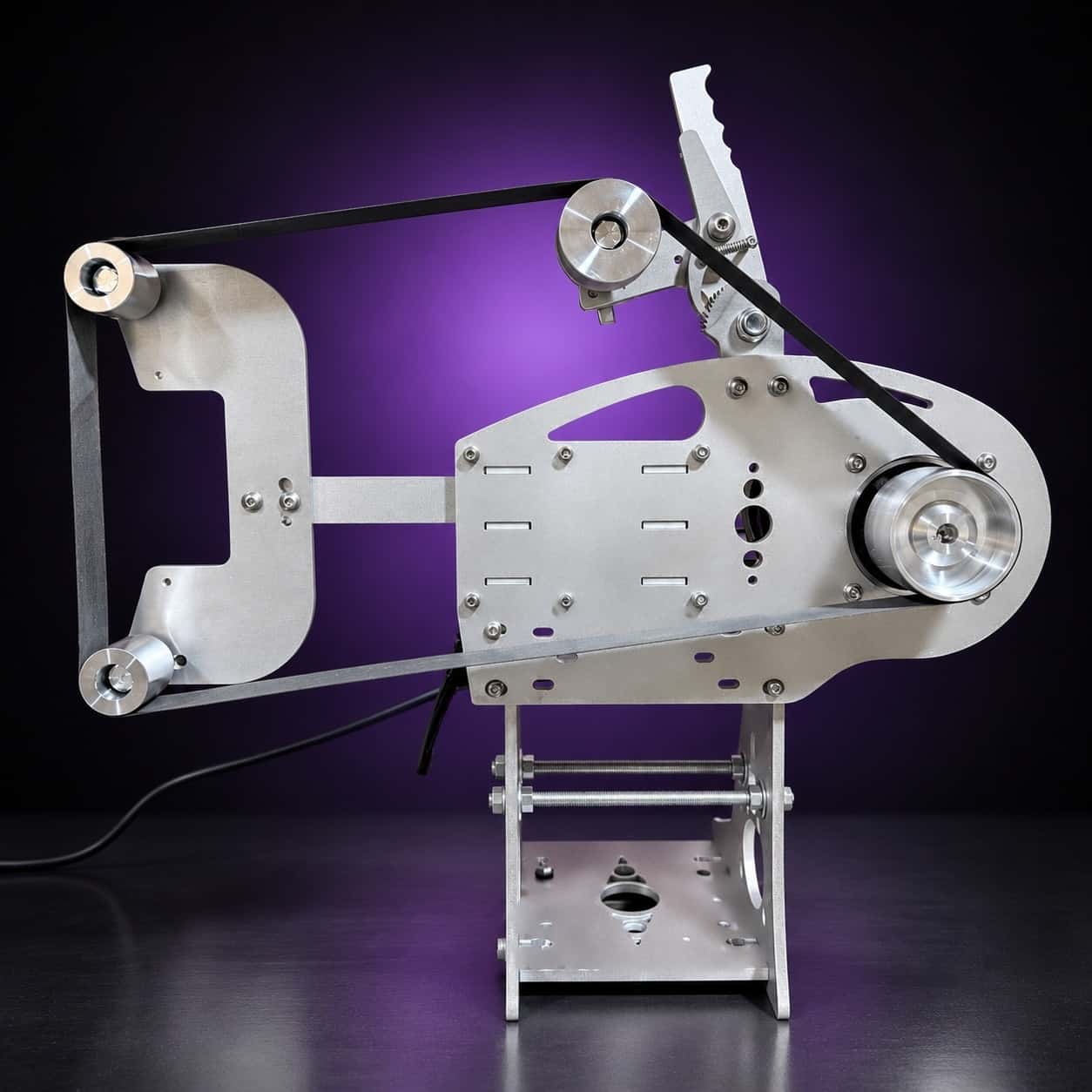
Current dual-axis platform with a fiber-laser-cut 6061 chassis and single-knob tracking.
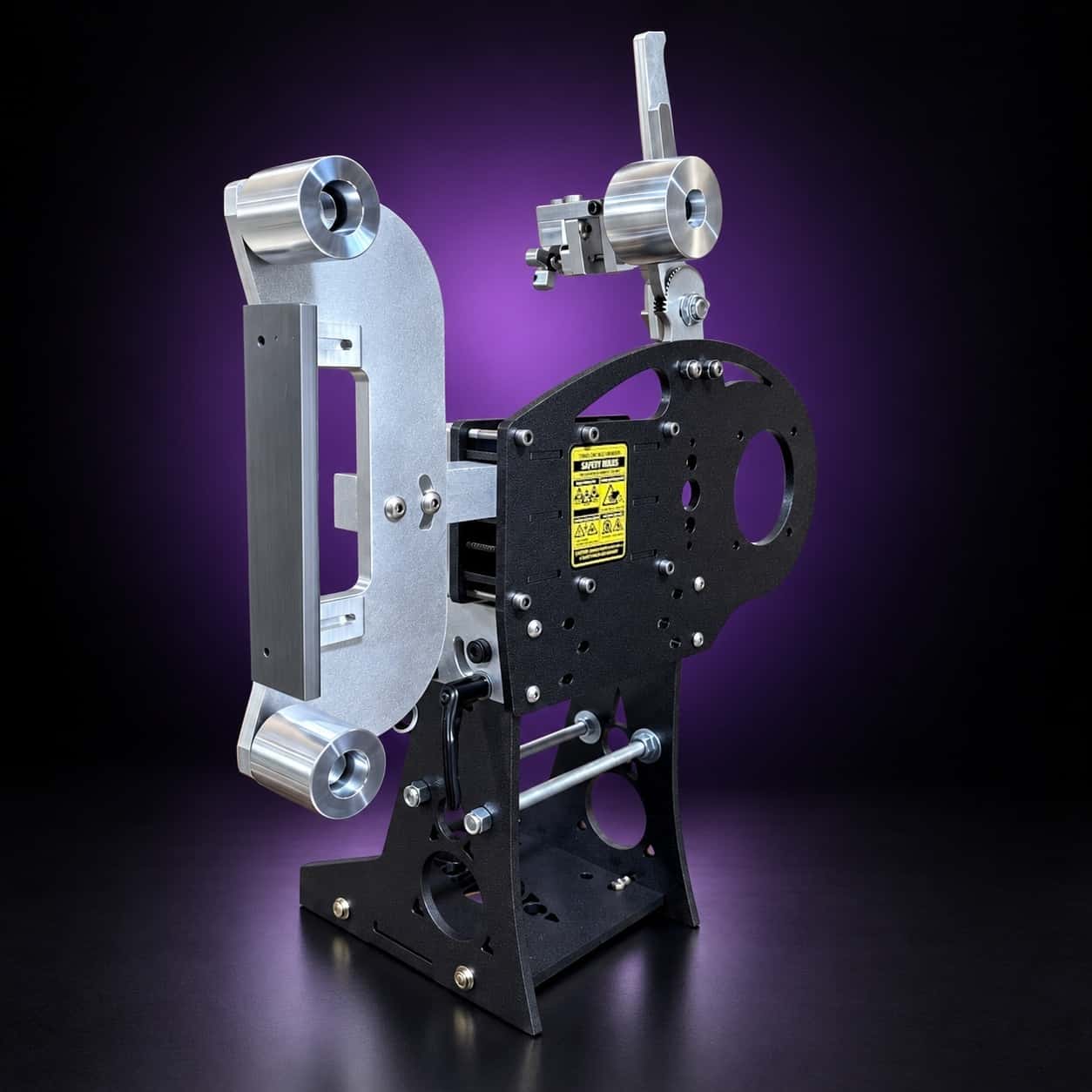
Current dual-axis platform with a steel chassis, more mass and less vibration.
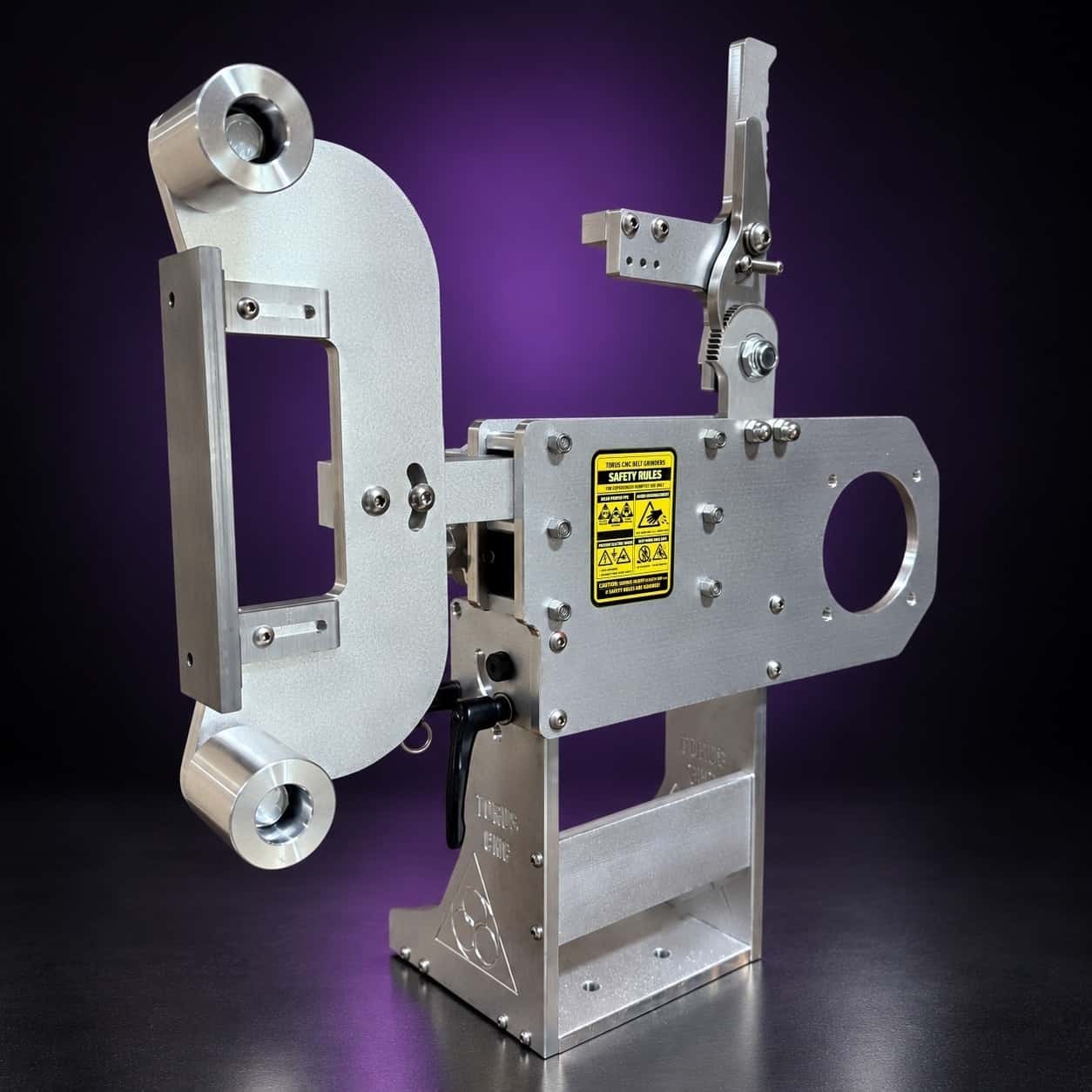
Prior-design aluminum chassis, 90-degree tilt and 1.5-inch tooling arms.
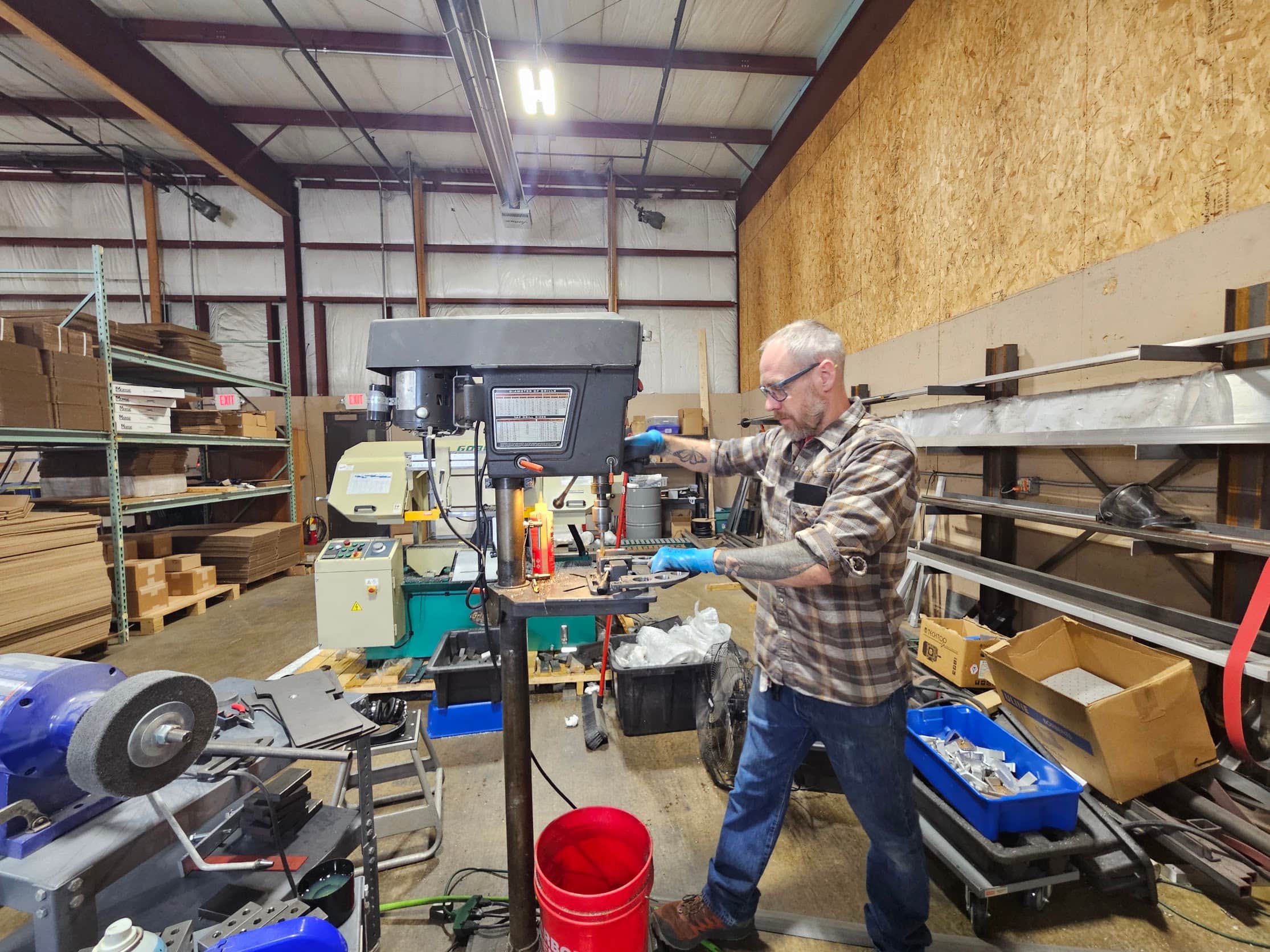
One-man shop
I answer my own email. Tell me the steel, the machine and what it is doing, and I will tell you what I would try next.