
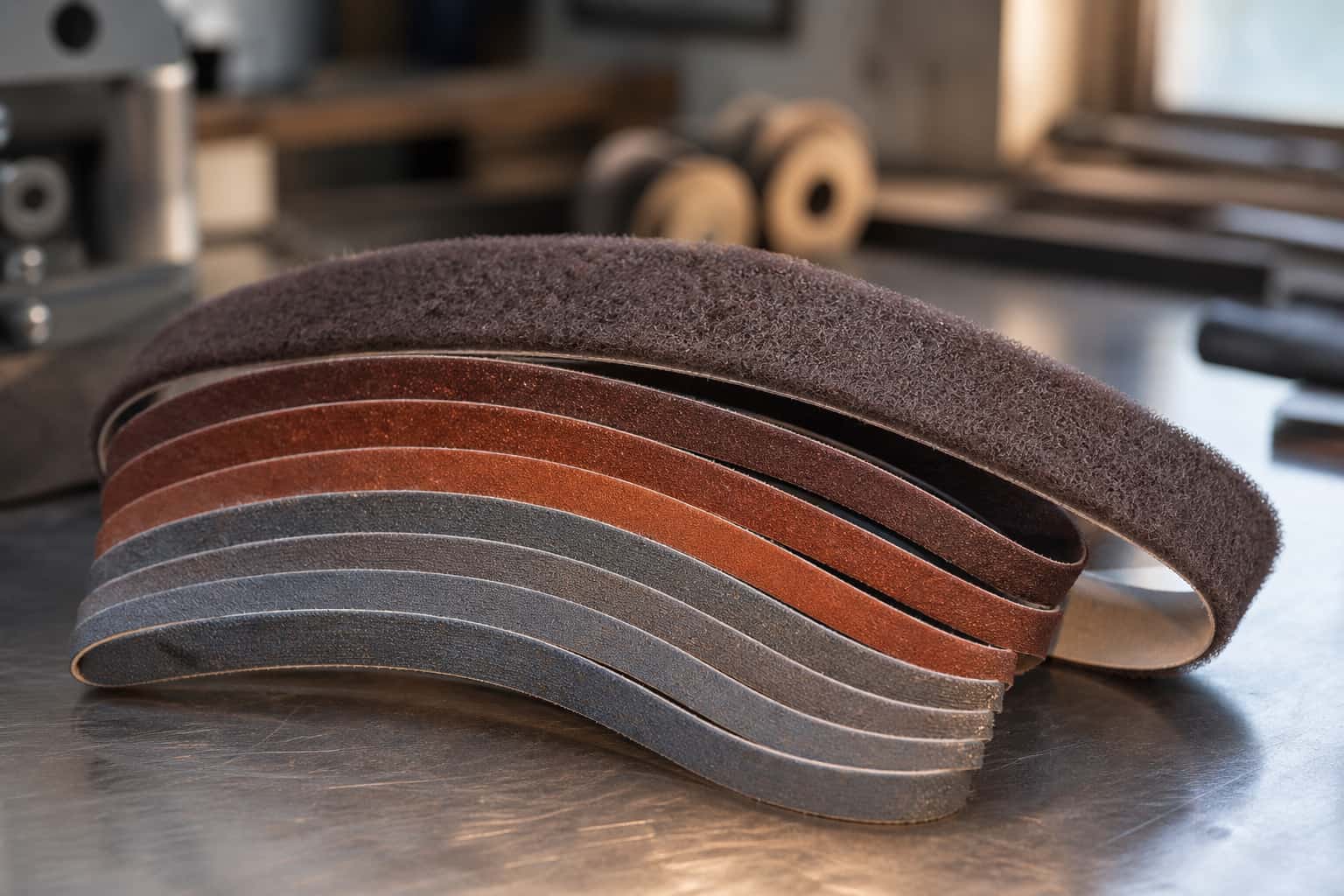
Abrasives
Grinding and Sharpening VG-10: Belt Recommendations & Technique
VG-10 grinds in the moderate, well-established range for premium stainless steels, easier than high-carbide CPM steels like CPM 20CV or S30V, but slightly…
Knife steel
A Japanese stainless steel famous for high-end kitchen cutlery, using a cobalt addition to reach high hardness and a fine, precise edge without giving up too much toughness.
Also known as
At a glance
The four meters are relative to the rest of the database. Composition is the published nominal analysis, not a mill certificate for your bar.
Working properties
The signature steel behind premium Japanese kitchen knives (santoku, gyuto, and beyond), and a solid choice for EDC folders that want a fine, precise edge. Browse more entries in the Knife Steel Database, and see the Heat Treating Guide for the full stage-by-stage process.
At the bench
Open the property you are worried about. Every note is written for the blade in your hand, not for a spec sheet.
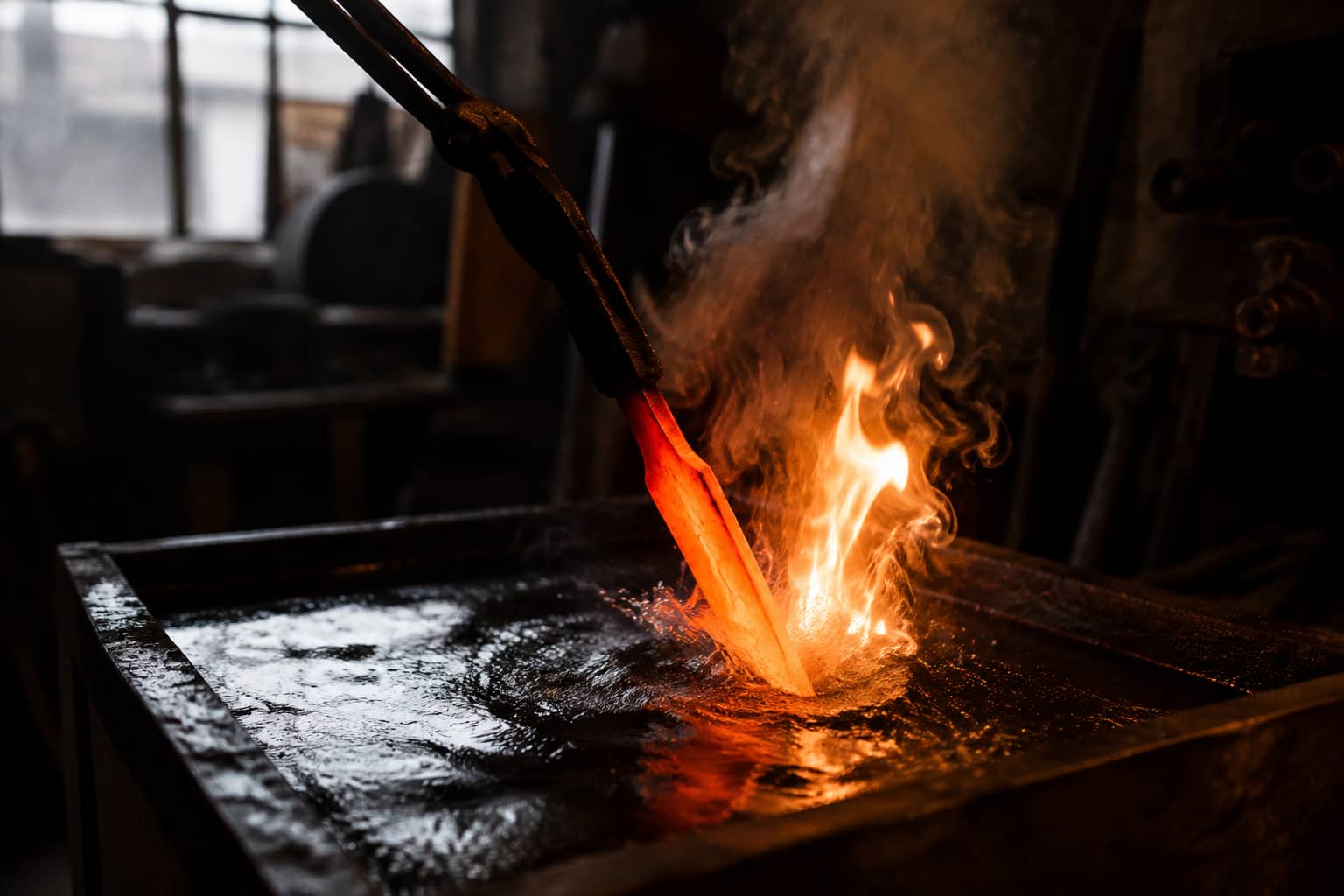
The full reference
VG-10 is a Japanese stainless steel from Takefu Special Steel that became the signature steel of high-end Japanese kitchen cutlery, and later found its way into Western EDC folders as well. A cobalt addition lets it reach high hardness without sacrificing much toughness, which is a big part of why it takes such a fine, precise edge.
Properly heat treated, VG-10 typically lands at 60-62 Rc. See the heat treat details further up this page for the full recipe.
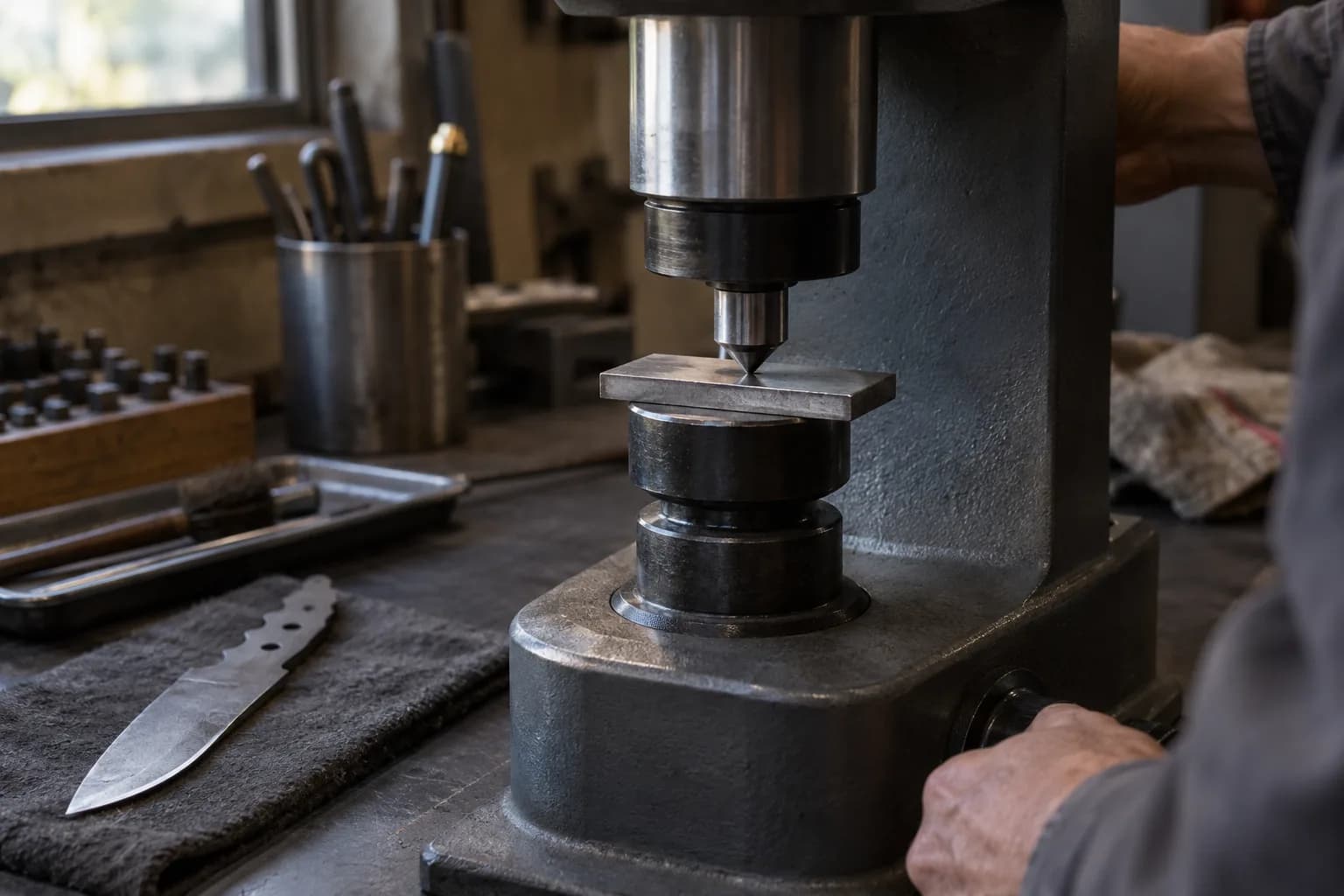
No, it sharpens well with standard sharpening stones and does not require diamond or CBN abrasives. See the full grinding and sharpening guide.
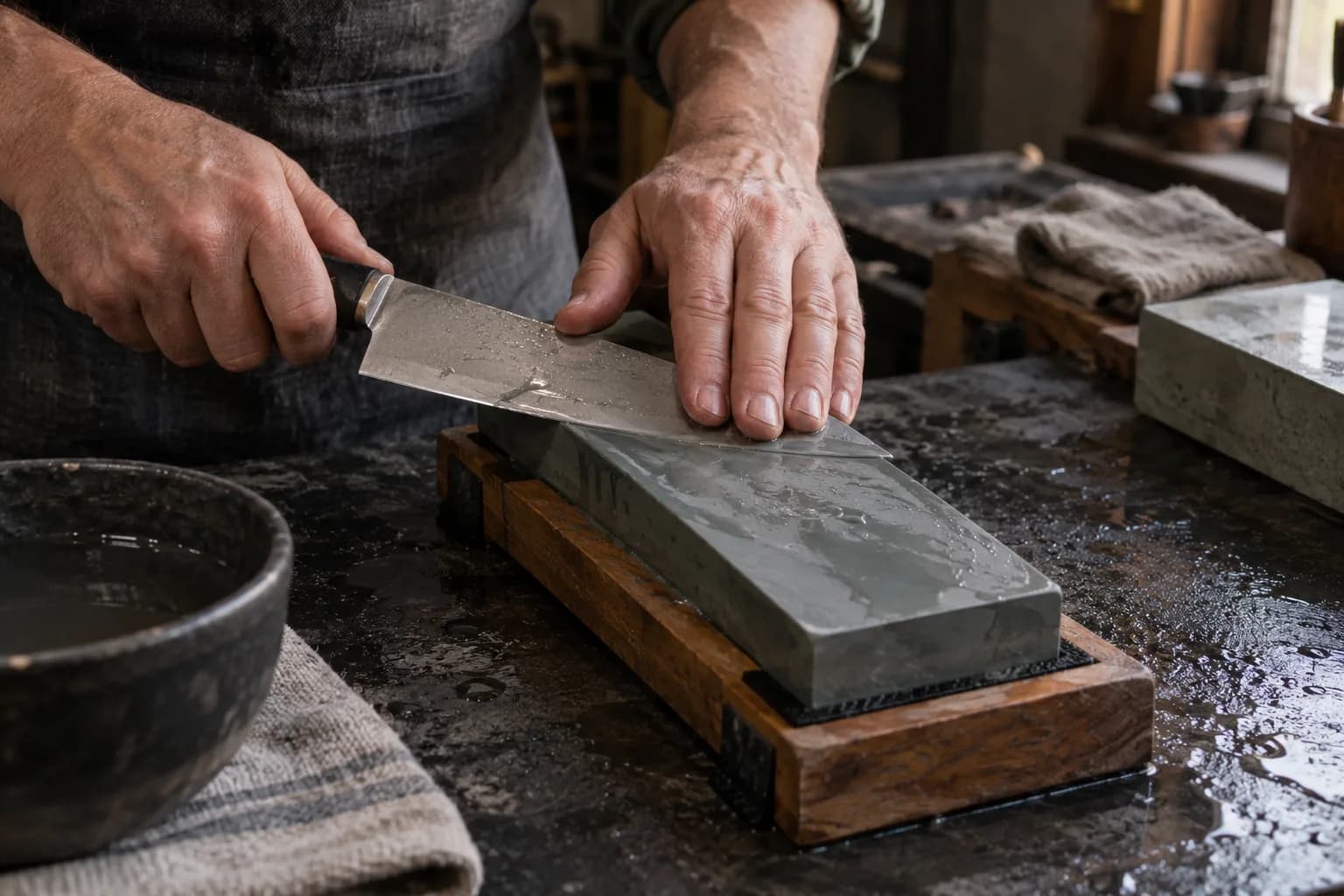
Yes, it is the signature steel behind premium Japanese kitchen cutlery, prized for taking an exceptionally fine, precise edge.
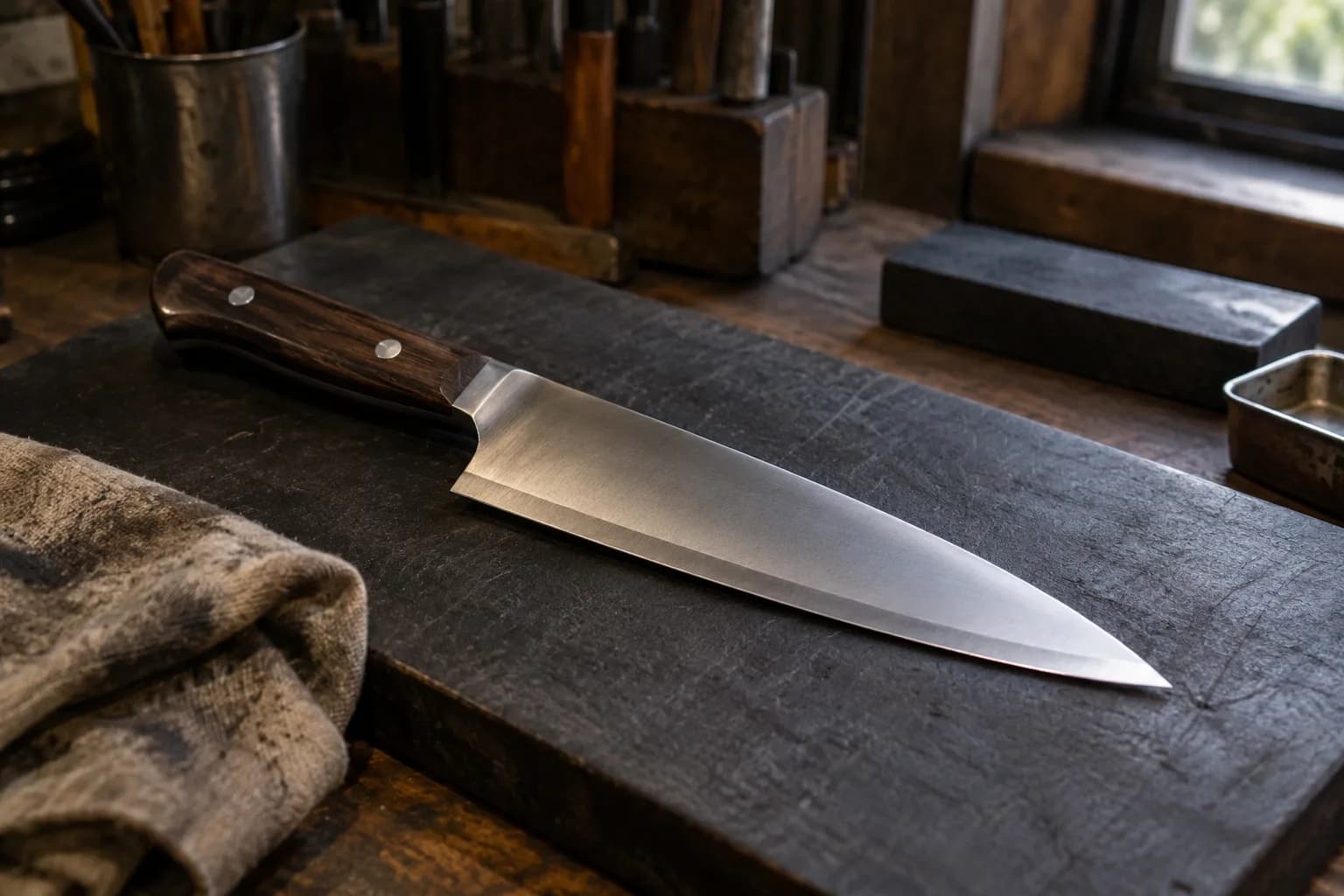
VG-10 holds a modest edge-retention advantage over 154CM while being marginally harder to grind, and offers better edge retention than AEB-L at the cost of toughness and ease of grinding. See the full breakdowns: VG-10 vs 154CM and VG-10 vs AEB-L.
Head to head
Every matchup VG-10 appears in, dimension by dimension.
Keep reading
VG-10 grinds in the moderate, well-established range for premium stainless steels, easier than high-carbide CPM steels like CPM 20CV or S30V, but slightly…
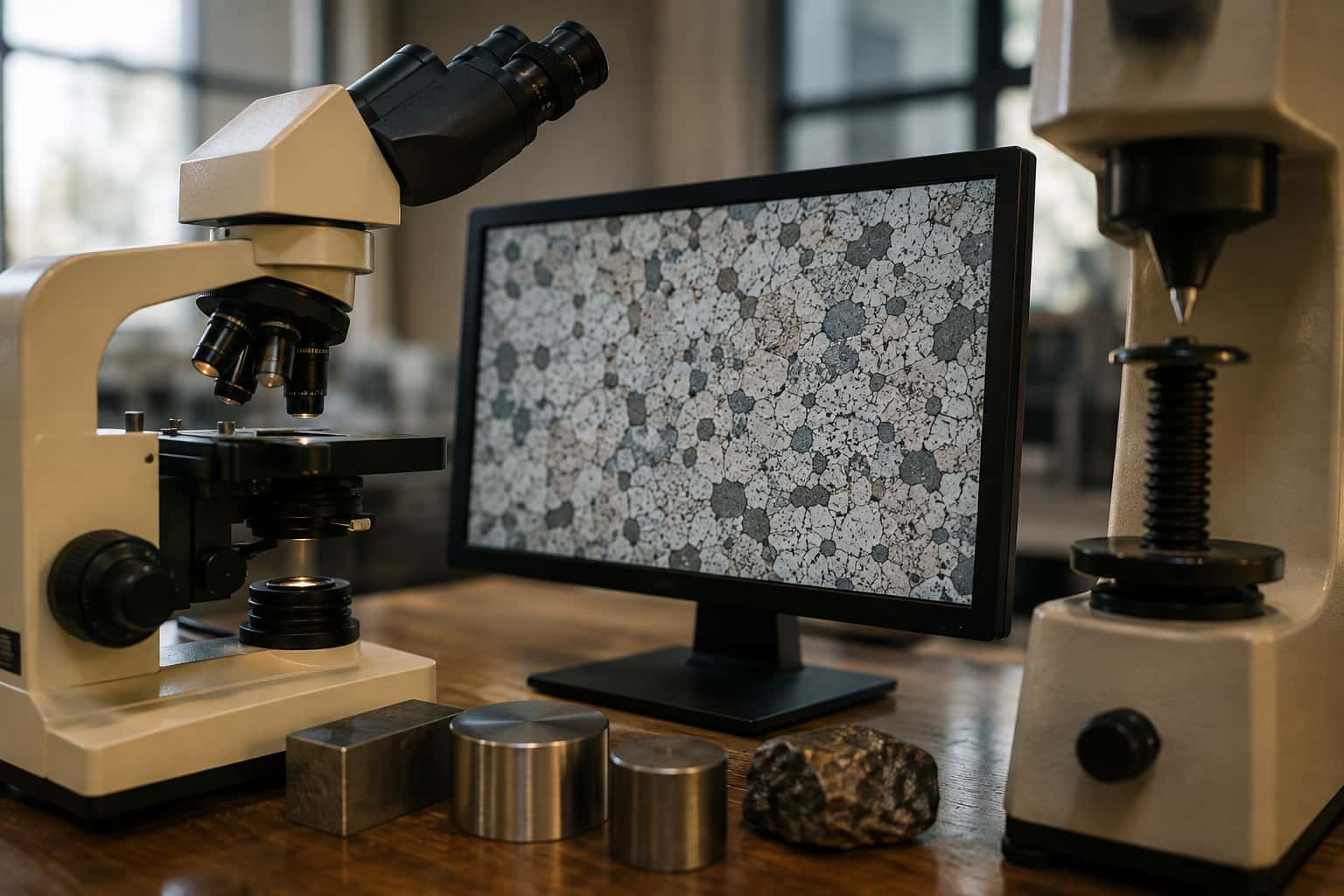
Every knife steel is iron plus a specific recipe of other elements, and each of those elements pulls the steel’s behavior in a particular direction…
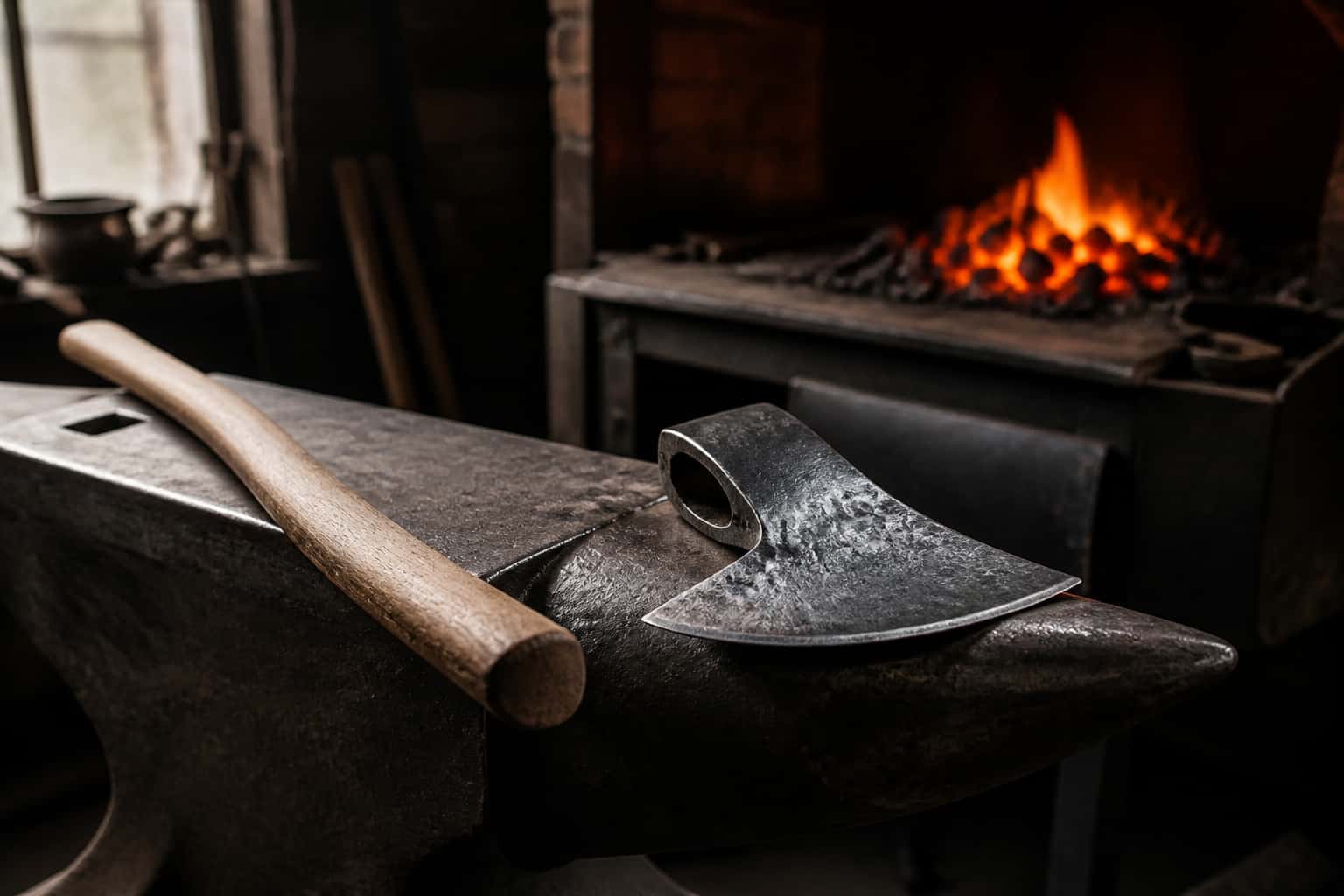
Two steels with similar hardness numbers can feel completely different under a sharpening stone, one glides along smoothly, another feels like it’s…
Same bench
Whatever the steel, the grind is only as flat as the platen behind it. I machine the parts, hand-assemble and test Torus grinders in Sterling, Illinois.
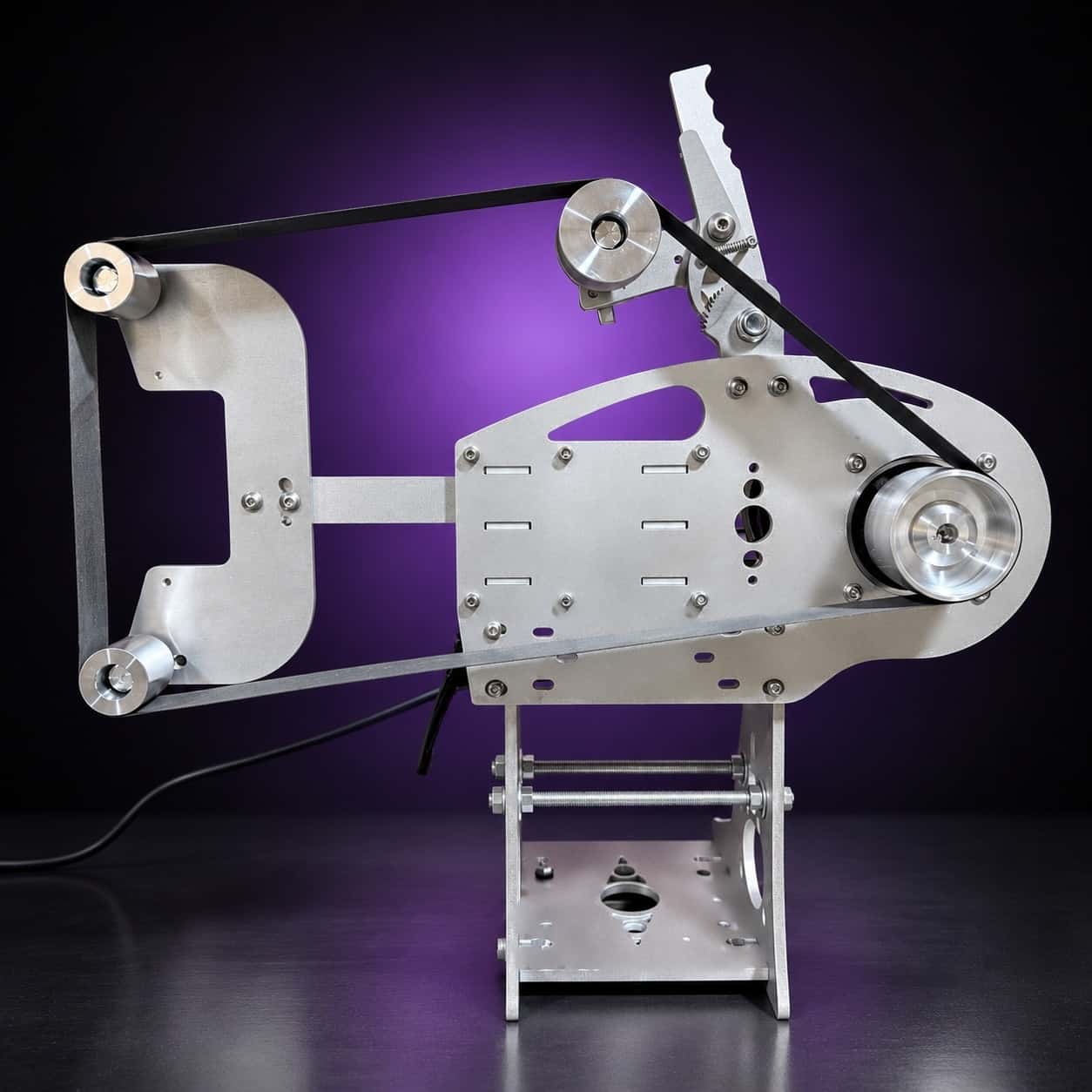
Current dual-axis platform with a fiber-laser-cut 6061 chassis and single-knob tracking.
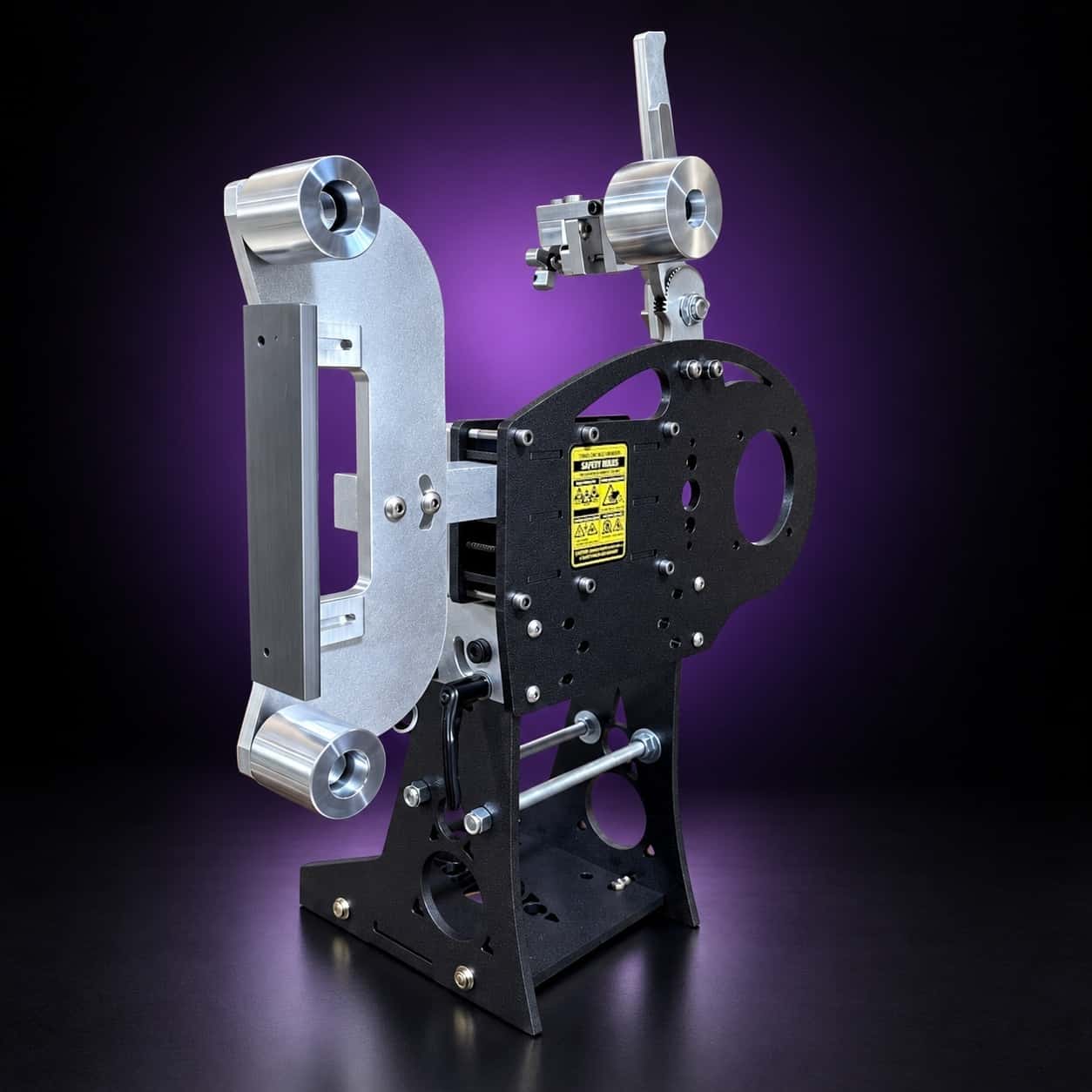
Current dual-axis platform with a steel chassis, more mass and less vibration.
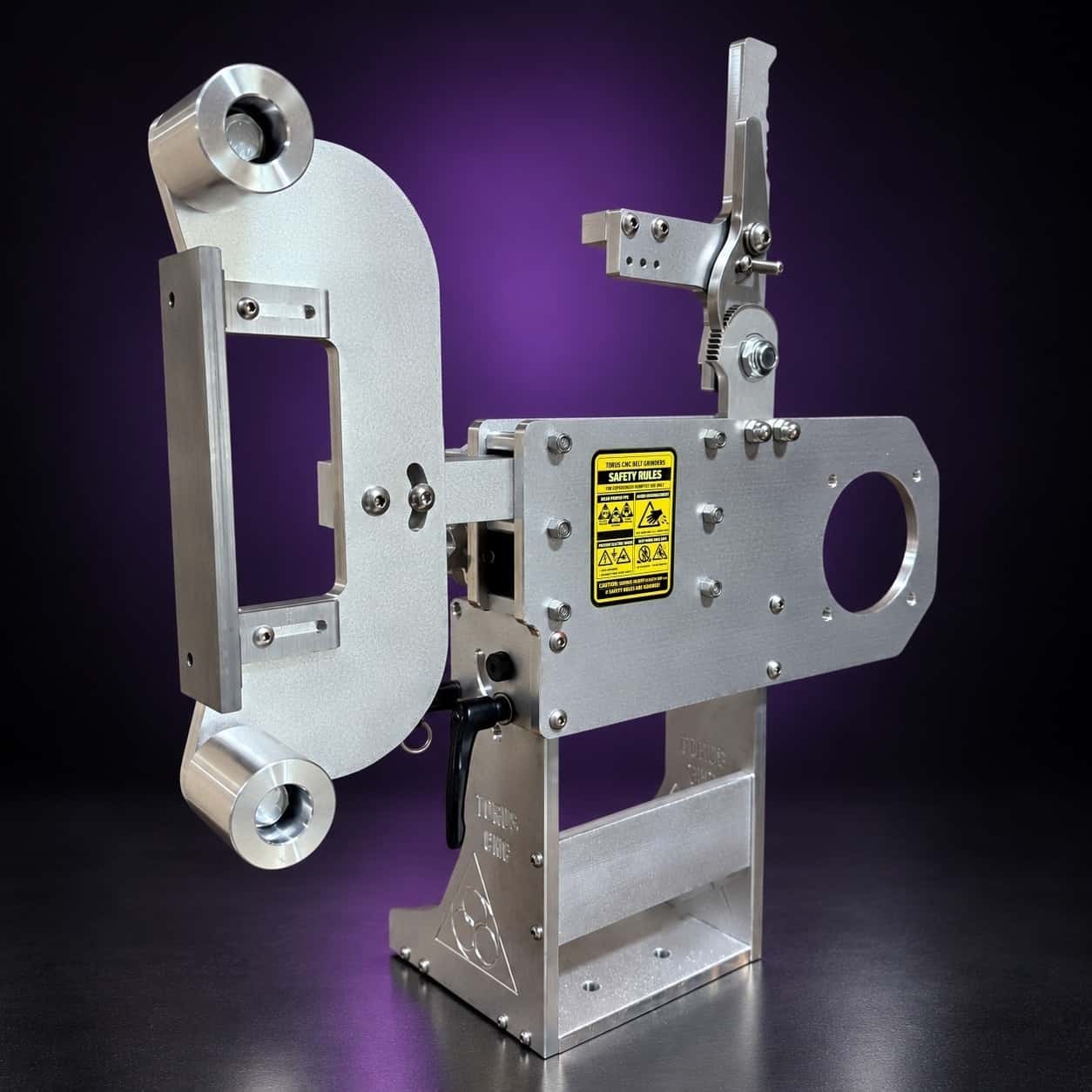
Prior-design aluminum chassis, 90-degree tilt and 1.5-inch tooling arms.
One-man shop
Tell me what the blade is for and how you heat treat. I will tell you whether this is the steel I would use, and what I would use instead.