
Heat Treat
Heat Treating Knife Steel: Complete Guide
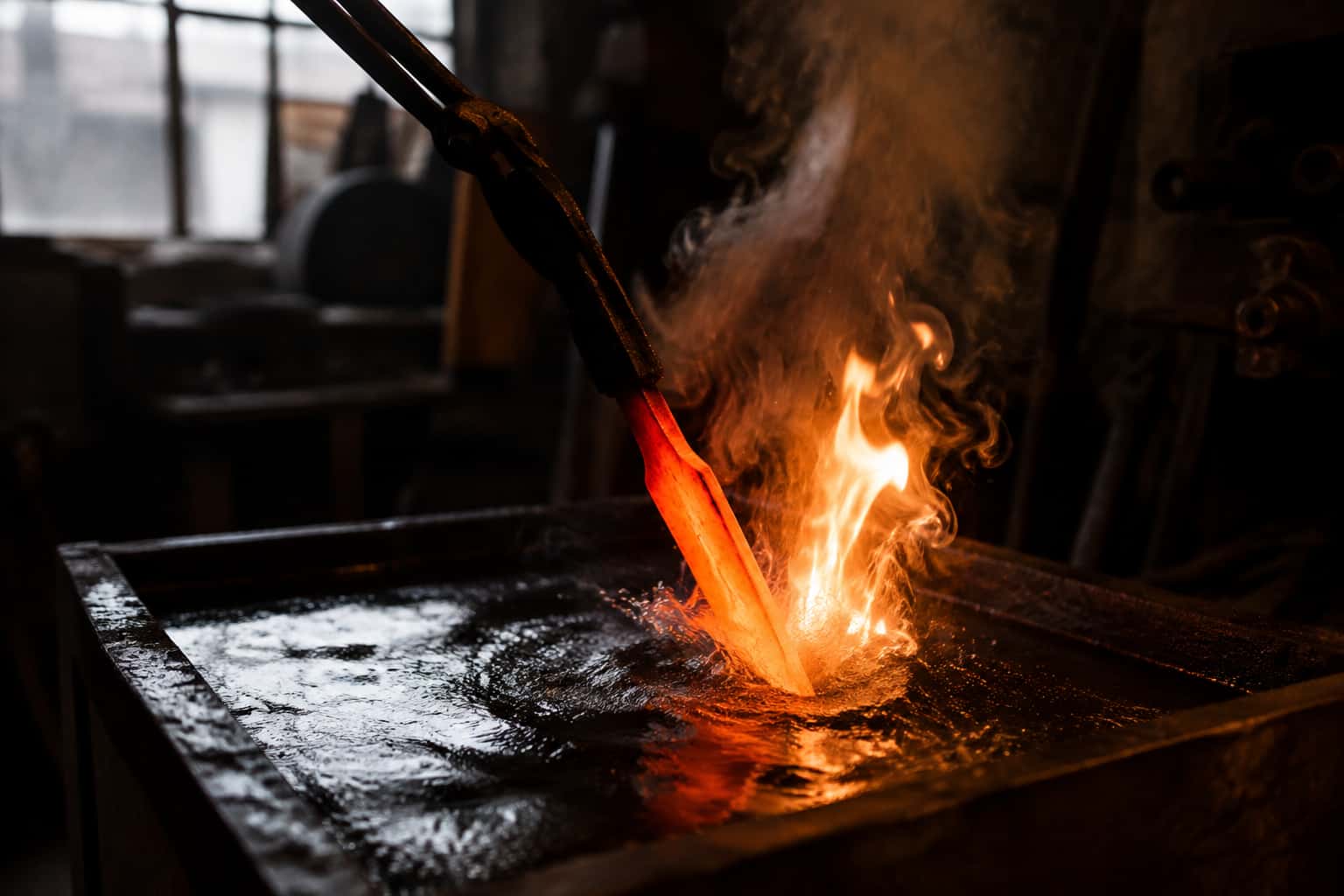
Heat treating is what turns a piece of flat bar stock into a functional knife blade. Done correctly, it transforms the steel’s internal crystal structure…
Abrasives
Belt recommendations, grit progression, and sharpening tips for grinding VG-10 on a 2x72 belt grinder. Free guide from Torus CNC's ForgeBrain.
1 min readWritten by Rich LinvilleFree to read
VG-10 grinds in the moderate, well-established range for premium stainless steels, easier than high-carbide CPM steels like CPM 20CV or S30V, but slightly more demanding than a lean steel like AEB-L. It has decades of production history behind it in Japanese kitchen cutlery, so the belt and sharpening approach is well understood.
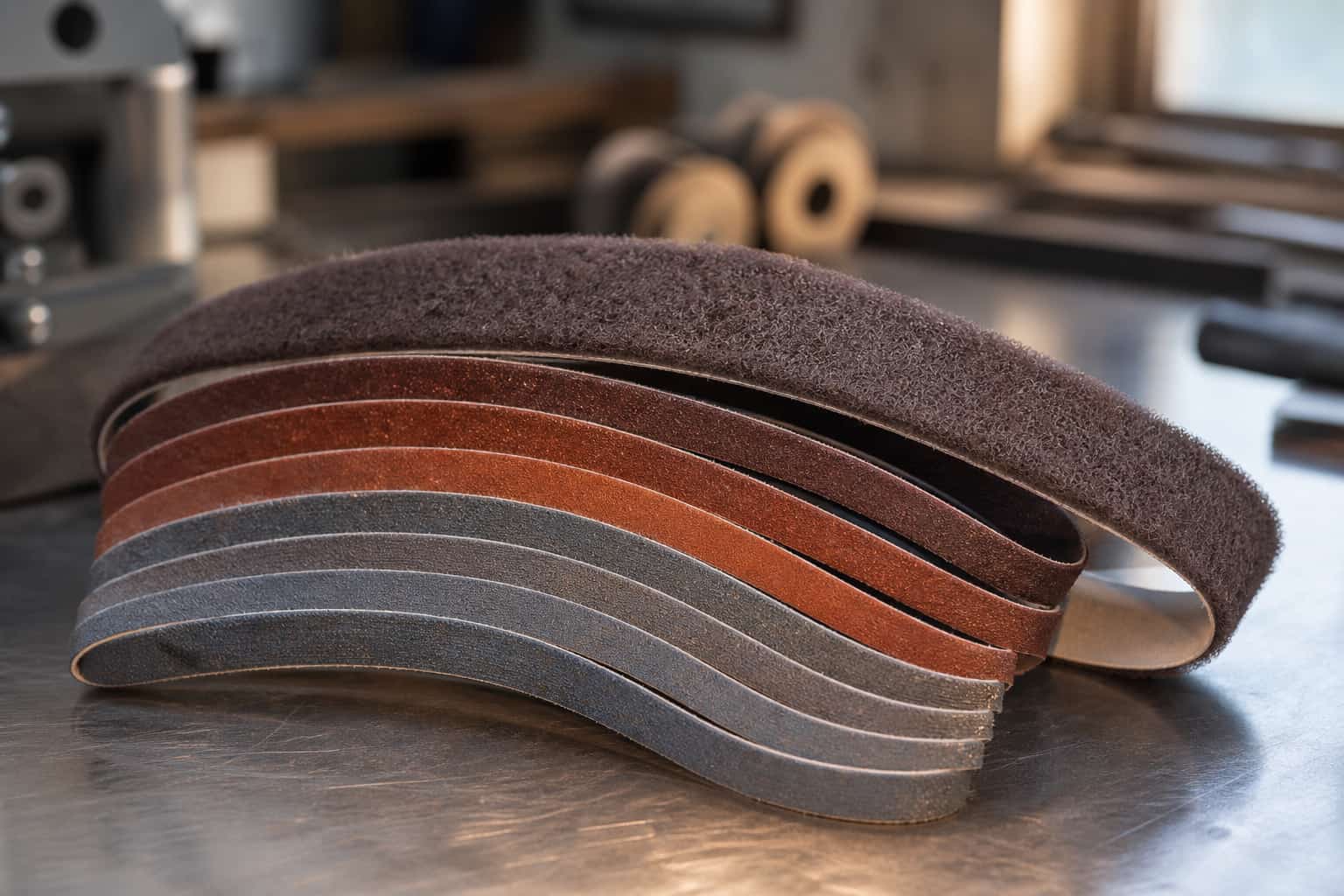
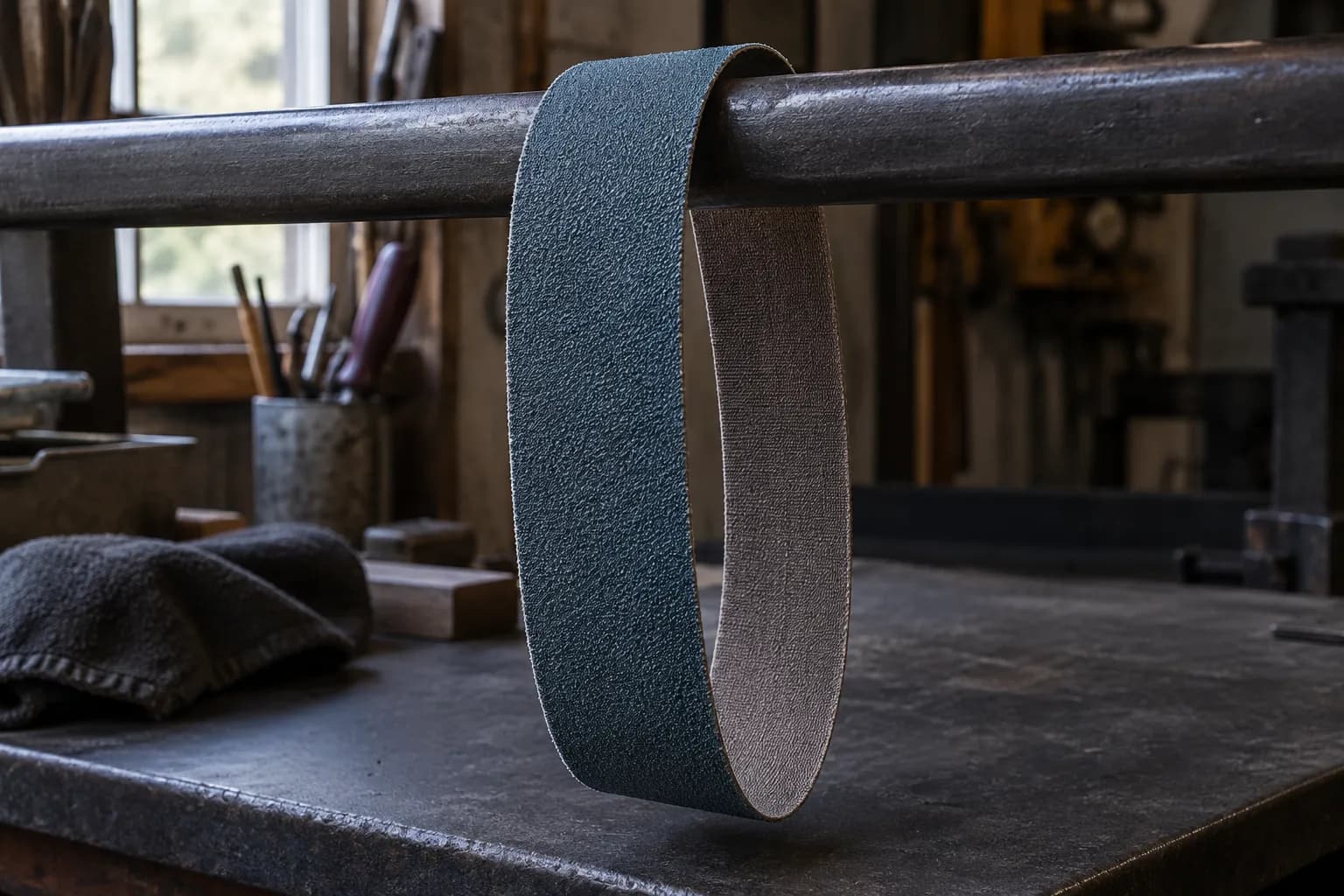
Standard ceramic or good-quality zirconia belts handle VG-10 well. It does not demand the premium structured abrasives that harder, more carbide-heavy steels benefit from.
| Stage | Grit |
| Profiling / heavy stock removal | 50 |
| Bevel refinement | 80 |
| Pre-finish | 120 |
| Finish grinding | 220 |
Standard technique applies well: moderate belt speed, light controlled passes, and a coolant mister to protect the temper. Given VG-10’s frequent use on thin kitchen-knife grinds, take extra care to avoid overheating thin edges, similar to the concerns with thin AEB-L stock.
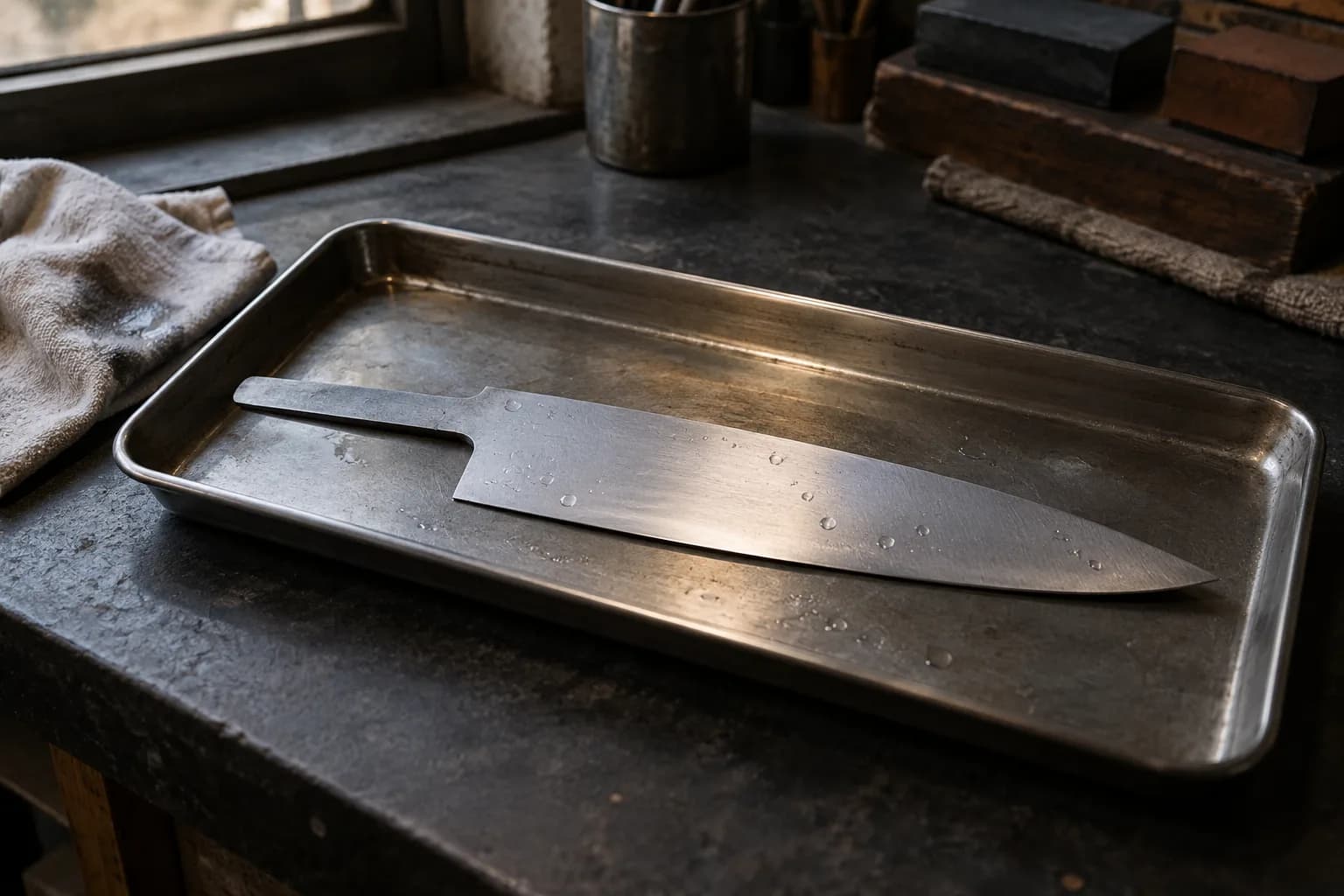
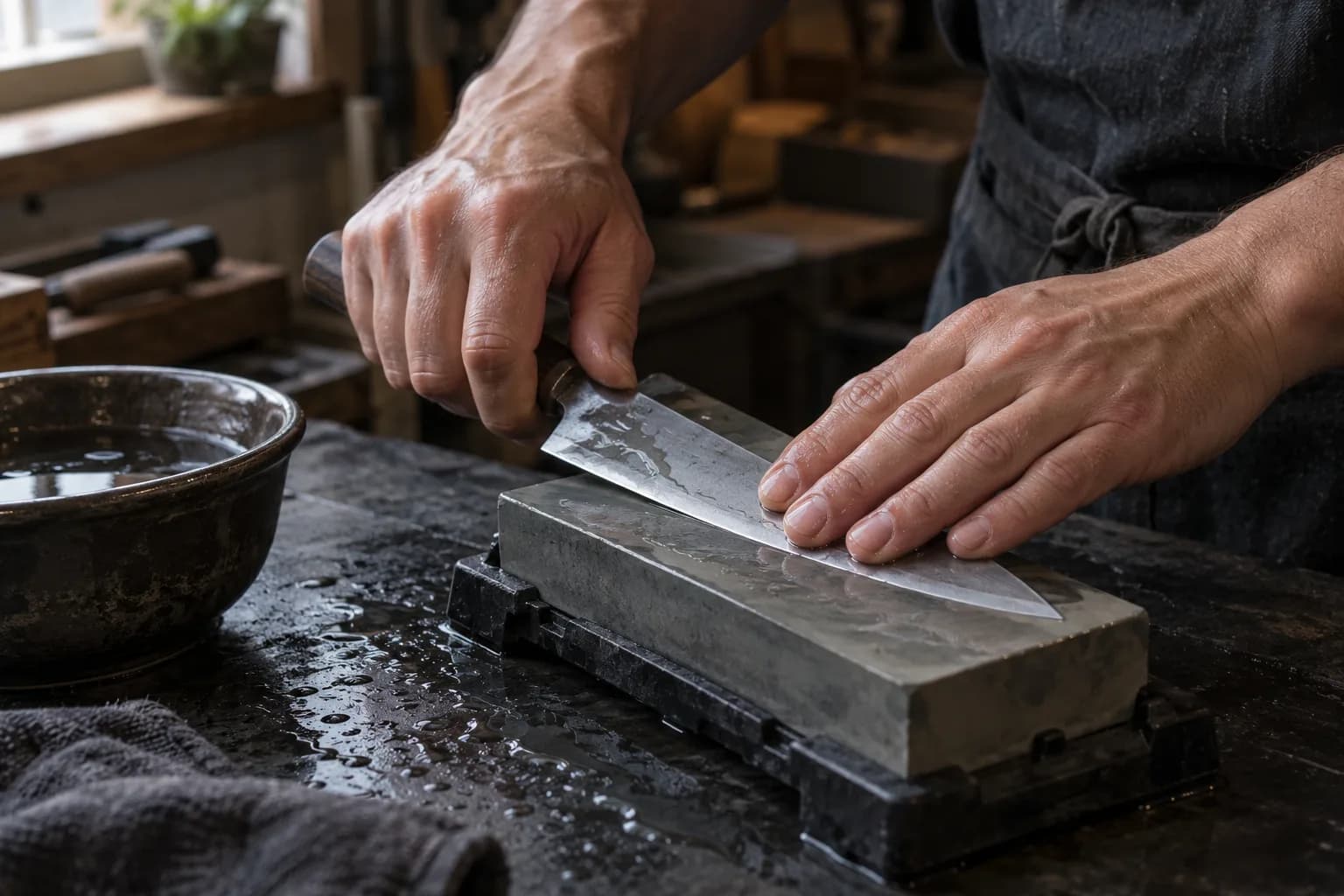
VG-10 sharpens well with standard sharpening stones and does not require diamond or CBN abrasives. Its fine, cobalt-hardened grain takes a very keen, precise edge, which is exactly why it remains a top choice for Japanese-style kitchen knives.
Keep reading
Three more from the same bench.
Heat treating is what turns a piece of flat bar stock into a functional knife blade. Done correctly, it transforms the steel’s internal crystal structure…
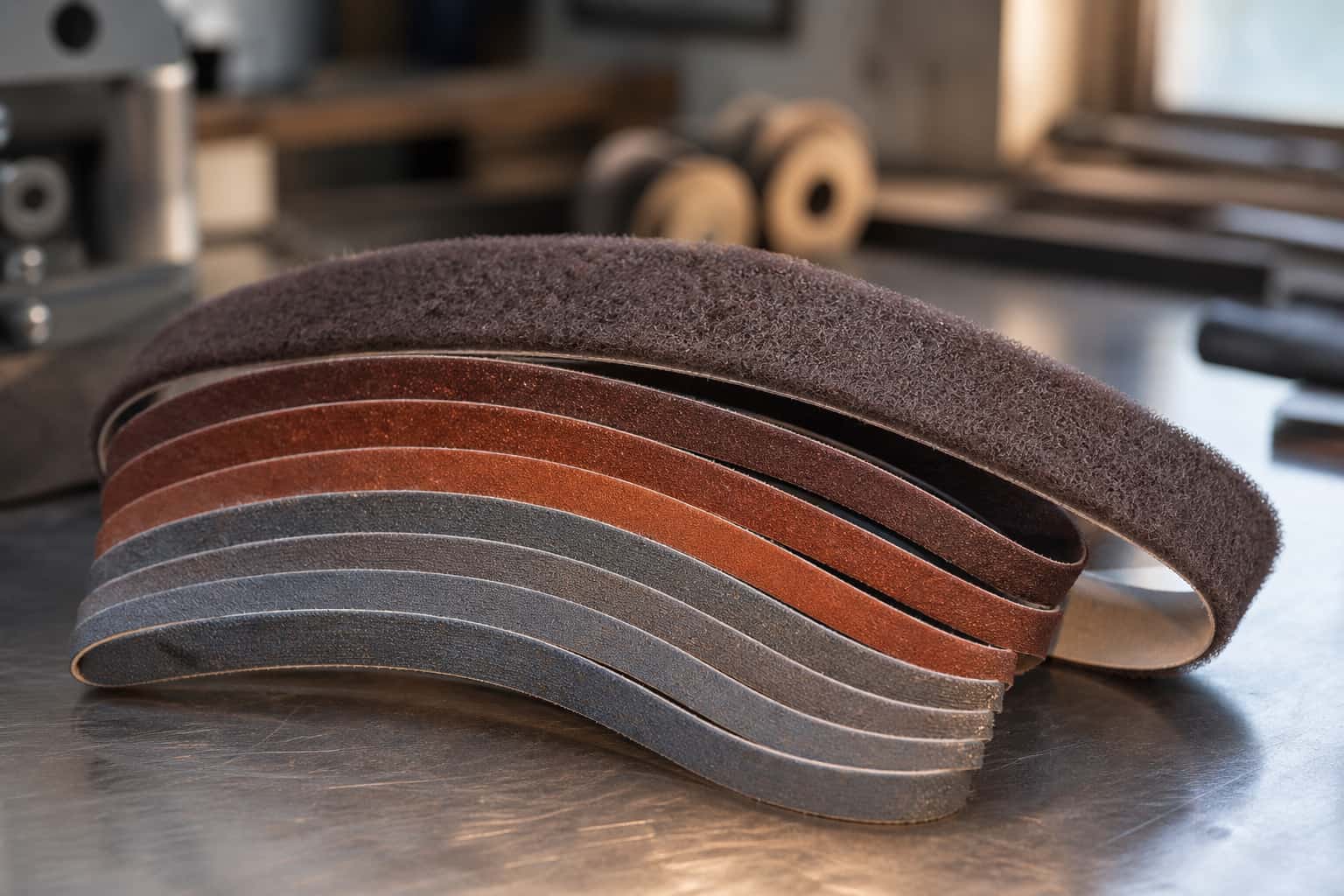
Belts are the single biggest recurring cost in this hobby, and buying the wrong ones wastes money twice: once on belts that wear out fast, and again on…
Every Torus ships as a complete assembled chassis with the motor sold separately — which hands you the one decision that shapes the machine’s personality…
Same bench
I machine the parts, hand-assemble, track and test Torus grinders in Sterling, Illinois. Most orders ship in seven to ten business days from time of order.
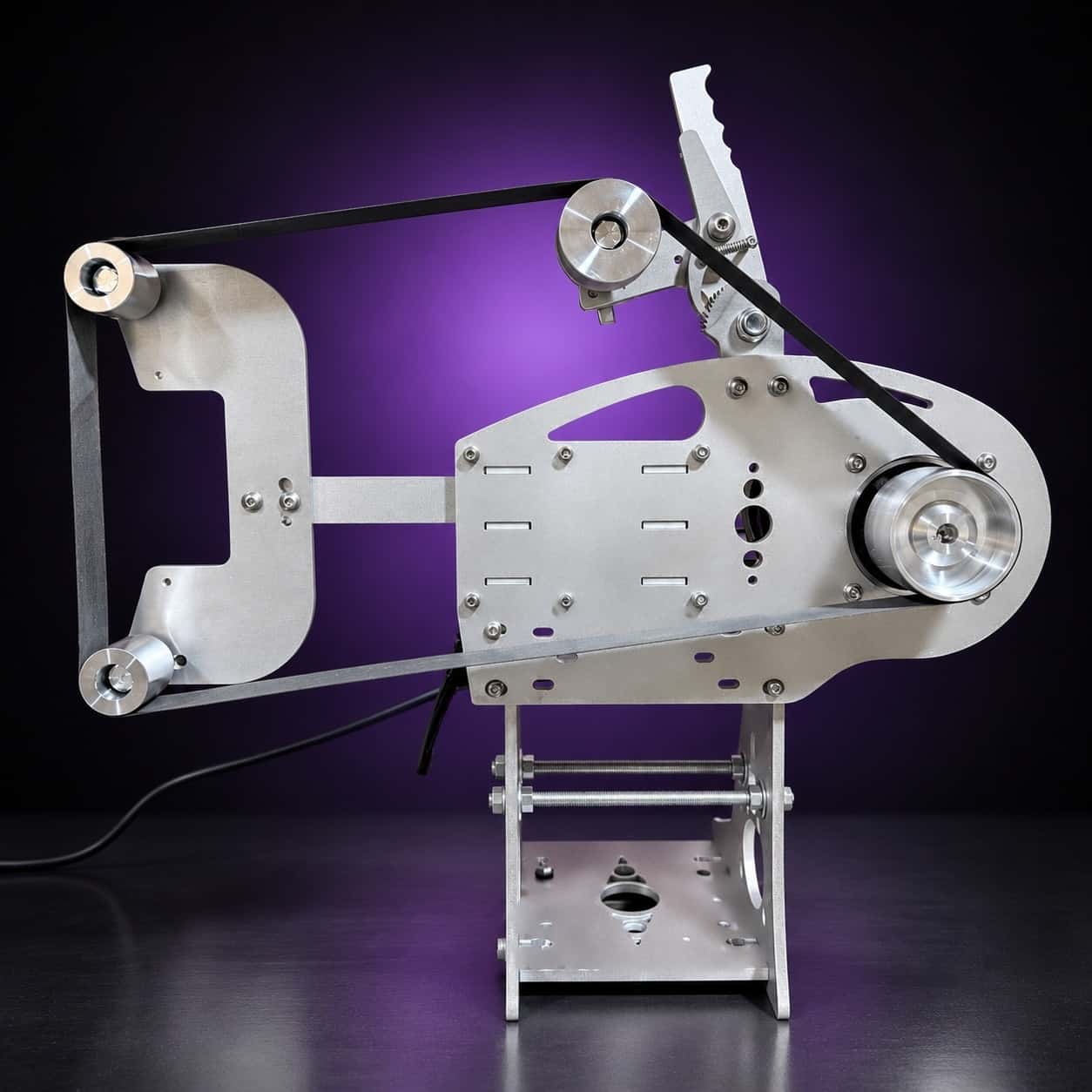
Current dual-axis platform with a fiber-laser-cut 6061 chassis and single-knob tracking.
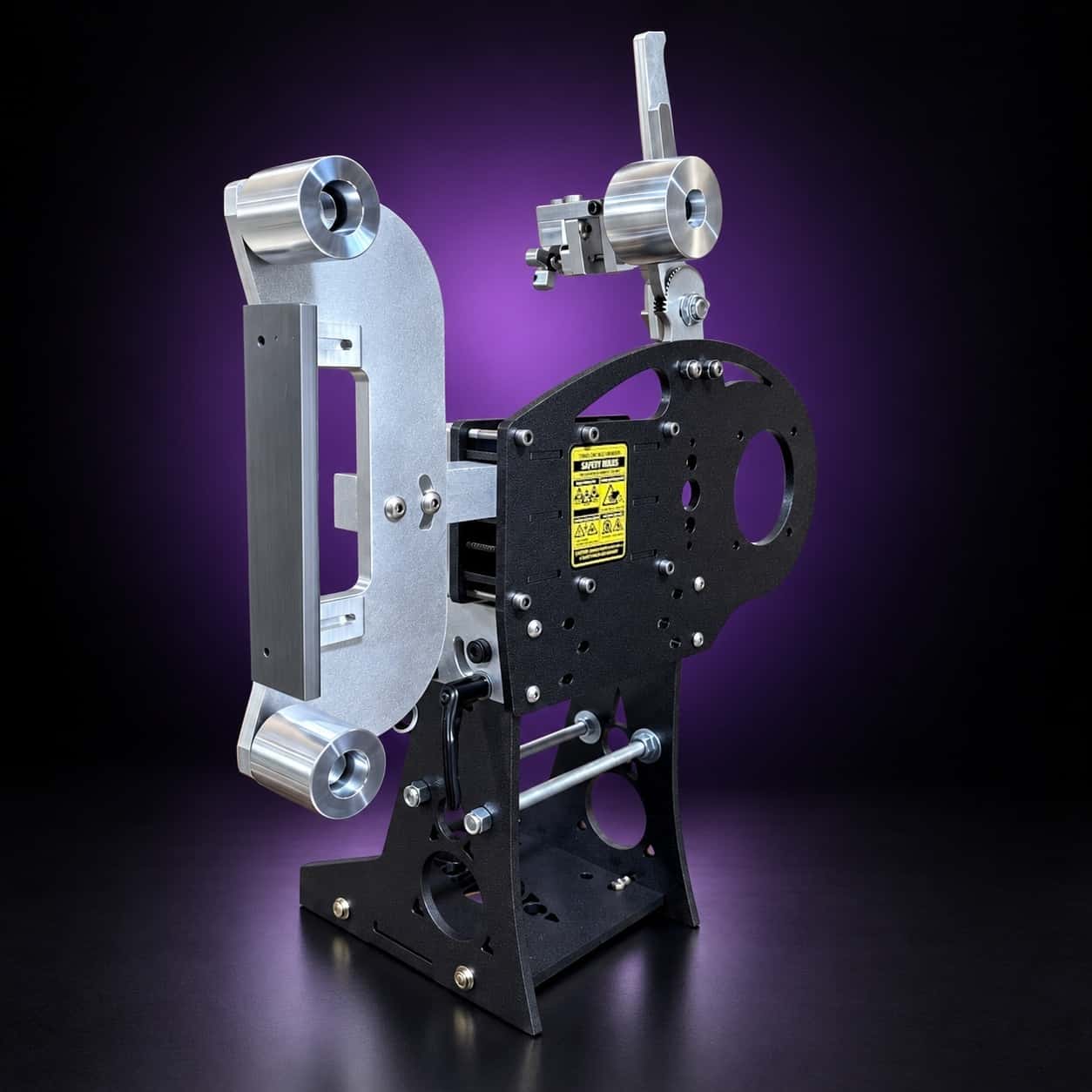
Current dual-axis platform with a steel chassis, more mass and less vibration.
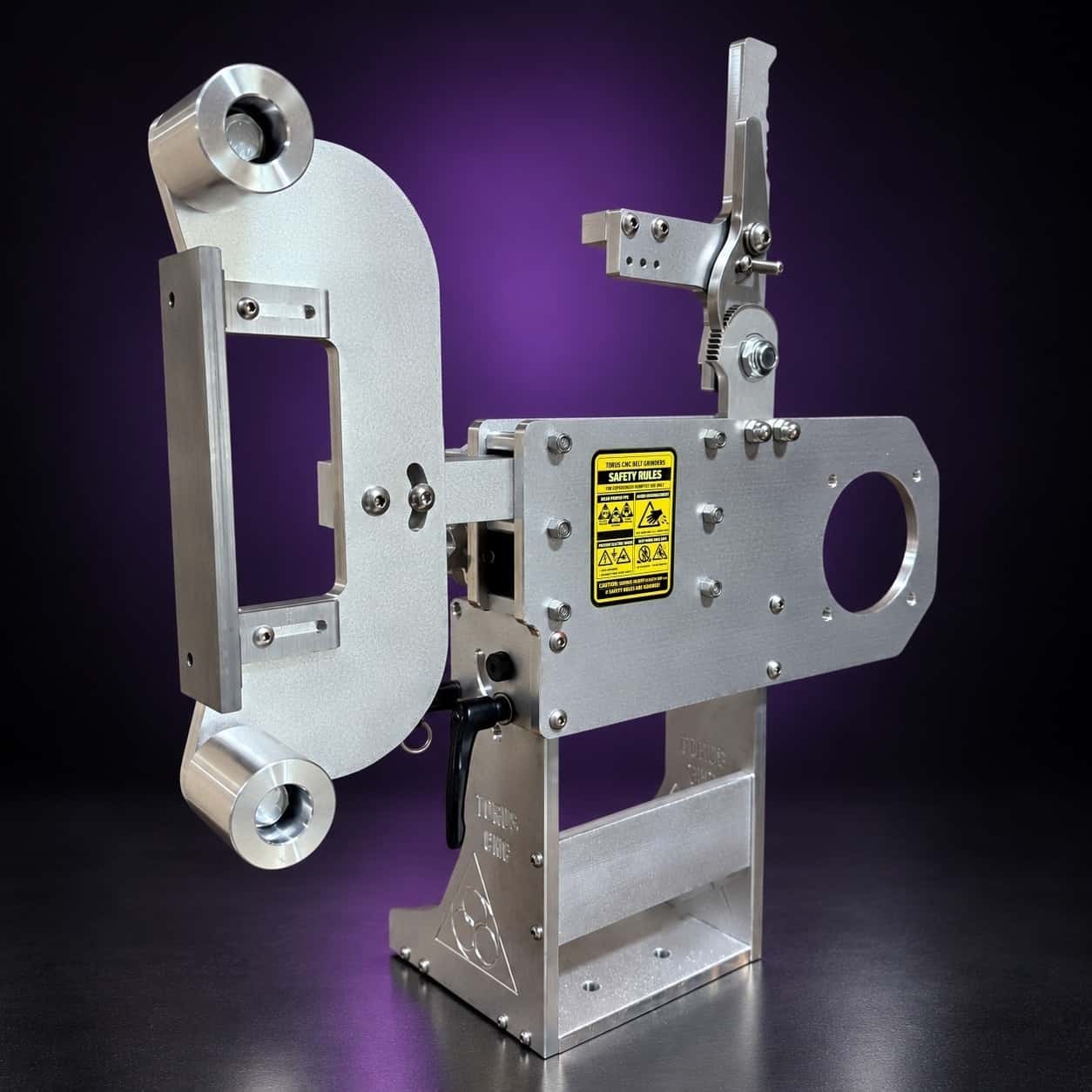
Prior-design aluminum chassis, 90-degree tilt and 1.5-inch tooling arms.
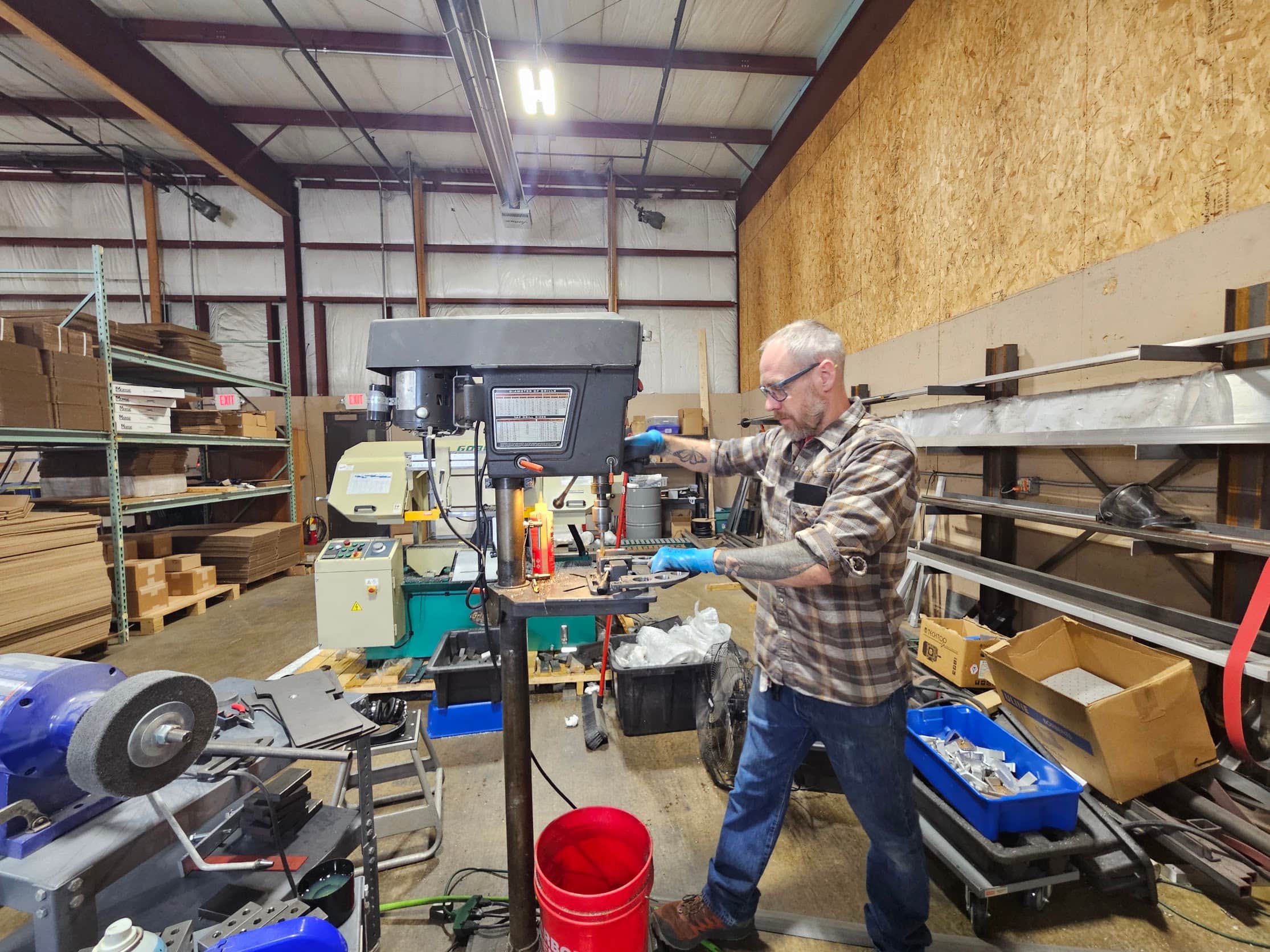
One-man shop
I answer my own email. Tell me the steel, the machine and what it is doing, and I will tell you what I would try next.