
A Japanese stainless steel famous for high-end kitchen cutlery, using a cobalt addition to reach high hardness and a fine, precise edge without giving up too much toughness.
- Toughness
- 3
- Edge retention
- 4
- Corrosion resistance
- 4
- Ease of grinding
- 3
Steel matchup
VG-10 and 154CM, compared on the five things that decide a blade: toughness, edge retention, corrosion, heat treat and how each one grinds.
A Japanese stainless steel famous for high-end kitchen cutlery, using a cobalt addition to reach high hardness and a fine, precise edge without giving up too much toughness.
A classic conventionally-melted stainless steel and the direct ancestor of CPM 154, historically the premium stainless steel behind many well-known production knives.
Dimension by dimension
Each steel's own note, its score out of five, and what separates the two in that one column. The higher score in a row is marked in purple.
| Dimension | VG-10 | 154CM | What separates them |
|---|---|---|---|
| Toughness | Adequate for kitchen and EDC use; the cobalt addition helps it hold toughness at a higher hardness than its composition alone would suggest, though it is not built for hard-use abuse. | Solid, dependable toughness for a stainless steel of this class, though its conventional (non-powder) manufacturing gives it a coarser grain than CPM 154, its powder-metallurgy successor. | Tied. Both offer solid, dependable toughness for premium stainless steels of this class. |
| Edge retention | Very good edge retention with a fine, precise bite, which is exactly why it became the standard steel for premium Japanese kitchen knives. | Good, middle-of-the-road edge retention thanks to a healthy carbide volume from its molybdenum and chromium content, similar in principle to CPM 154 but slightly less consistent. | VG-10 holds a modest edge here, with its cobalt addition and fine grain giving it slightly better wear resistance and a keener edge than 154CM. |
| Corrosion resistance | 15% chromium gives it excellent stainless performance, well suited to kitchen use where the blade is washed constantly. | 14% chromium gives it good, dependable stainless performance suitable for everyday-carry and outdoor use. | Essentially tied. Both offer good, dependable stainless performance suitable for kitchen use. |
| Heat treat | Austenitize at 1920-1960 F (1050-1070 C) to fully dissolve the carbides into the matrix. Quench in oil or air for rapid cooling to form martensite. Temper at 300-390 F (150-200 C) to relieve internal stress and balance hardness against toughness. Properly heat treated, VG-10 typically lands at 60-62 Rc. | Preheat to 1400 F, then austenitize at 1900-2000 F for 30-60 minutes. Quench in oil or with a positive pressure quench to below 125 F. A cryogenic treatment (dry ice, around -100 F) right after the quench, or between tempers, is recommended to fully transform retained austenite. Double temper for at least 2 hours per cycle, choosing a temperature between 400 and 1200 F, but avoid the 800-1100 F range, which causes sensitization and reduces both corrosion resistance and toughness. Target hardness is 55-62 Rc. | Both are considered forgiving stainless steels to heat treat, though 154CM's sensitizing temper range (800-1100 F) is worth watching, a consideration VG-10 does not share. |
| Grinding | Reasonably easy to grind and finish for a vanadium-bearing stainless steel, which has helped it stay popular in high-volume Japanese cutlery production. | One of its biggest selling points historically: easy to grind and finish compared to many other premium stainless steels, which is part of why it became so popular with production knife makers. | 154CM is marginally easier to grind and finish, part of why it became such a popular production steel, though both are well within the easy-to-moderate range for stainless steels. |
Best use
VG-10
Choose VG-10 for Japanese-style kitchen knives where a very fine, keen edge is the top priority.
Open the VG-10 reference154CM
Choose 154CM for general-purpose EDC or hunting knives with a long, proven American production track record.
Open the 154CM reference
The long answer
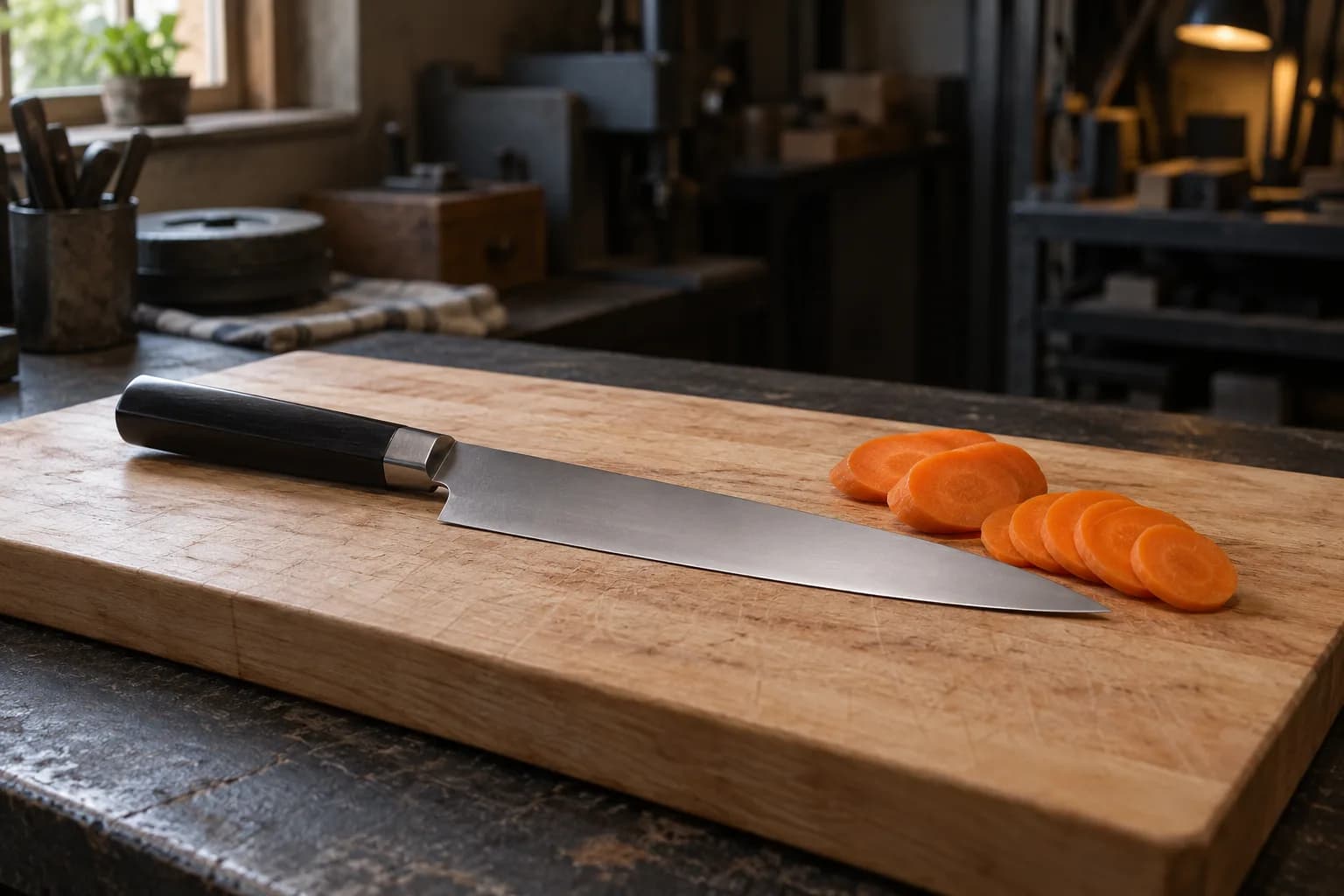
VG-10 and 154CM are both long-established, easy-to-work premium stainless steels, one from Japan’s Takefu Special Steel and one from America’s Crucible Industries, and both remain popular for kitchen and production knives decades after their introduction. The differences between them are modest but real.
Keep comparing
Keep reading
154CM has a well-earned reputation as one of the easier premium stainless steels to grind and finish, which is a big part of why it became the workhorse…
VG-10 grinds in the moderate, well-established range for premium stainless steels, easier than high-carbide CPM steels like CPM 20CV or S30V, but slightly…
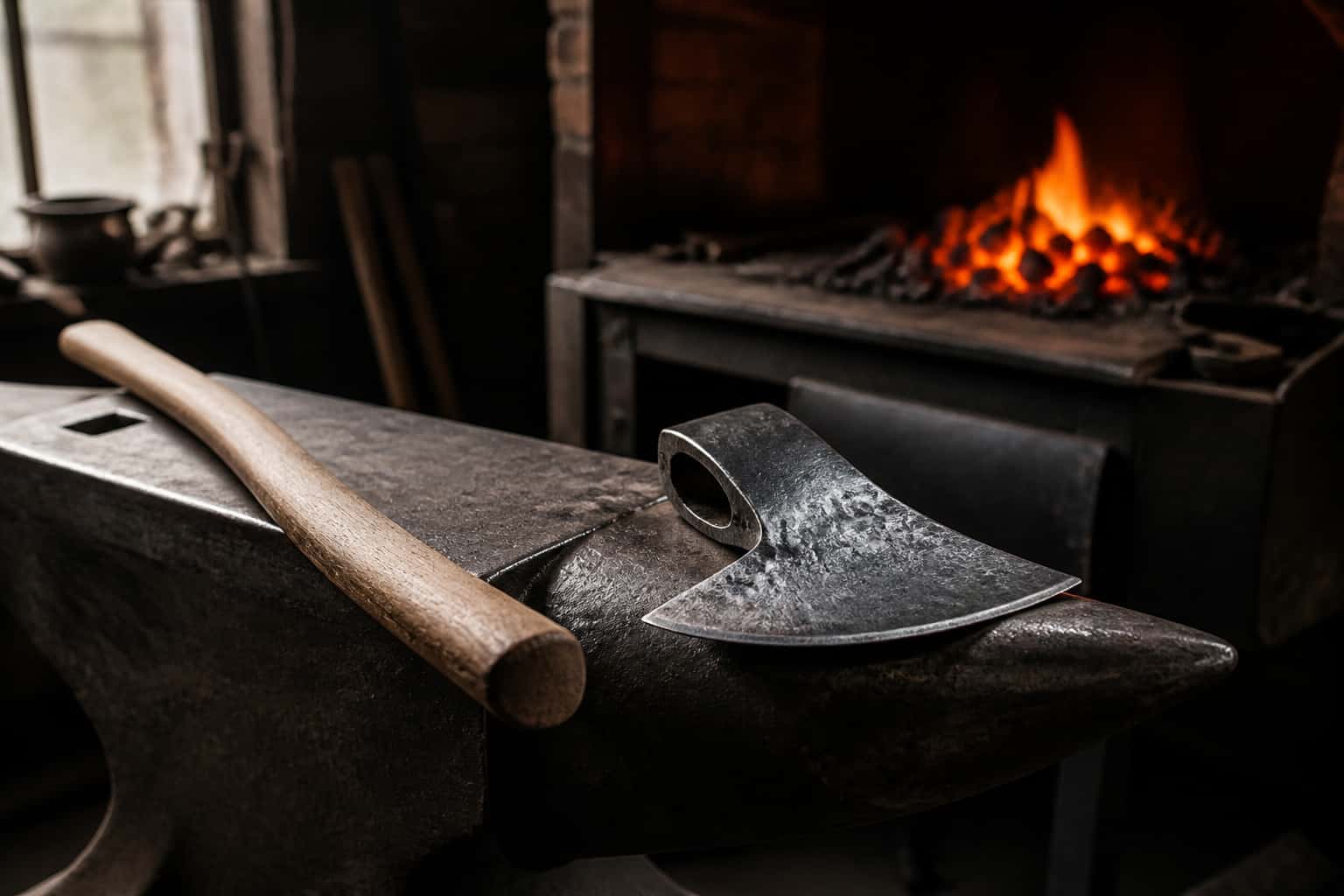
Every knife steel is iron plus a specific recipe of other elements, and each of those elements pulls the steel’s behavior in a particular direction…
Same bench
Whichever steel wins, the grind is only as flat as the platen behind it. I machine the parts, hand-assemble, track and test Torus grinders in Sterling, Illinois.
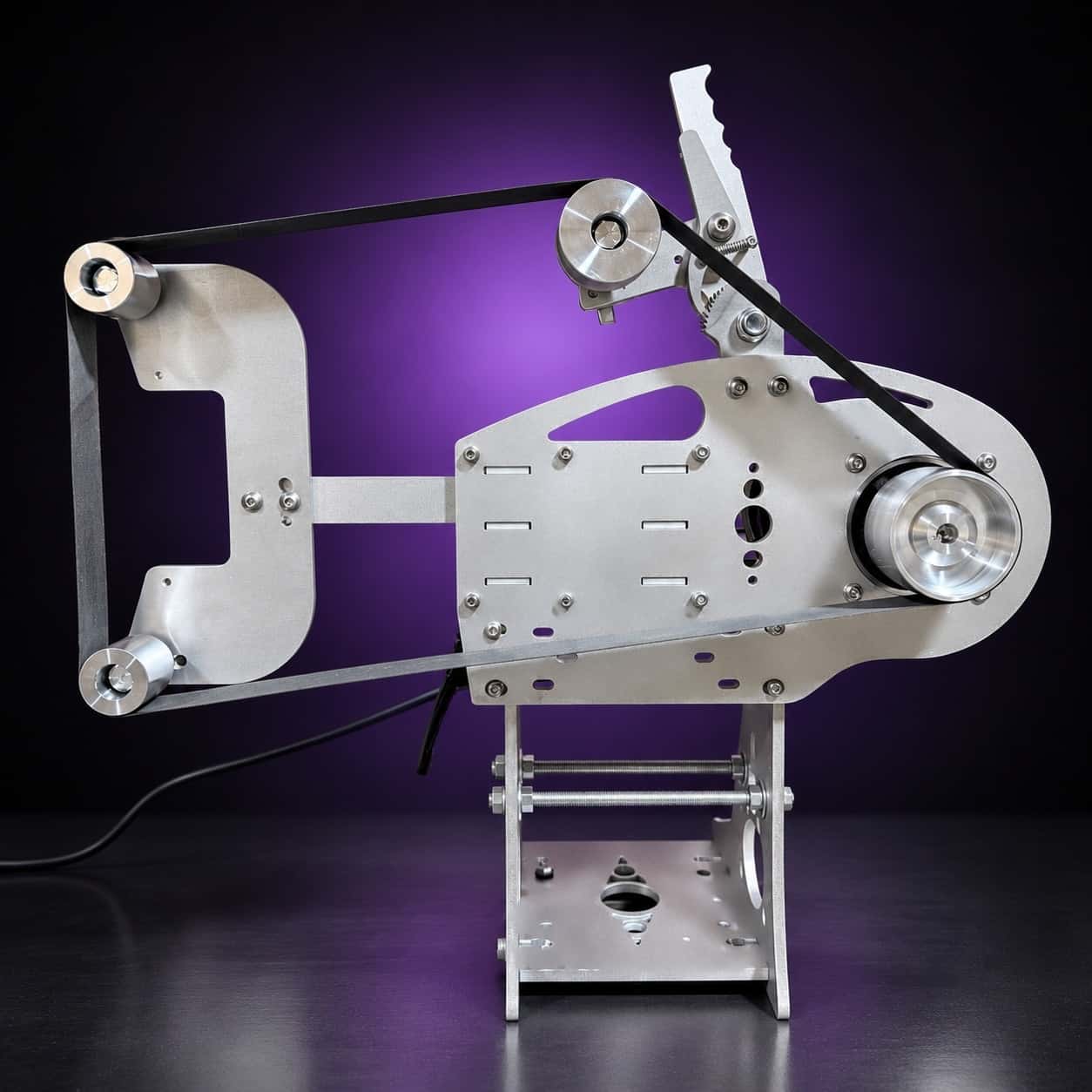
Current dual-axis platform with a fiber-laser-cut 6061 chassis and single-knob tracking.
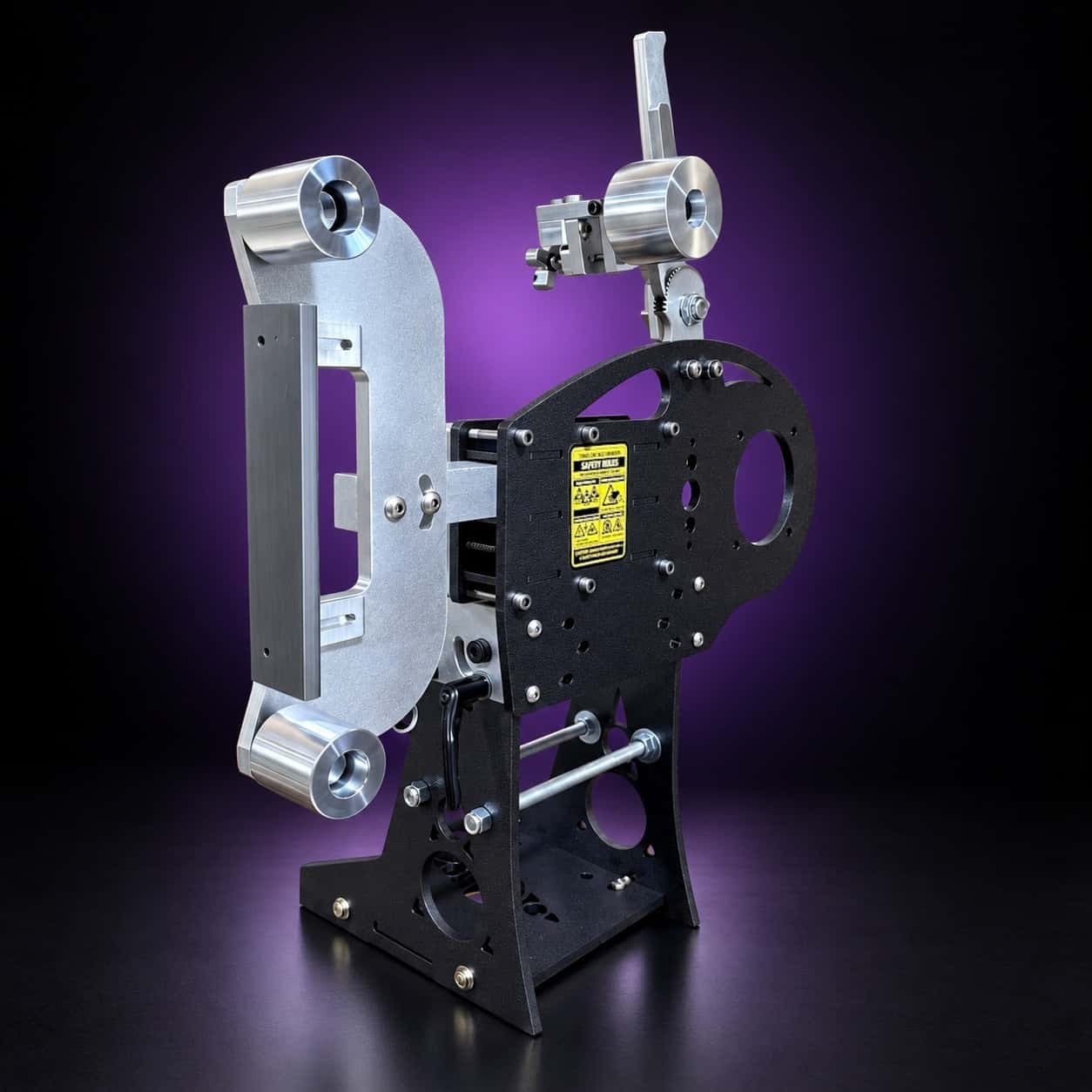
Current dual-axis platform with a steel chassis, more mass and less vibration.
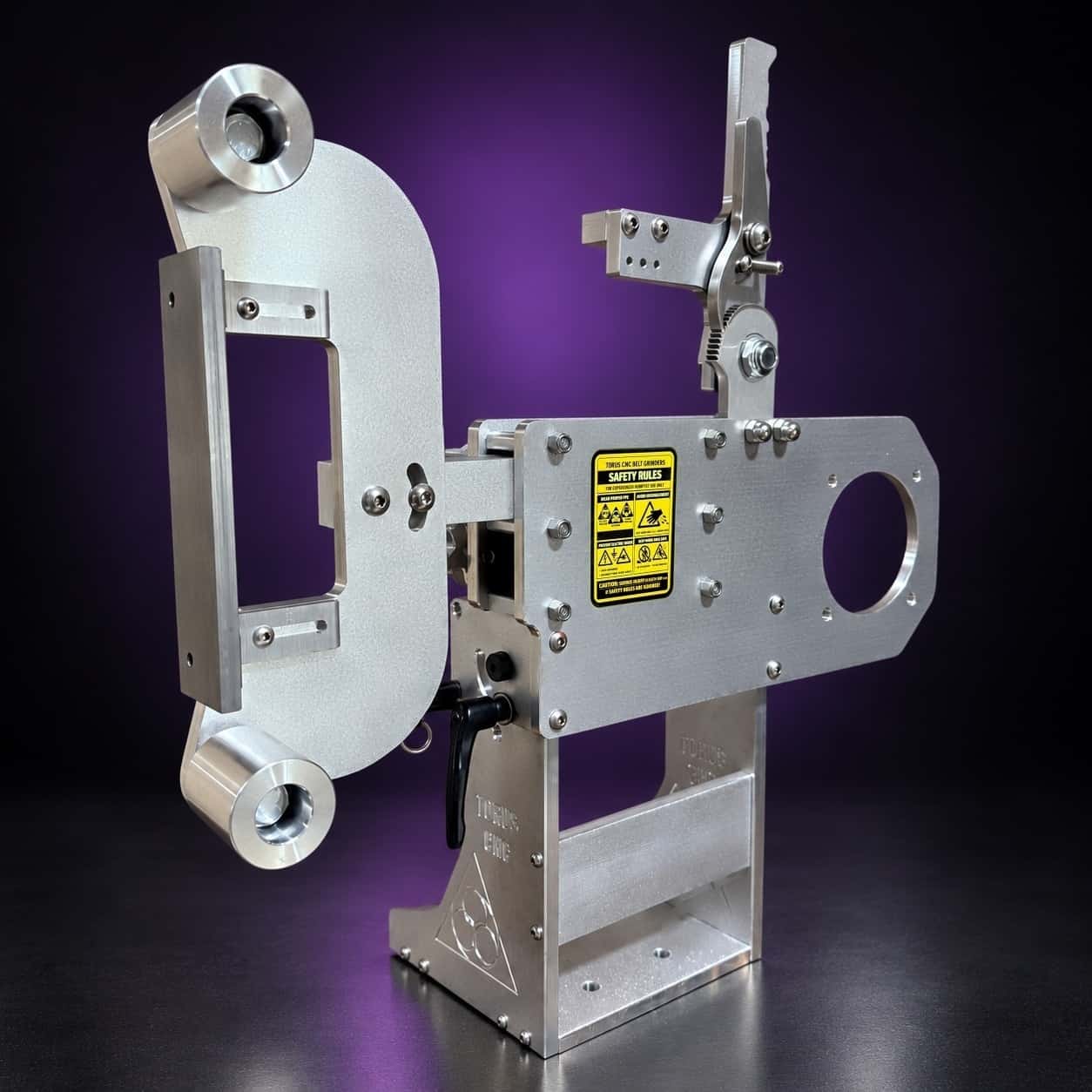
Prior-design aluminum chassis, 90-degree tilt and 1.5-inch tooling arms.
One-man shop
Tell me what the blade is for and how you heat treat, and I will tell you which of these I would put on the bench — including when the answer is neither.