
Heat Treat
Heat Treating Knife Steel: Complete Guide
Heat treating is what turns a piece of flat bar stock into a functional knife blade. Done correctly, it transforms the steel’s internal crystal structure…
Beginner Guides
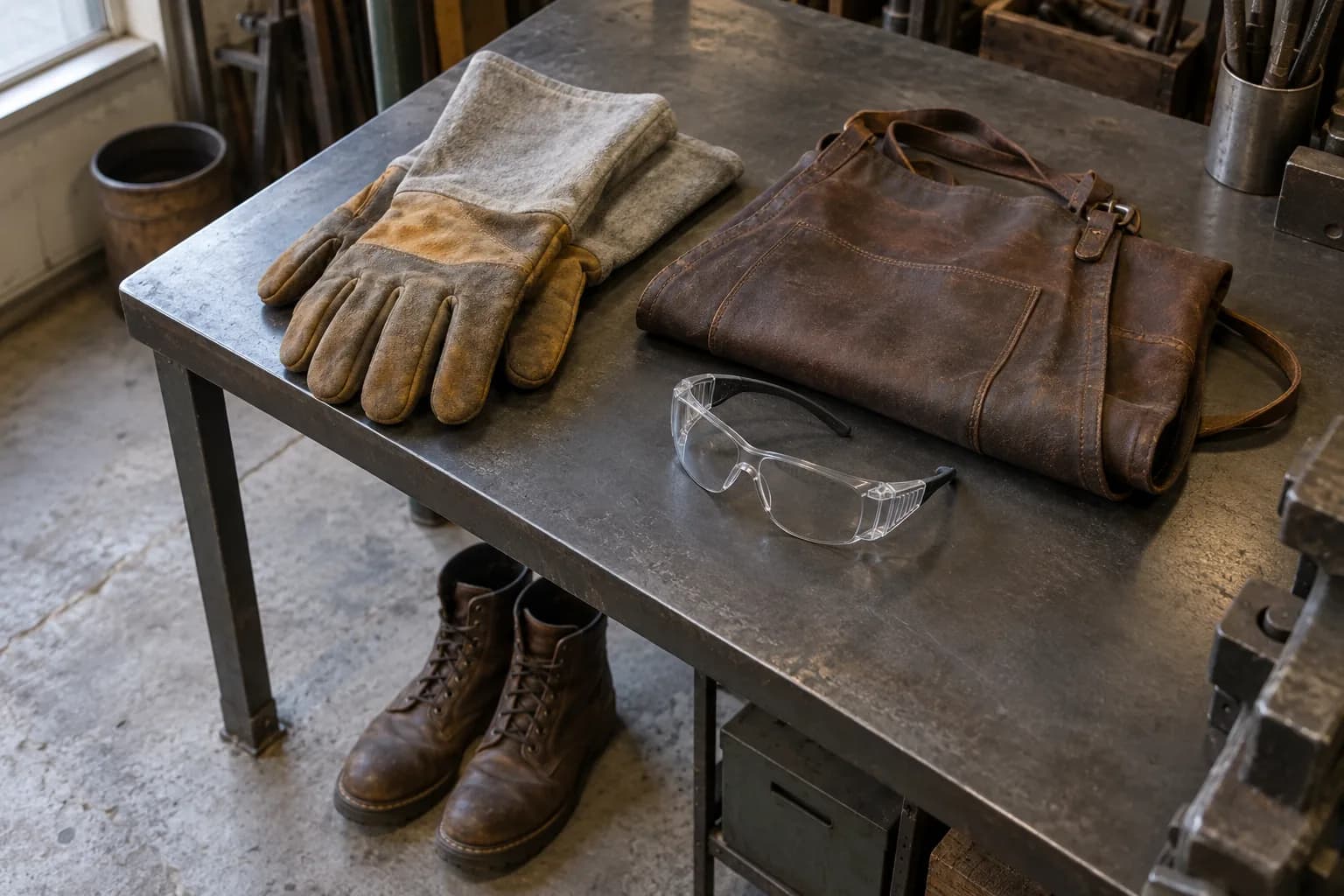
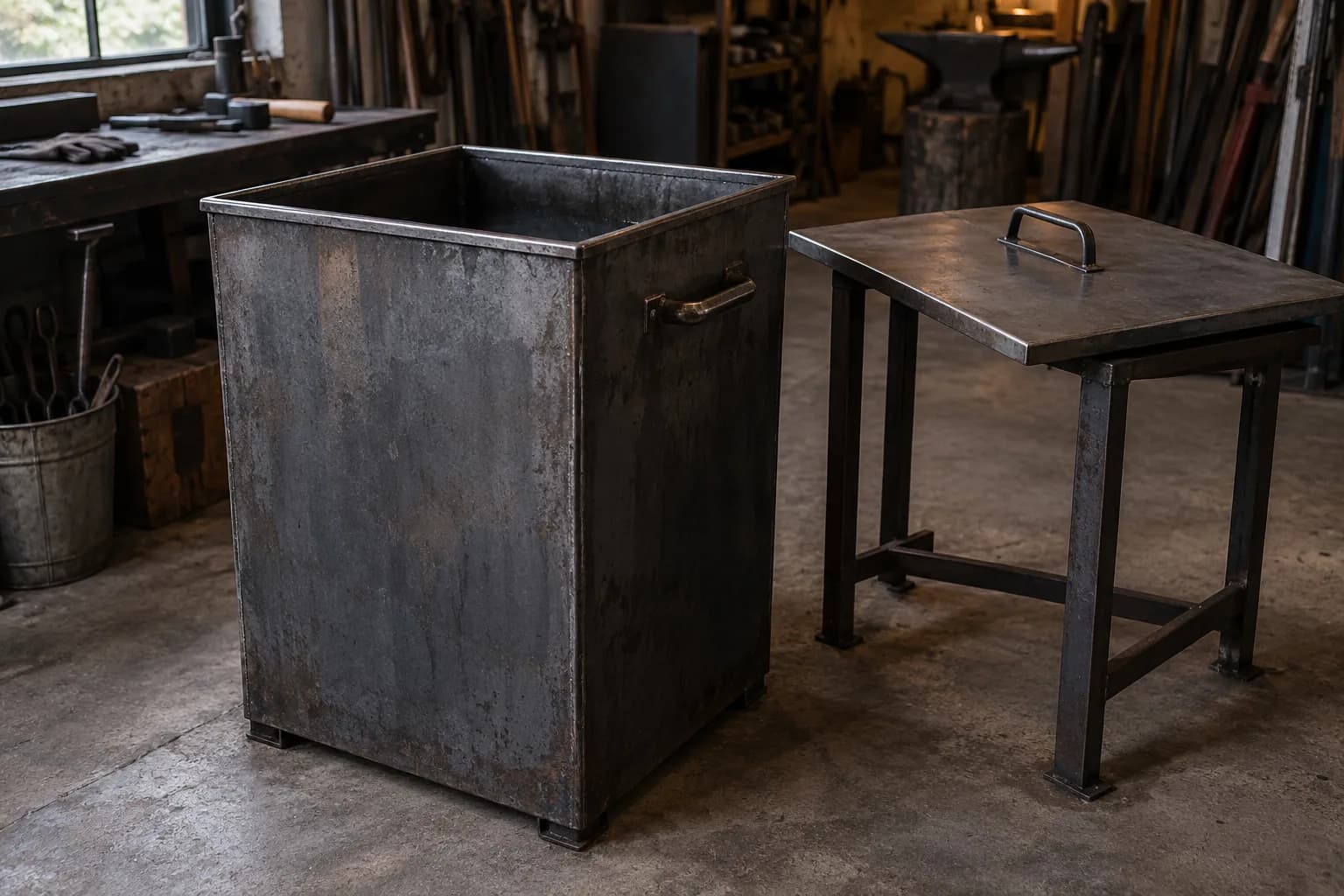
Heat-treat safety is not grinding safety: a clear, non-flammable workspace, real ventilation, heat-rated PPE and a metal lid ready for a quench tank flare-up.
3 min readWritten by Rich LinvilleFree to read
Heat treating introduces hazards grinding doesn’t: open flame, hot oil, and steel well over 1,000°F. None of it is complicated to do safely, but it does need a setup that respects those risks from the first heat, not after something goes wrong.
Grinding hazards are mostly about sparks, dust, and repetitive strain. Heat treat adds fire risk, burn risk, and fume exposure that a dust mask and face shield don’t cover. A safe grinding station and a safe heat-treat station overlap, but they aren’t the same setup.
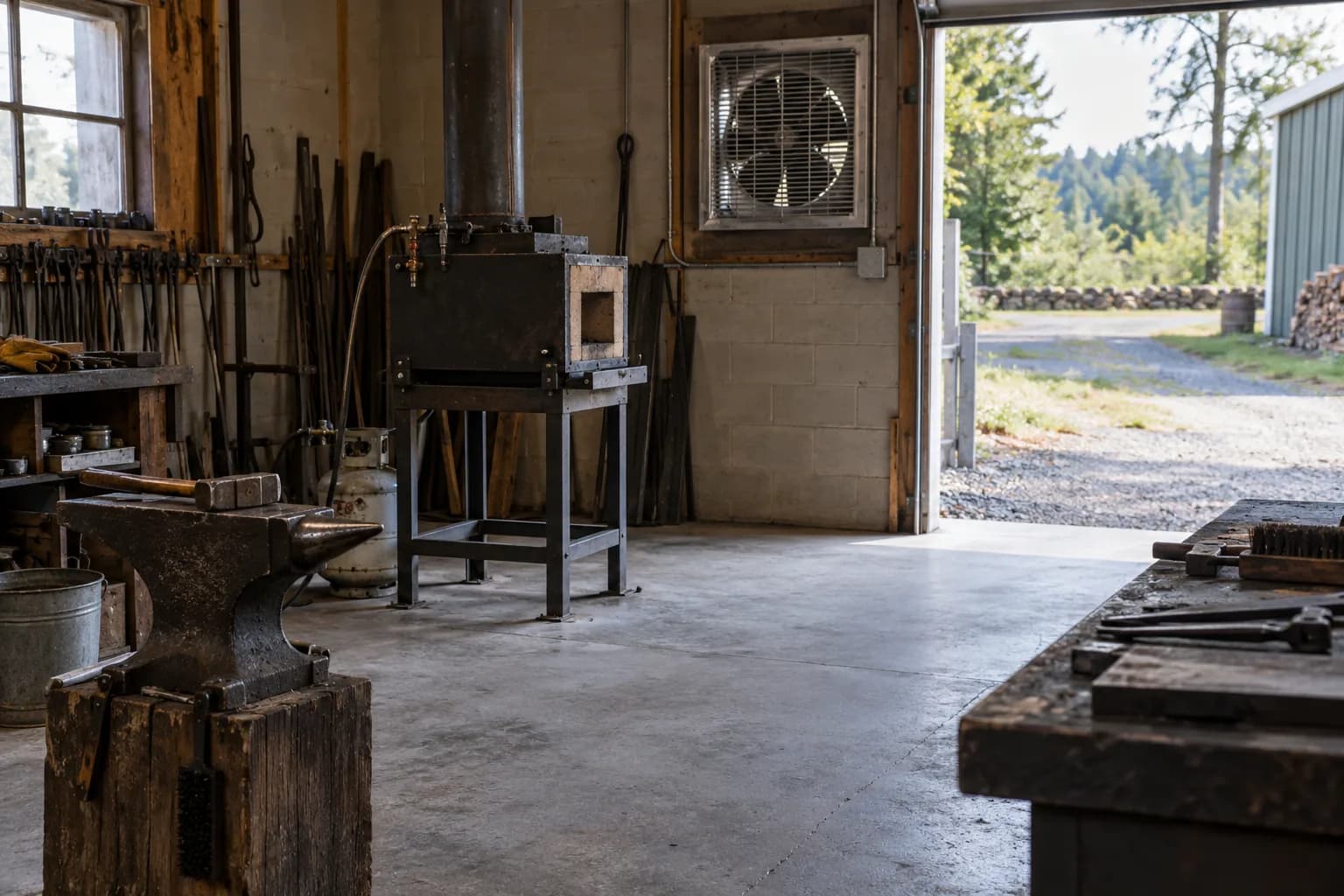
Heat treat over a bare wood bench, near sawdust, solvents, or anything else flammable, is how small mistakes become real fires. Work on a concrete floor or a dedicated metal table, keep a clear 3-4 foot radius free of clutter and flammables around the forge or torch, and never heat treat directly under low-hanging shelving or ductwork. Keep a fire extinguisher rated for both ordinary combustibles and flammable liquids (a Class B or Class K rating for oil fires) within arm’s reach, not across the shop.
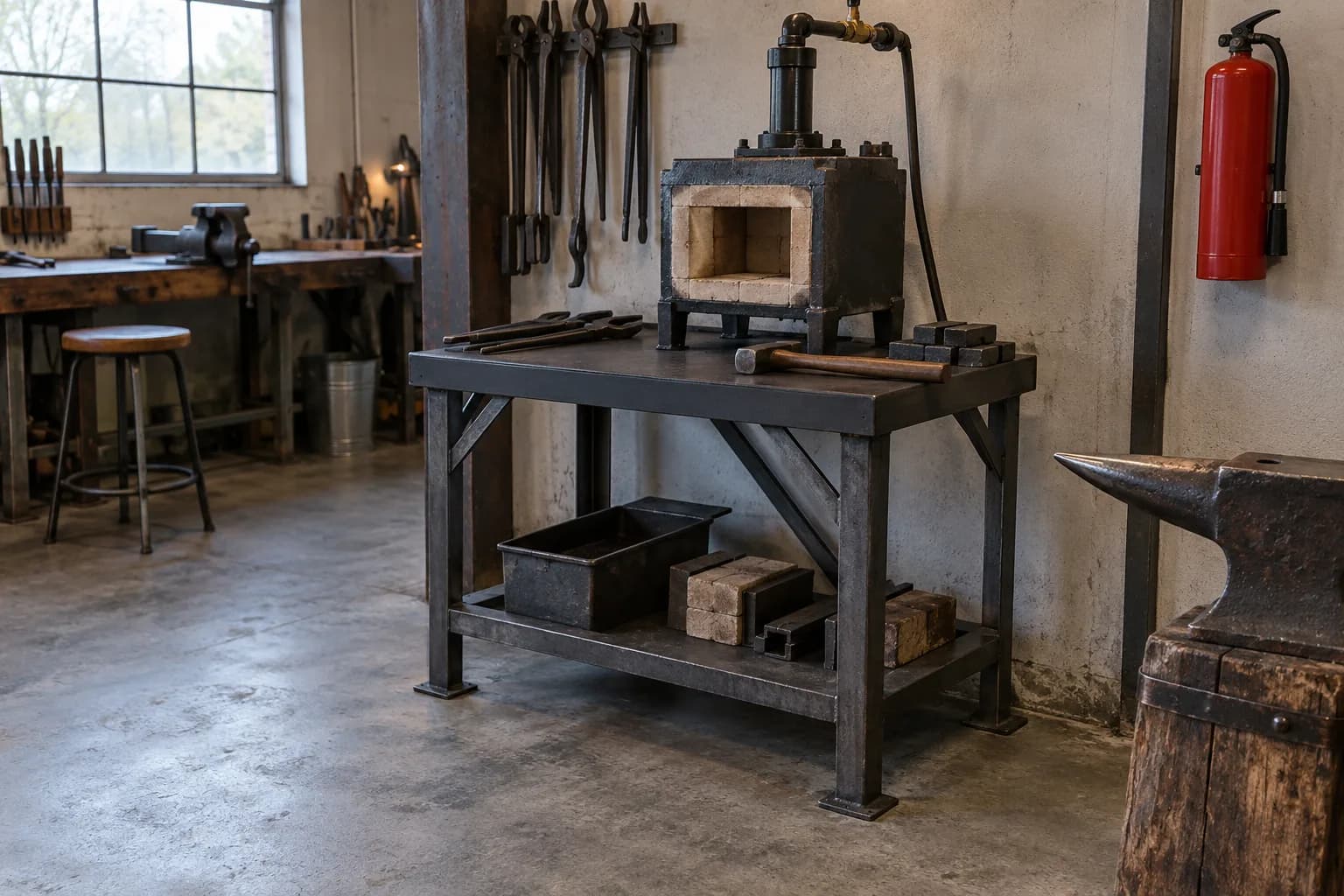
Propane and other open-flame heat sources consume oxygen and produce carbon monoxide; quench oil produces smoke and fumes when a hot blade goes in. Heat treat in a space with real airflow, an open garage door, a shop fan pulling air out, or outdoors, not a sealed room. Never run a propane forge in a fully enclosed space with the door shut, even briefly.
Grinding PPE isn’t a full substitute here. For heat-treat work specifically: natural-fiber clothing (cotton, leather, wool) since synthetics can melt onto skin if a spark or splash lands on them; welding or heat-rated gloves rather than thin work gloves when handling hot tongs or blades; safety glasses or a face shield rated for radiant heat and bright light, especially around a forge at full temperature; and closed-toe leather boots, never sneakers or sandals, in case of an oil splash or dropped hot blade. See the general shop PPE basics in Essential First Tools & Equipment.
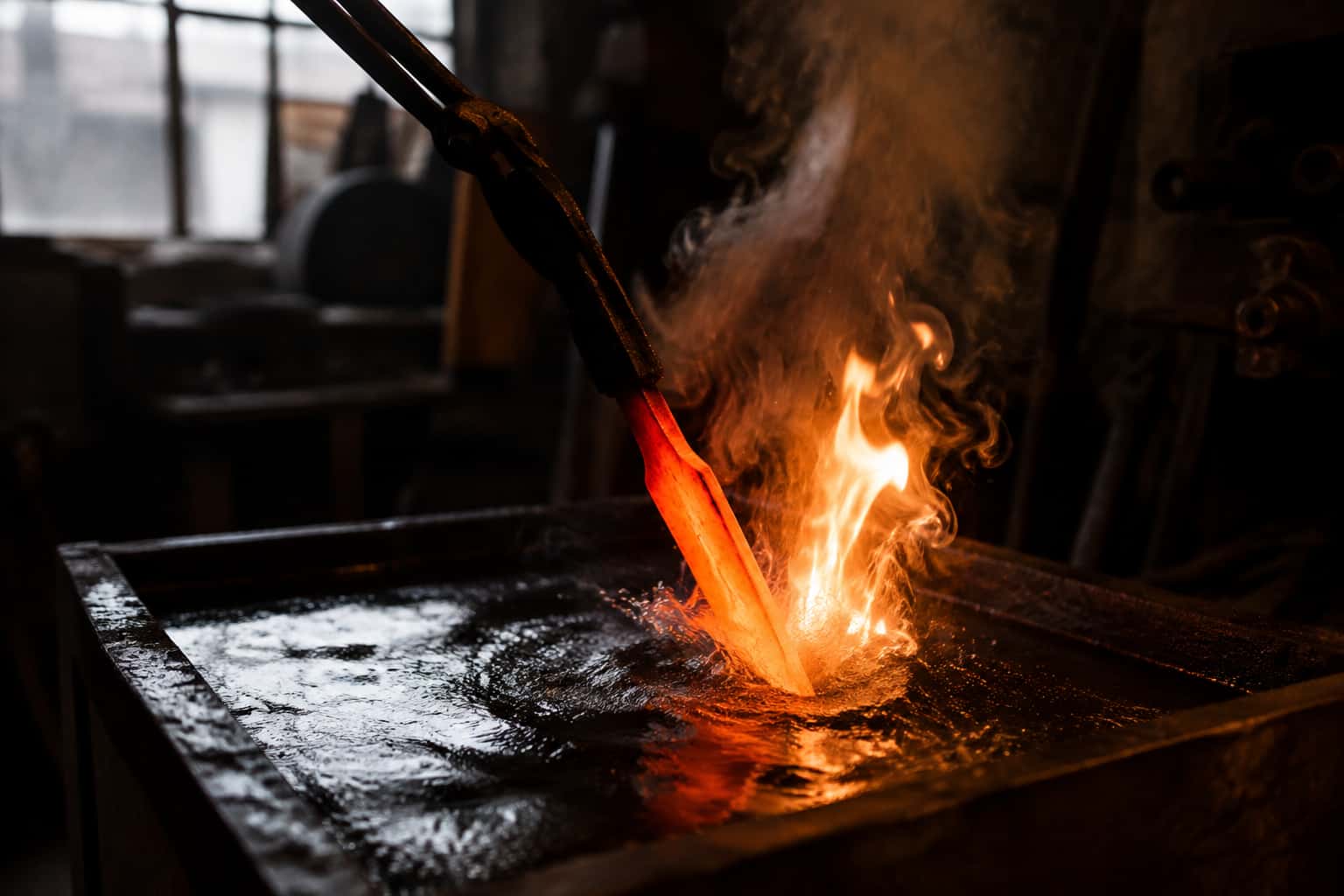
Quench oil has a flash point, and a blade quenched too hot or too fast can produce a brief flame at the surface of the tank. Always keep a metal lid sized to fully cover your quench tank within reach, so a flare-up can be smothered in seconds rather than left to burn. Keep the tank away from your heat source so you’re not carrying a hot blade far, and never quench near an open flame or a pilot light. Water and brine quenches don’t carry fire risk the way oil does, but they do produce sudden steam and splashing, keep your face and any exposed skin clear of the tank when the blade enters.
Propane setups need a leak check (soapy water on fittings, watching for bubbles) before every session, and should never be lit or run near open oil containers. Electric kilns carry electrical hazards on top of heat, keep them on a dedicated circuit and away from any moisture, including a nearby quench tank. Torches should be used with the tank secured upright and the work area clear of anything that could roll or fall into the flame path.
Know where your fire extinguisher is without looking, and know it’s rated for oil fires before you need it, not after. Keep a basic burn kit (cool running water access, burn gel, clean dressings) nearby, since minor burns are the most common heat-treat injury. If you heat treat alone, keep a phone within reach, not across the shop, in case you need help fast.
Yes. A standard Class A extinguisher isn’t rated for burning oil and using one on an oil fire can spread it. Look for a Class B or Class K rating, or keep a metal lid ready to smother small flare-ups before they need an extinguisher at all.
Only with real ventilation, an open garage door and moving air, not a closed room. Carbon monoxide from propane and fumes from hot oil both build up fast in a sealed space with no symptoms until it’s a real problem.
It’s not strictly required for every method, torch work on small blades is lower-risk than a full forge, but it’s cheap insurance against sparks and splashes and worth having before you need it rather than after.
Keep reading
Three more from the same bench.
Heat treating is what turns a piece of flat bar stock into a functional knife blade. Done correctly, it transforms the steel’s internal crystal structure…
It’s easy to look at a fully outfitted professional shop and assume you need all of it to make your first knife. You don’t. Here’s what actually matters…
Most beginner knifemaking problems trace back to a handful of repeat mistakes, not bad luck or bad steel. Here are the ones that trip up new makers most…
Same bench
I machine the parts, hand-assemble, track and test Torus grinders in Sterling, Illinois. Most orders ship in seven to ten business days from time of order.
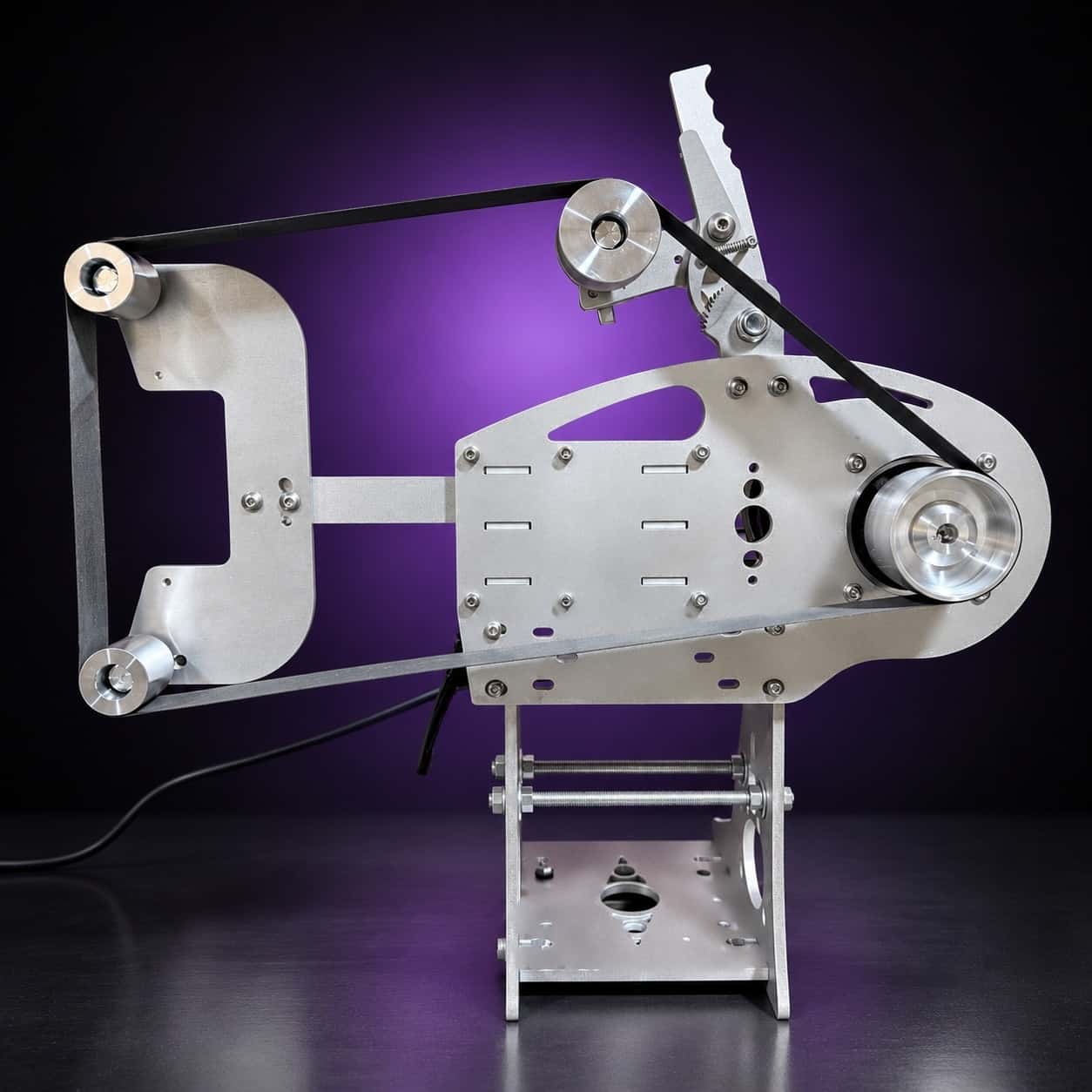
Current dual-axis platform with a fiber-laser-cut 6061 chassis and single-knob tracking.
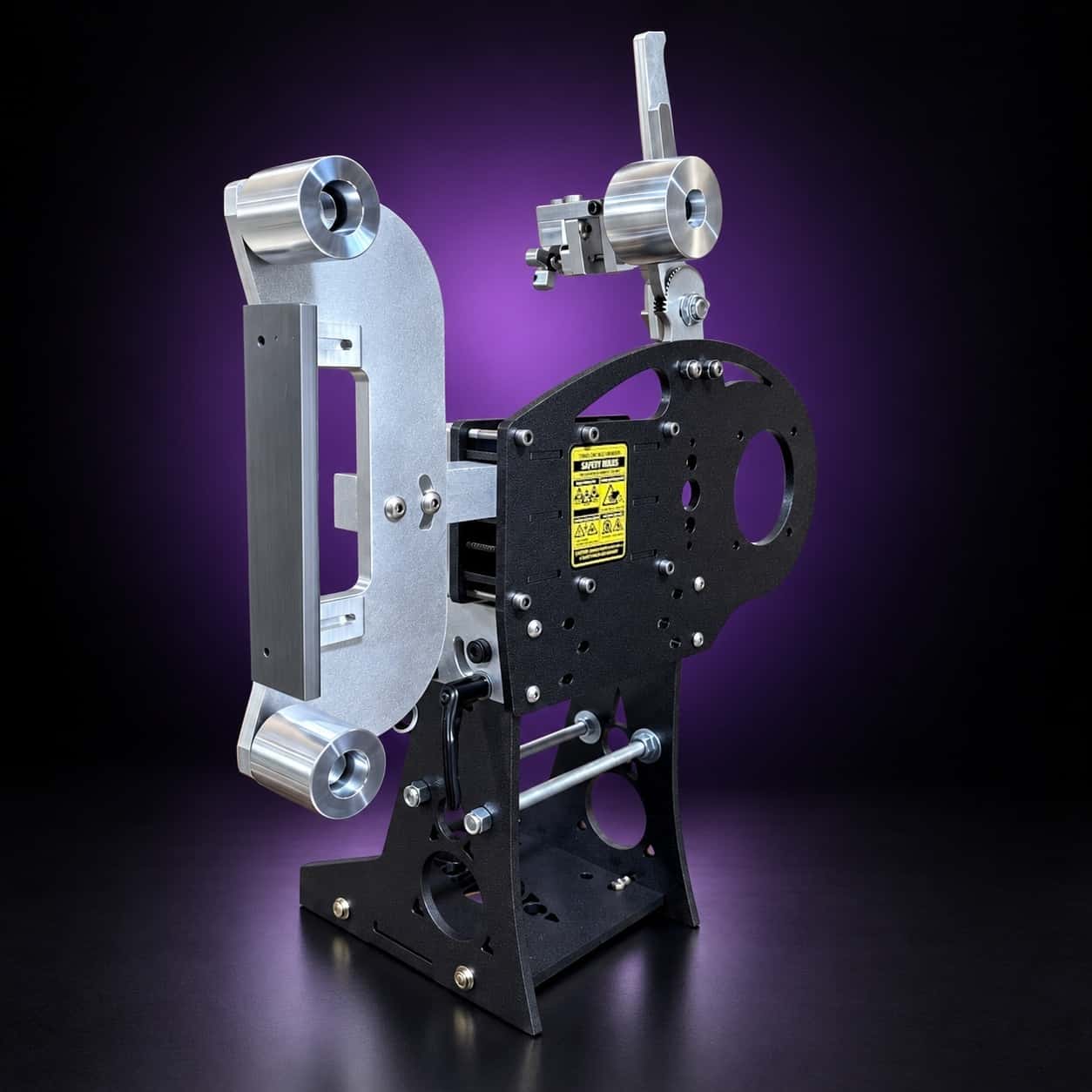
Current dual-axis platform with a steel chassis, more mass and less vibration.
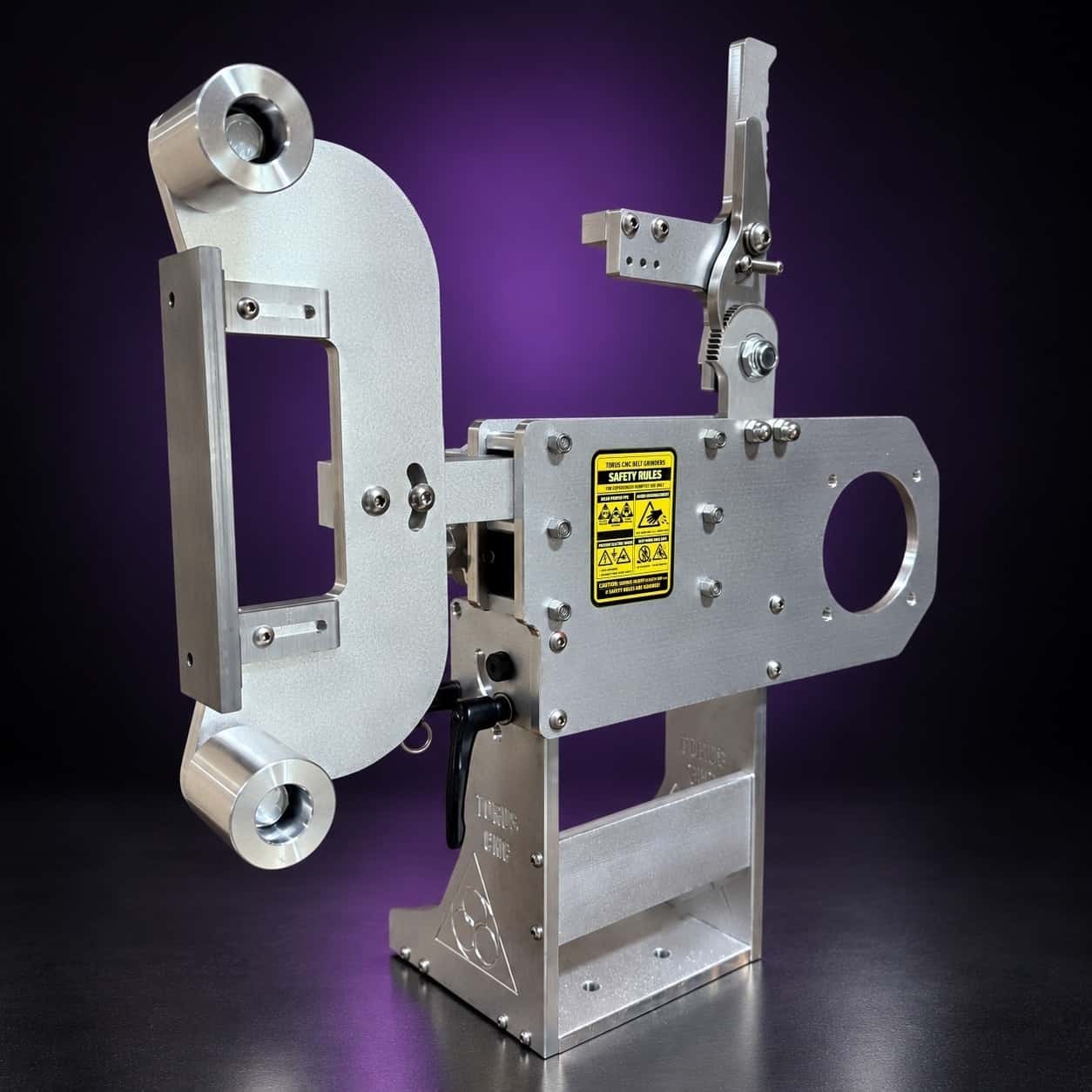
Prior-design aluminum chassis, 90-degree tilt and 1.5-inch tooling arms.
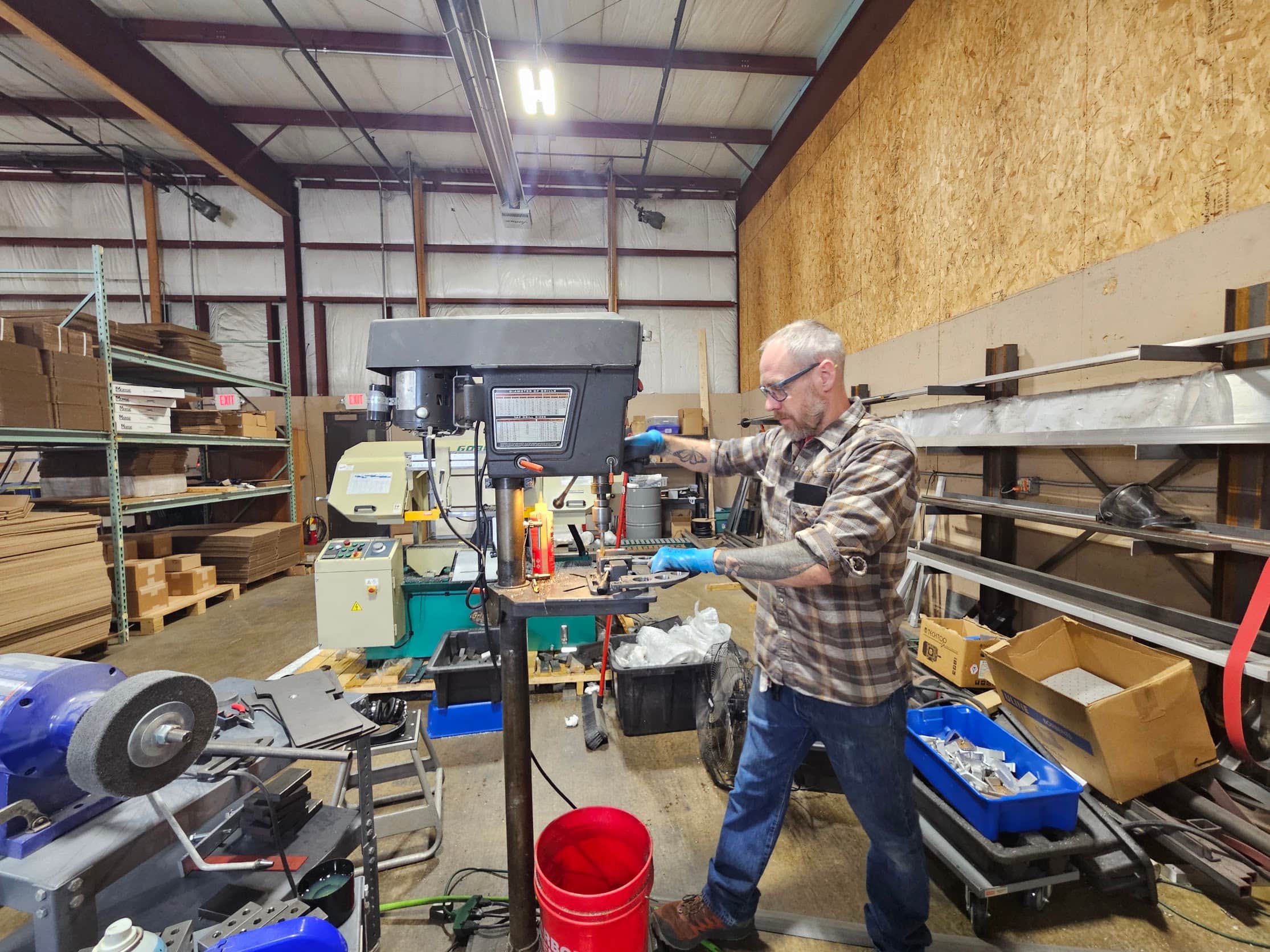
One-man shop
I answer my own email. Tell me the steel, the machine and what it is doing, and I will tell you what I would try next.