
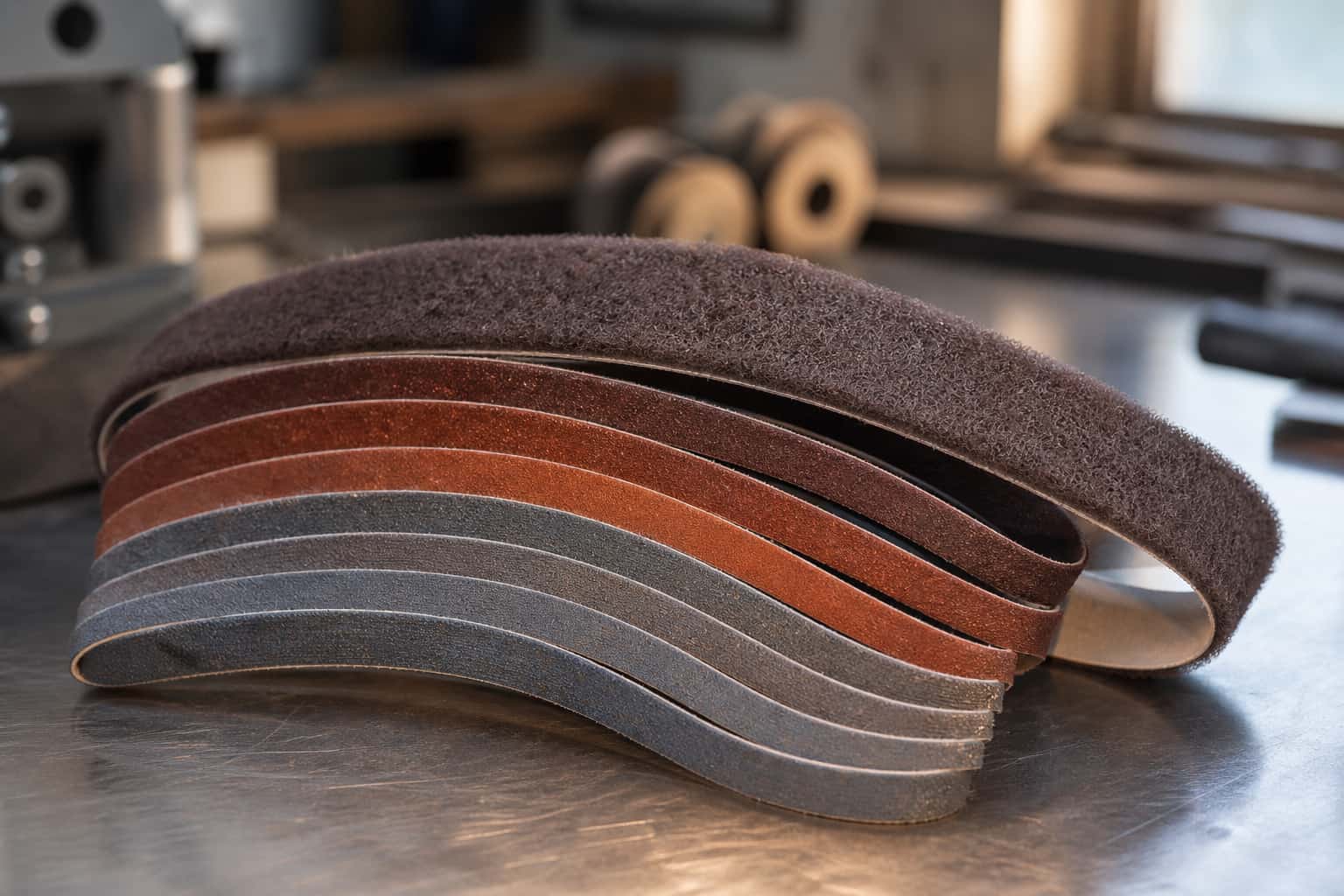
Abrasives
Grinding and Sharpening Elmax: Belt Recommendations & Technique
Elmax sits in the moderately demanding middle tier of powder-metallurgy stainless steels, tougher and easier to work than harder-edged steels like CPM…
Knife steel
A premium powder-metallurgy stainless steel from Bohler-Uddeholm, balancing strong edge retention with good stainless corrosion resistance and easier sharpening than most steels in its performance class.
Also known as
At a glance
The four meters are relative to the rest of the database. Composition is the published nominal analysis, not a mill certificate for your bar.
Working properties
A strong all-around choice for EDC and outdoor knives where good stainless corrosion resistance and strong edge retention both matter, including humid climates and wet work that gets dried afterward. It is not a saltwater steel, so look at LC200N or Vanax for constant salt exposure. Browse more entries in the Knife Steel Database, and see the Heat Treating Guide for the full stage-by-stage process.
At the bench
Open the property you are worried about. Every note is written for the blade in your hand, not for a spec sheet.
The full reference
Elmax is a third-generation powder-metallurgy stainless steel from Bohler-Uddeholm, built with high chromium, vanadium, and molybdenum content for a strong all-around balance of wear resistance, corrosion resistance, and toughness. Its fine, round carbides make it noticeably easier to sharpen than many other steels with this level of performance.
Uddeholm, the maker, publishes three different things. Its base cycle (1980°F austenitize, then its preferred 480°F or 980°F temper) gives 56-58 HRC; the 60 HRC (after 1920°F) and 61 HRC (after 1980°F) in its data sheet are as-quenched figures before tempering, not finished hardness. A cryogenic treatment right after the quench is part of its guideline and is expected to add 1-2 HRC (the data sheet says about 1-3 HRC for a 1-3 hour sub-zero treatment), which by our arithmetic puts a cold-treated knife at roughly 57-60 HRC; Uddeholm does not print that sum. Lower tempers are the other route: the data sheet allows 350°F only in exceptional cases for small simple parts, and its tempering graph reads by eye about 58-59 HRC at a 390°F temper and about 60 HRC near 210°F, which is below the 350°F minimum the data sheet gives (2010°F austenitize, small samples). We have not found a separately sourced knife-maker cycle for Elmax (Larrin Thomas’s CATRA chart on our MagnaCut vs Elmax page uses Elmax at about 61 HRC, with no cycle we can cite), so if a maker quotes 60 HRC or more, ask which cycle produced it (a cold treatment is within Uddeholm’s guidance; a temper below its preferred 480°F is allowed only in exceptional cases, 350°F at the lowest) and confirm the actual hardness with a test. See the heat treat details further up this page for the full recipe.
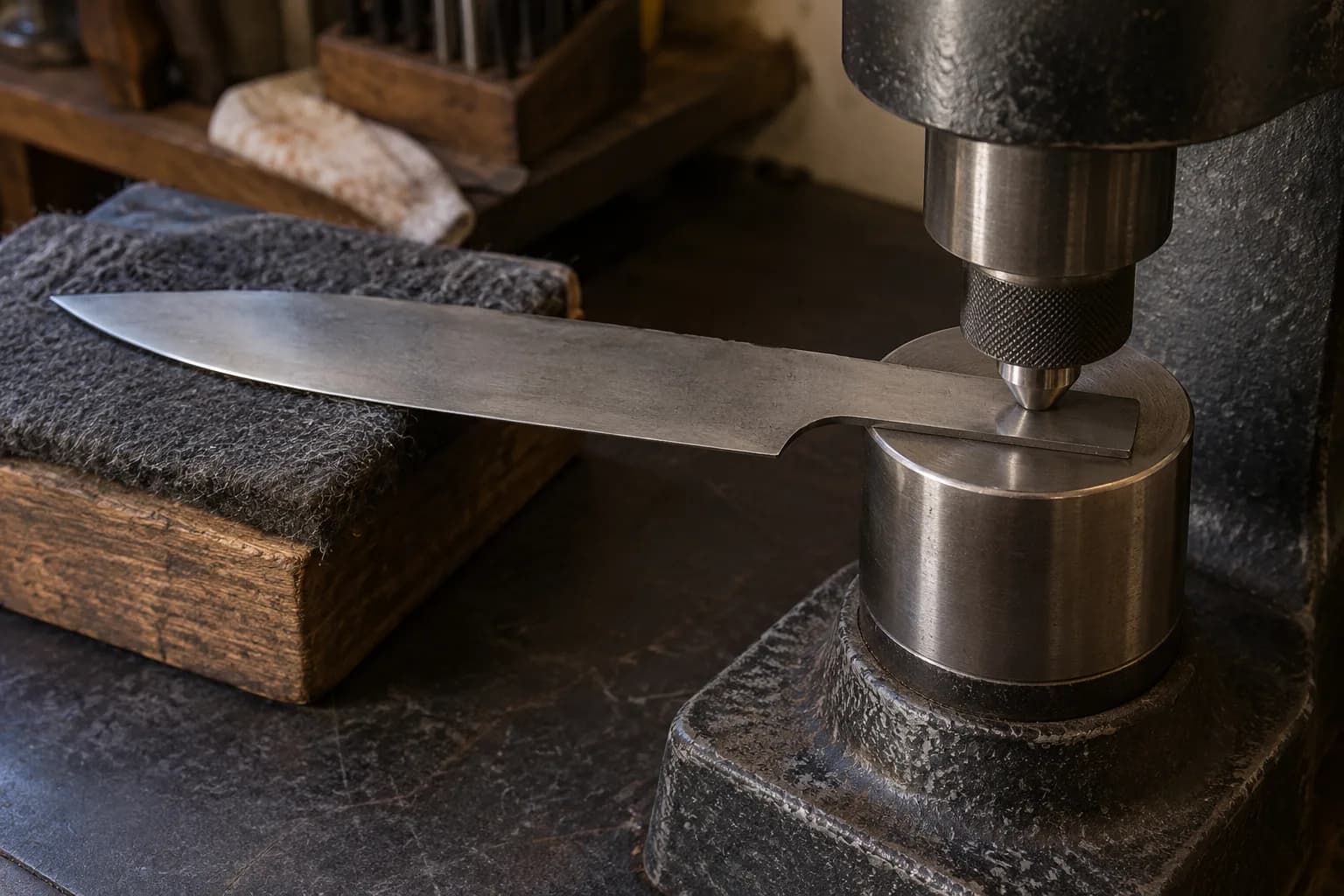
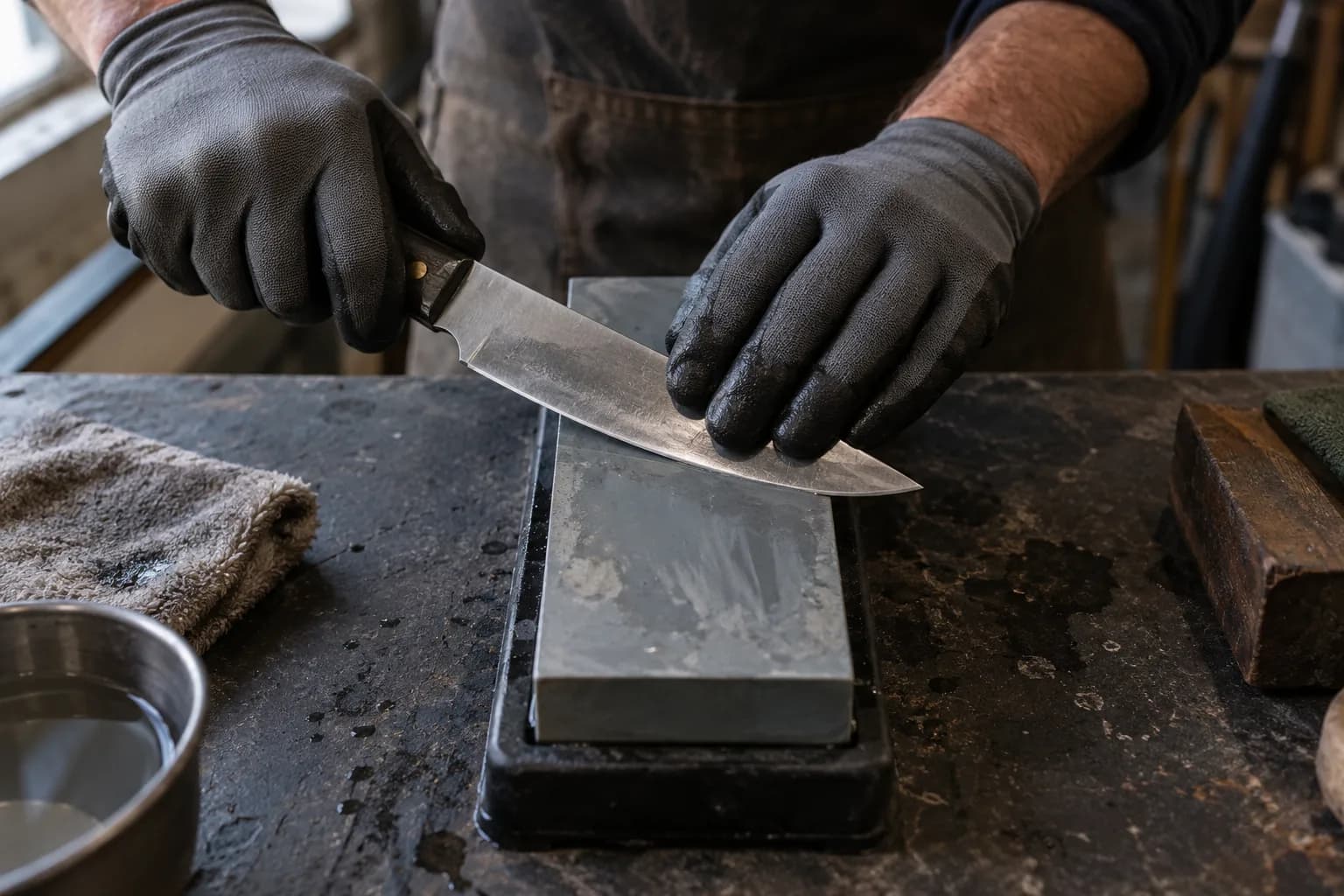
No, it is one of the easier premium powder-metallurgy steels to sharpen for its performance class, thanks to its fine, round carbide structure. See the full grinding and sharpening guide for belt recommendations.
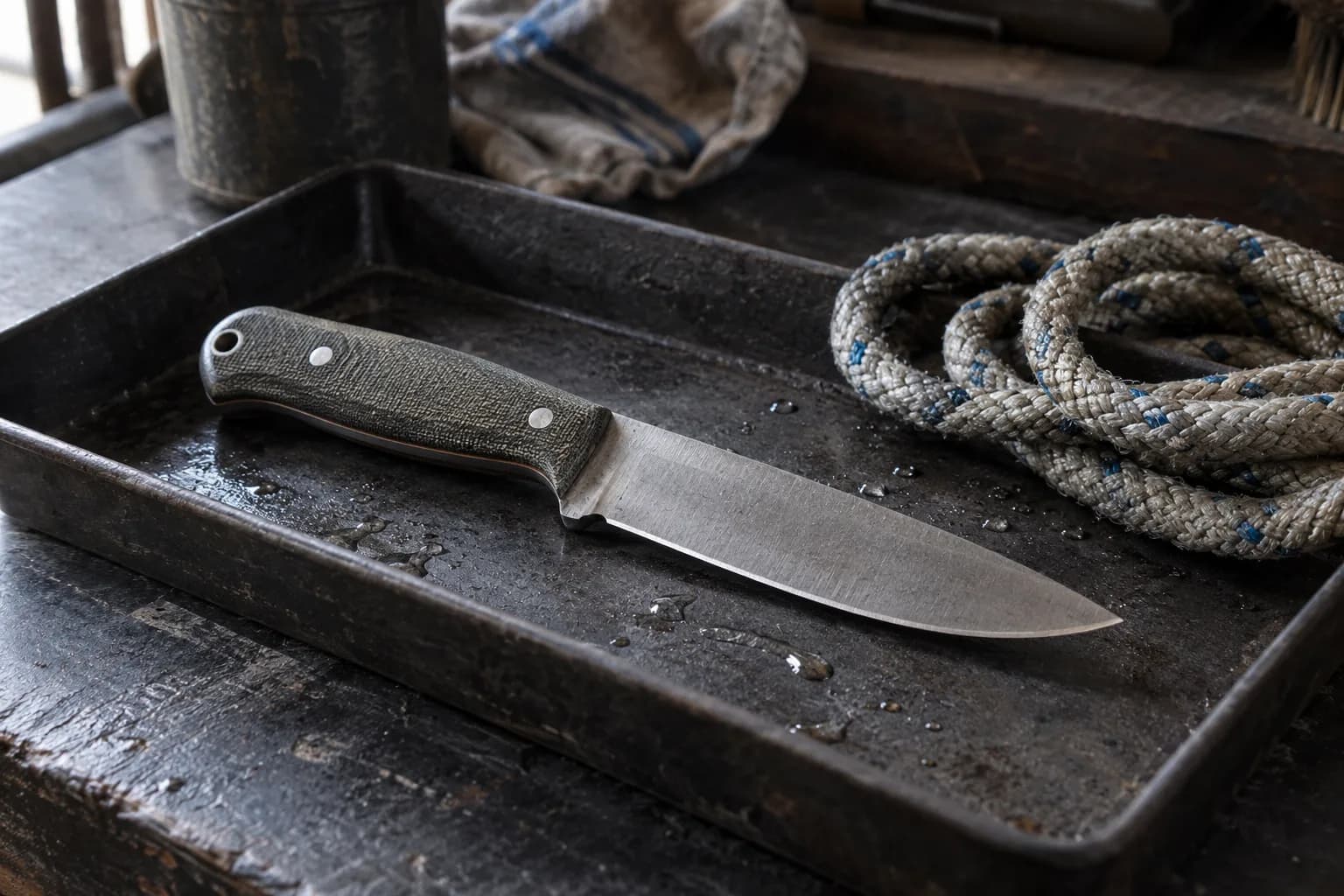
It can. Elmax is a good stainless steel, not a saltwater steel. Larrin Thomas rates it 8 out of 10 for corrosion resistance, a hair ahead of S35VN and S30V (7.5) and behind MagnaCut (9.5), 20CV (9) and LC200N (10), and in his 72-hour 1% saltwater test Elmax showed rust spots where MagnaCut showed none. Wipe it dry after wet, humid or salty use, and choose LC200N or Vanax for constant saltwater exposure.
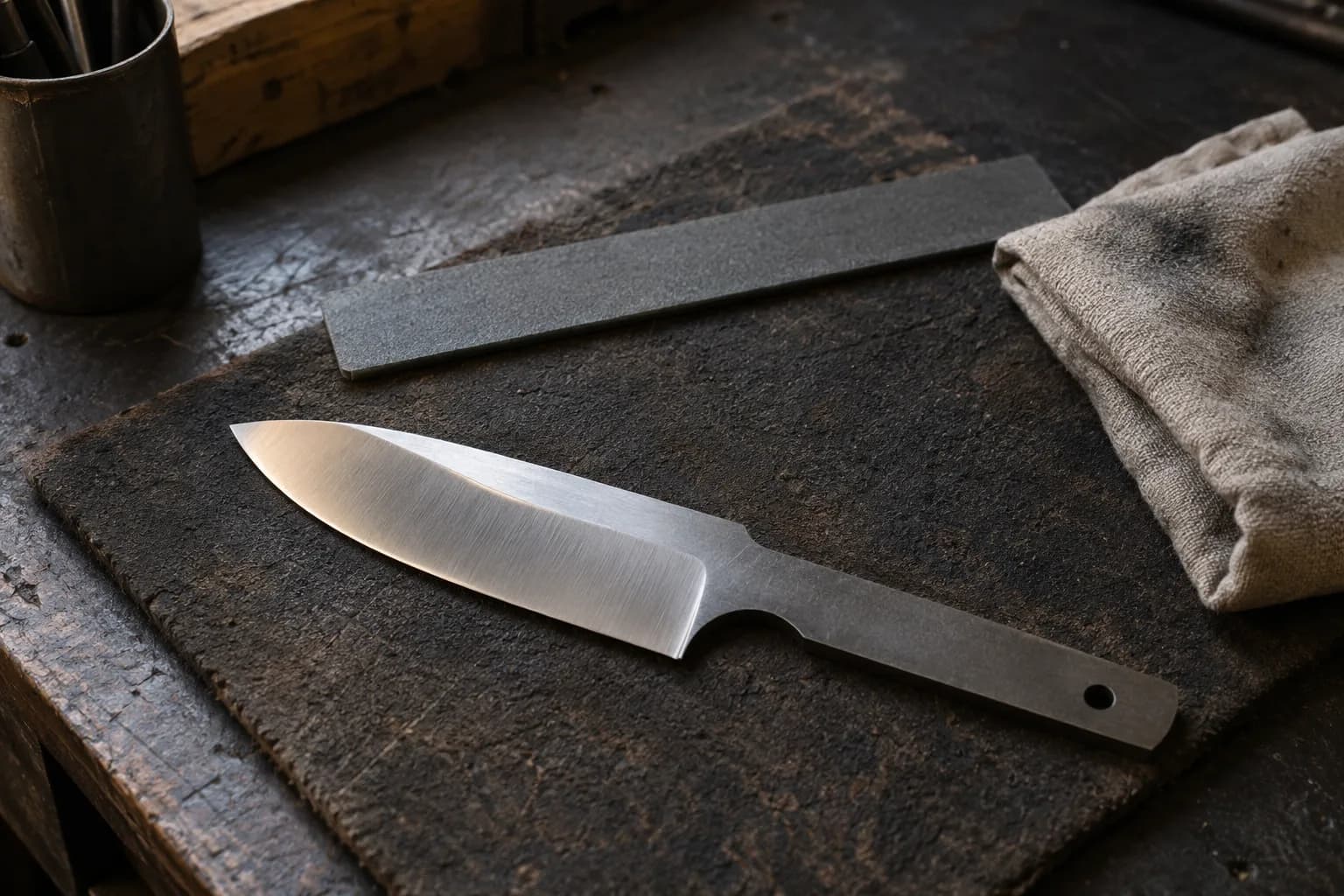
Elmax is tougher and easier to sharpen than CPM 20CV, and is a hair ahead of CPM S35VN on corrosion resistance (Larrin Thomas rates it 8 against 7.5 out of 10) while being nearly tied with it otherwise. See the full breakdowns: CPM 20CV vs Elmax and Elmax vs CPM S35VN.
Head to head
Every matchup Elmax appears in, dimension by dimension.
Keep reading
Elmax sits in the moderately demanding middle tier of powder-metallurgy stainless steels, tougher and easier to work than harder-edged steels like CPM…
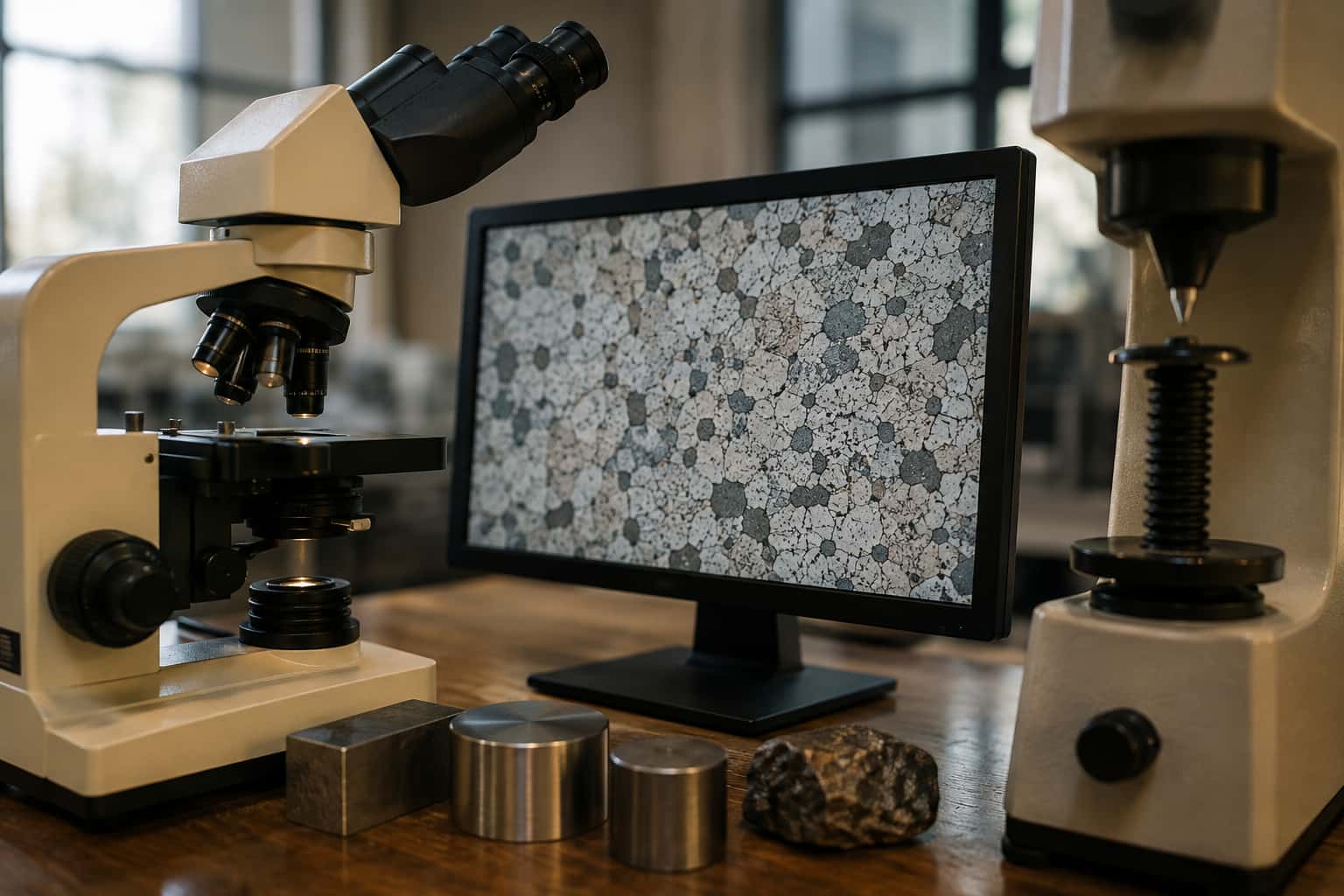
Every knife steel is iron plus a specific recipe of other elements, and each of those elements pulls the steel’s behavior in a particular direction…
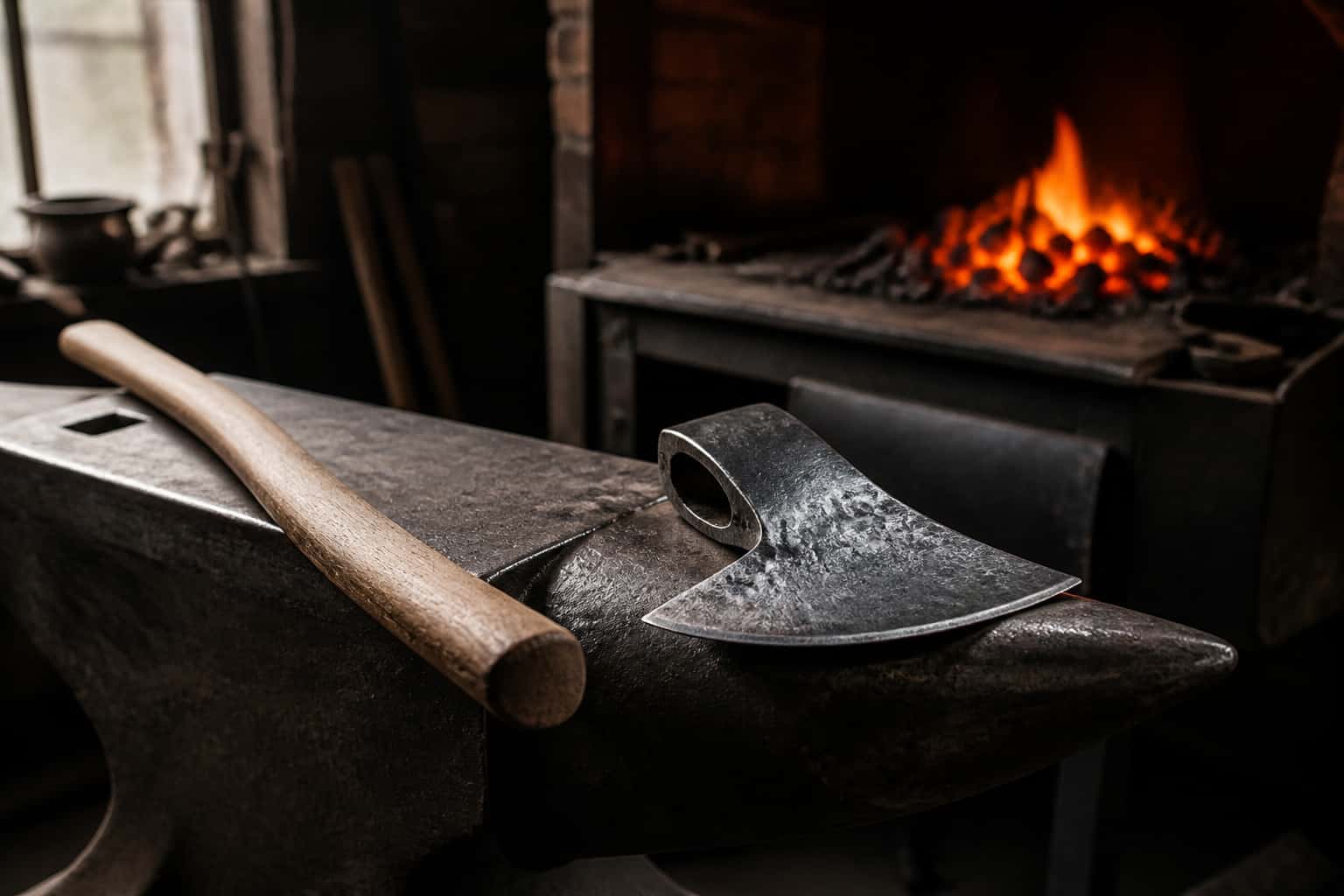
Two steels with similar hardness numbers can feel completely different under a sharpening stone, one glides along smoothly, another feels like it’s…
Same bench
Whatever the steel, the grind is only as flat as the platen behind it. I machine the parts, hand-assemble and test Torus grinders in Sterling, Illinois.
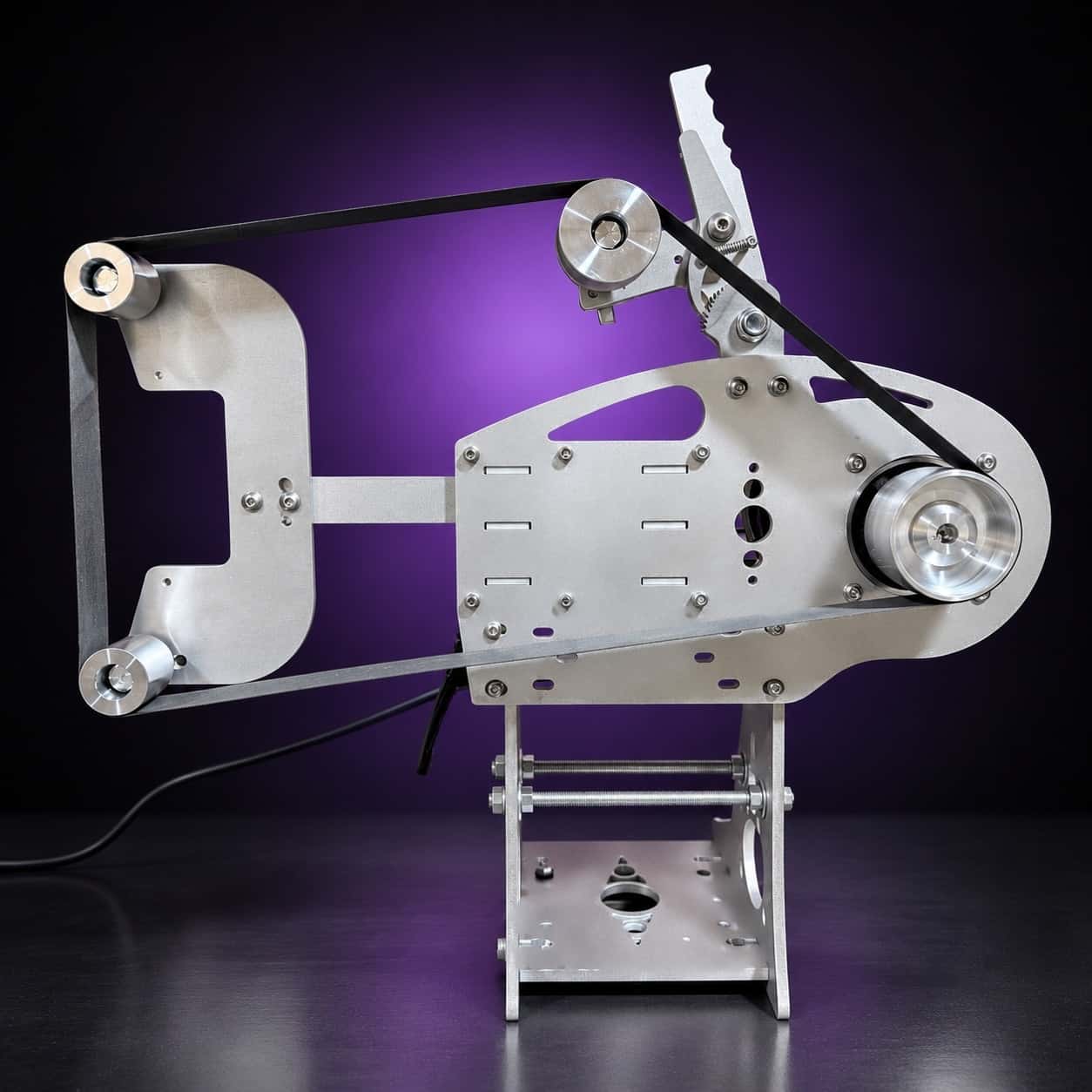
Current dual-axis platform with a fiber-laser-cut 6061 chassis and single-knob tracking.
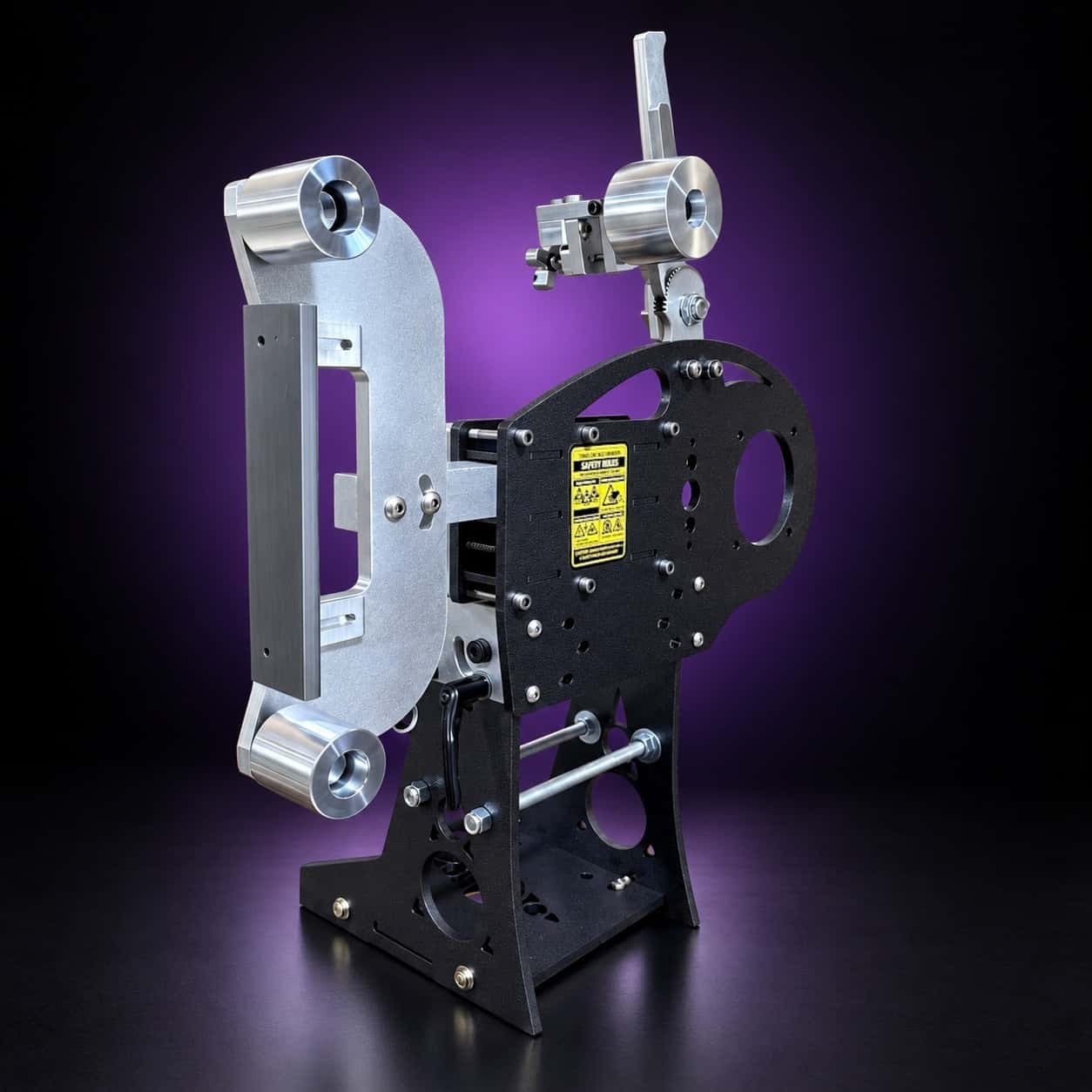
Current dual-axis platform with a steel chassis, more mass and less vibration.
These are the last Nebula chassis available until the next release. Once this run sells out, availability pauses until the next run is ready.
Next release: 10 more chassis expected Nov 17–Nov 24 (3–4 weeks from Oct 27).
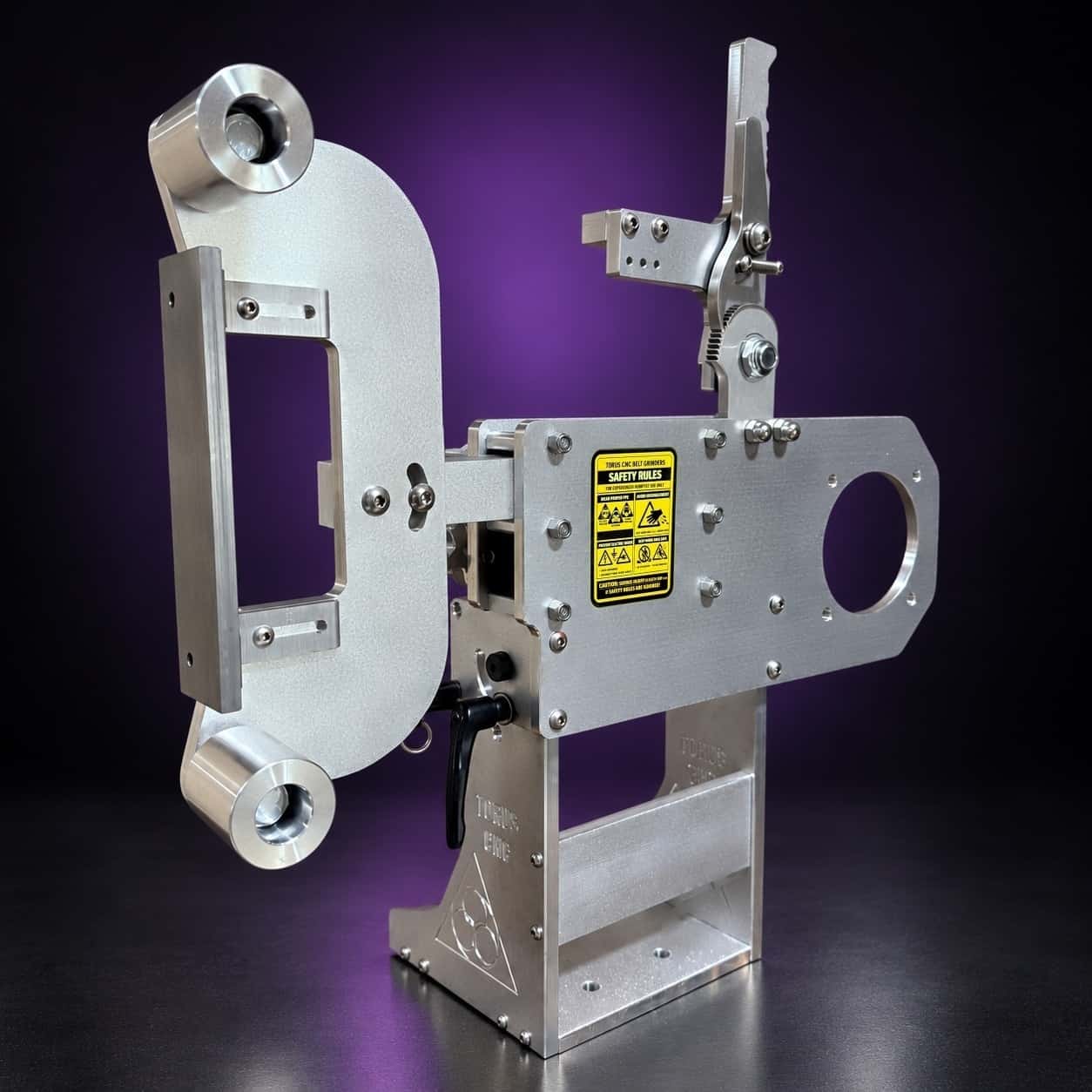
Prior-design aluminum chassis, 90-degree tilt and 1.5-inch tooling arms.
One-man shop
Tell me what the blade is for and how you heat treat. I will tell you whether this is the steel I would use, and what I would use instead.