Knife steel selection in a working knife shop

Steel matchup

Elmax vs CPM S35VN

Elmax and CPM S35VN, compared on the five things that decide a blade: toughness, edge retention, corrosion, heat treat and how each one grinds.

  • Bohler Elmax

A premium powder-metallurgy stainless steel from Bohler-Uddeholm, balancing strong edge retention with excellent corrosion resistance and easier sharpening than most steels in its performance class.

  • Carbon (C)1.70%
  • Chromium (Cr)18.00%
  • Vanadium (V)3.00%
  • Molybdenum (Mo)1.00%
Toughness
4 / 5
Edge retention
4 / 5
Corrosion resistance
5 / 5
Ease of grinding
3 / 5
  • S35VN

A refined, well-balanced powder-metallurgy stainless steel from Crucible, offering dependable all-around performance across toughness, edge retention, and corrosion resistance.

  • Carbon (C)1.40%
  • Chromium (Cr)14.00%
  • Vanadium (V)3.00%
  • Molybdenum (Mo)2.00%
Toughness
4 / 5
Edge retention
4 / 5
Corrosion resistance
4 / 5
Ease of grinding
3 / 5
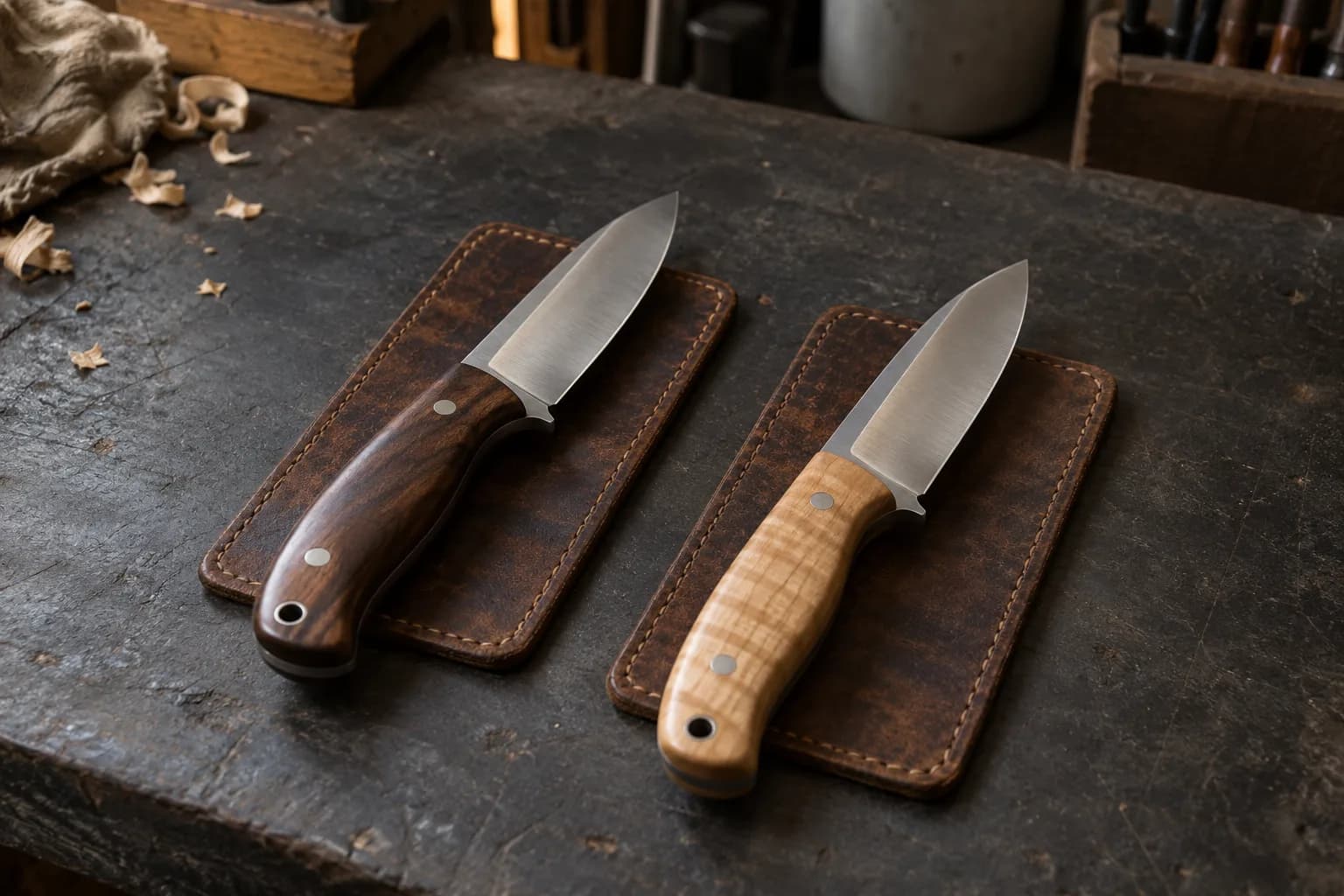
Two satin-finish drop-point knives, one with a dark walnut handle and one with pale curly maple, on separate leather pads on a bench.

Dimension by dimension

Where they actually differ

Each steel's own note, its score out of five, and what separates the two in that one column. The higher score in a row is marked in purple.

DimensionElmaxCPM S35VNWhat separates them
Toughness4/5Fine, round carbides from the powder-metallurgy process give it good toughness for a high-carbide steel, with minimal risk of edge chipping when hardened correctly.4/5Noticeably tougher than its predecessor S30V, thanks to niobium carbides replacing some of the vanadium carbide load, one of the better toughness figures among premium powder-metallurgy stainless steels.Tied. Both use a fine, round powder-metallurgy carbide structure that gives good resistance to chipping for steels in this performance class.
Edge retention4/5Strong wear resistance from a heavy vanadium and chromium carbide load, holding an edge well in everyday-carry and outdoor use.4/5Strong, dependable edge retention, slightly below S30V's, but still well ahead of basic stainless steels like 420HC or AEB-L.Tied. Both offer solid, dependable wear resistance without leading the field in either direction.
Corrosion resistance5/518% chromium puts it among the best corrosion resistance of any premium knife steel, a strong choice for marine or wet environments.4/5Nearly identical to S30V and considered very good for a high-performance stainless, suitable for kitchen, marine, and everyday-carry use.Elmax holds a real advantage here, with roughly 18% chromium versus S35VN's 14%, making it the better choice for wet, humid, or marine environments.
Heat treatAustenitize at 1975-2050 F (1080-1120 C). Air or plate quench, then apply a cryogenic treatment (liquid nitrogen or dry ice) before tempering to reduce retained austenite and boost hardness. Double temper at 350-400 F for 2 hours per cycle. Maximum working hardness is around 62 Rc, though most production knives run 60-61 Rc.Preheat at 1550-1600 F, then austenitize around 1900-2025 F for 15-30 minutes. Plate quench, followed by a cryogenic treatment (liquid nitrogen, at least 30 minutes) for best properties. Double temper at 300-400 F for 2 hours per cycle: 300 F favors maximum hardness (60+ Rc), while 400 F trades some hardness for added toughness. This combination gives S35VN's well-rounded, dependable performance without any single weak point.Both use broadly similar heat-treat windows (roughly 1900-2050 F austenitize with a cryogenic treatment and double temper), so neither is meaningfully harder to heat treat than the other at the shop level.
Grinding3/5One of the easier premium powder-metallurgy steels to sharpen for its performance level, though still slower to grind than basic stainless steels.3/5Easier to grind than S30V, a deliberate improvement in the alloy design, but still a powder-metallurgy steel that wears belts faster than simple carbon or basic stainless steels.Comparable. Both are moderately demanding powder-metallurgy steels that grind similarly and are easier to work than harder-edged steels like CPM S30V or CPM 20CV.
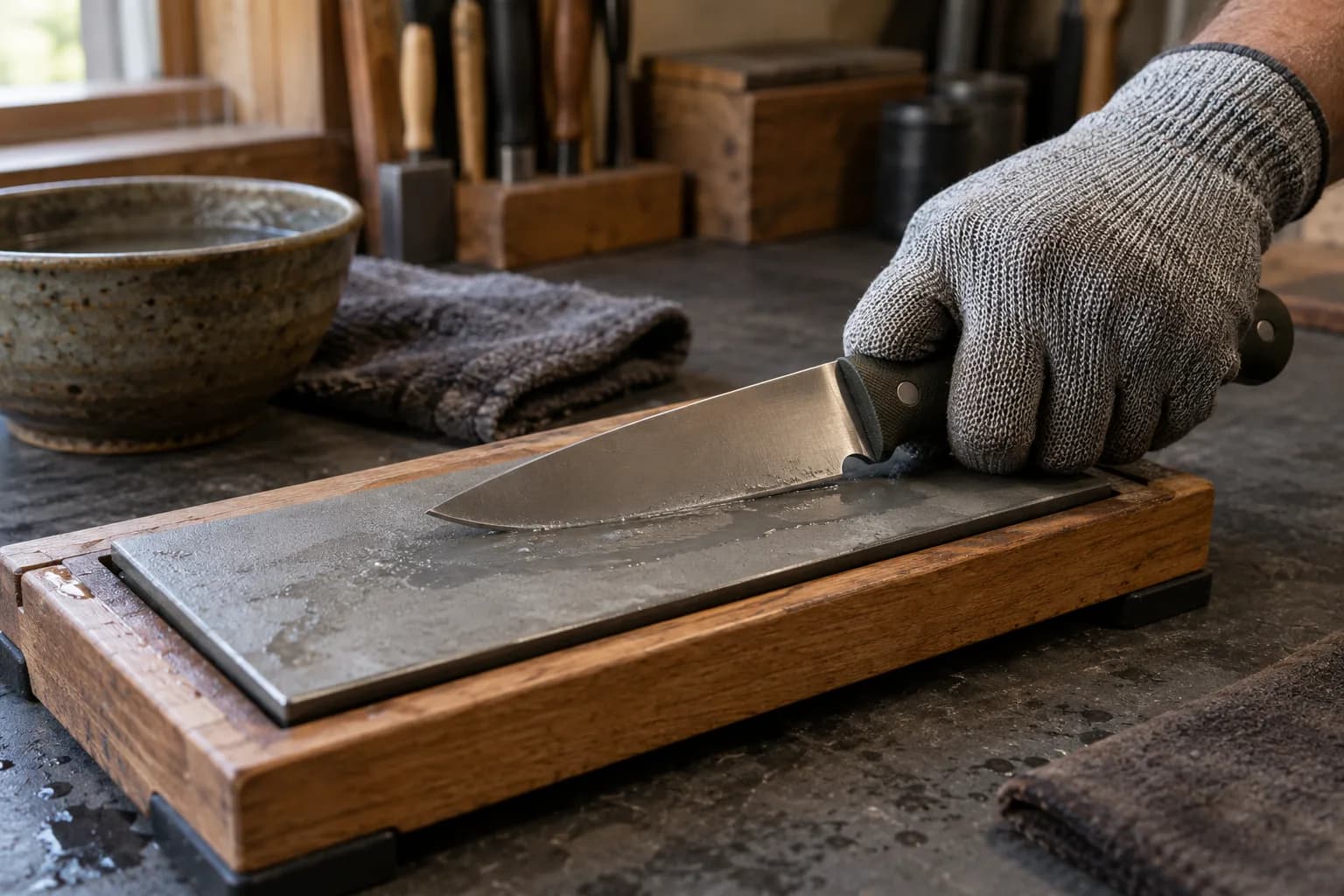
Gloved hand holds a knife with its edge on a wet gray sharpening plate set in a wooden holder, with a water bowl and towel behind.

Best use

Which one goes on your bench

Elmax

Choose Elmax when corrosion resistance is a slightly higher priority, such as marine or humid-climate use.

Open the Elmax reference

CPM S35VN

Choose CPM S35VN for general EDC and hunting knives where either steel would perform well and availability or cost tips the decision.

Open the CPM S35VN reference
Same grinder, same belts — the steel is the variable.
Fixed-blade knife with a black handle on a dry mat beside a steel tray of damp coiled rope and a folded cloth.

The long answer

Why the difference exists

Elmax and CPM S35VN both occupy the same well-rounded, no-major-weakness tier of premium stainless steel, one from Bohler-Uddeholm and one from Crucible. They land close enough in toughness and edge retention that the deciding factor for most buyers comes down to corrosion resistance and availability.

Full-tang knife blank with pin holes resting in a worn wooden cradle, with two dark wood handle scales on the bench beside it.

Keep reading

Guides behind this comparison

Same bench

Both steels still meet the belt

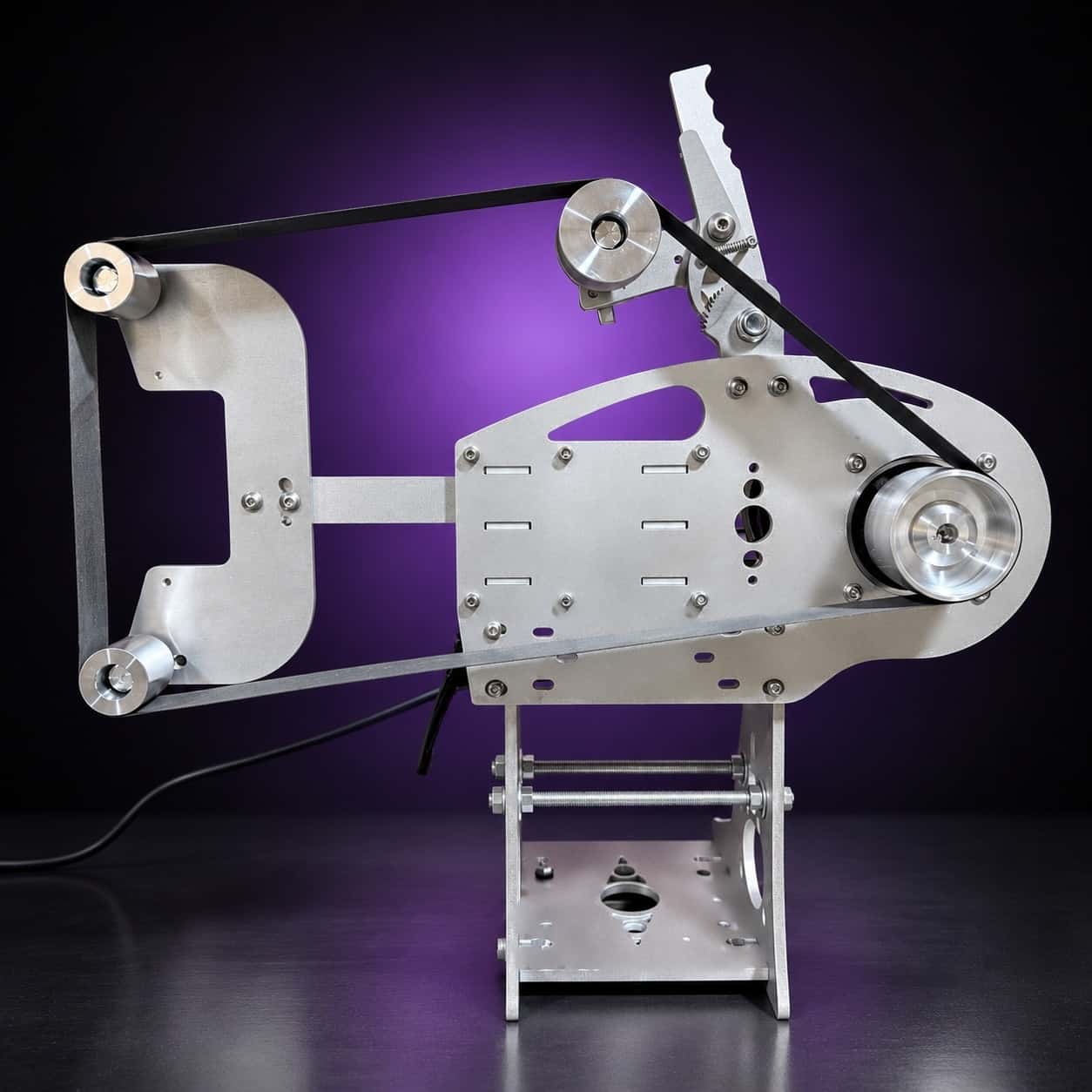
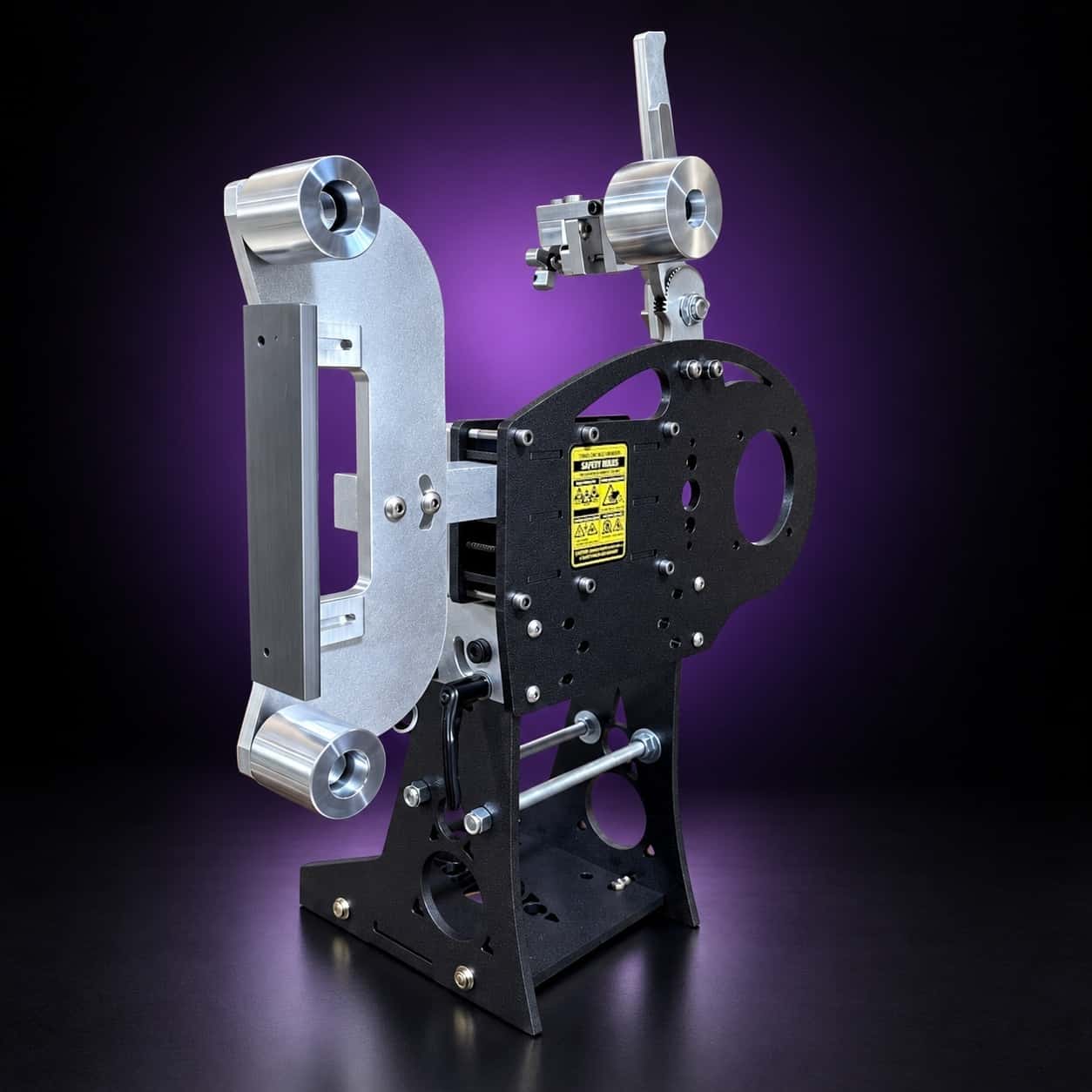
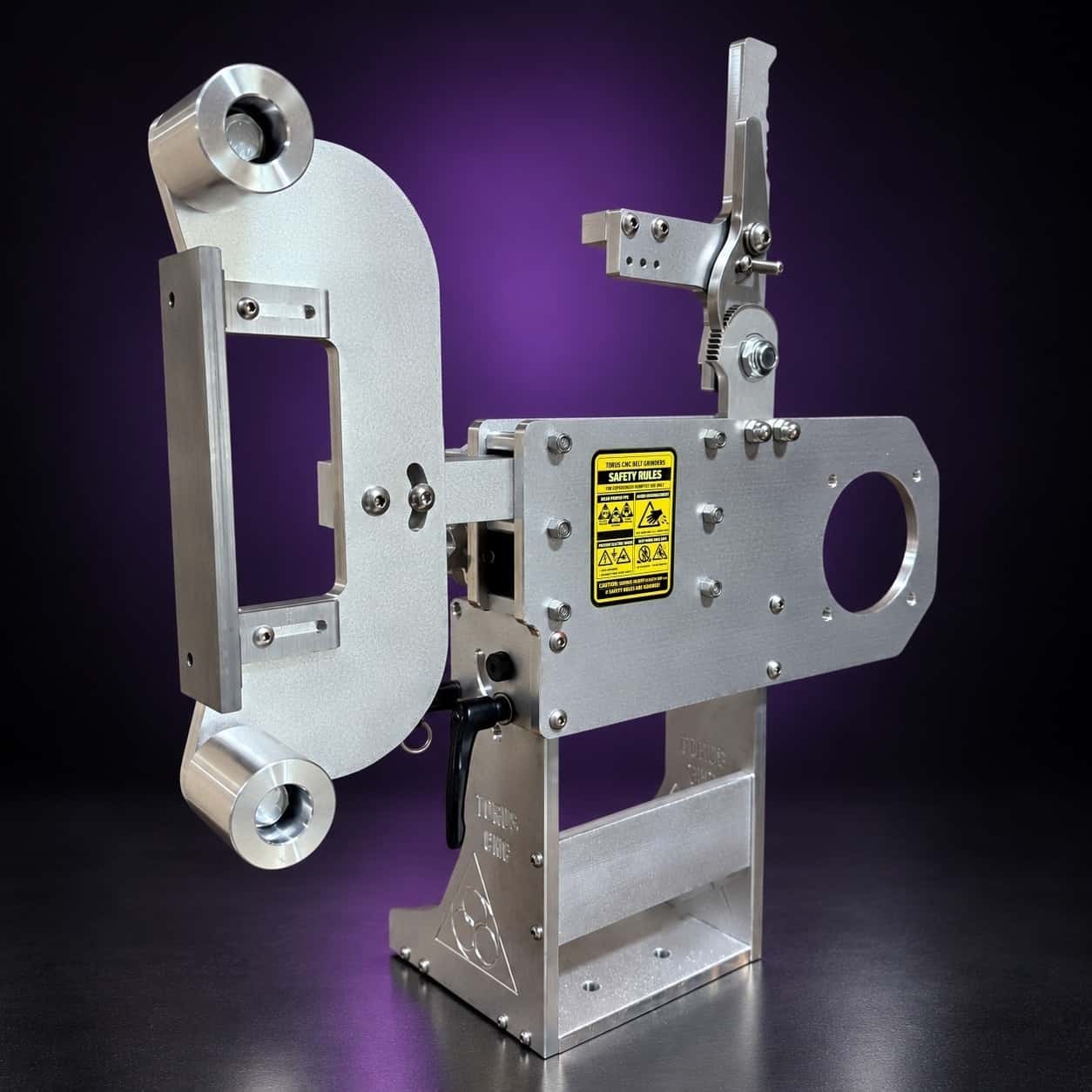
Whichever steel wins, the grind is only as flat as the platen behind it. I machine the parts, hand-assemble, track and test Torus grinders in Sterling, Illinois.

  • Classic aluminum 2x72 grinder, side view with flat-platen tool arm and yellow Safety Rules label, on black with a purple glow

    Torus 2×72 Classic Aluminum Belt Grinder

    Prior-design aluminum chassis, 90-degree tilt and 1.5-inch tooling arms.

    Starts at$995View

One-man shop

Still torn between the two?

Tell me what the blade is for and how you heat treat, and I will tell you which of these I would put on the bench — including when the answer is neither.