
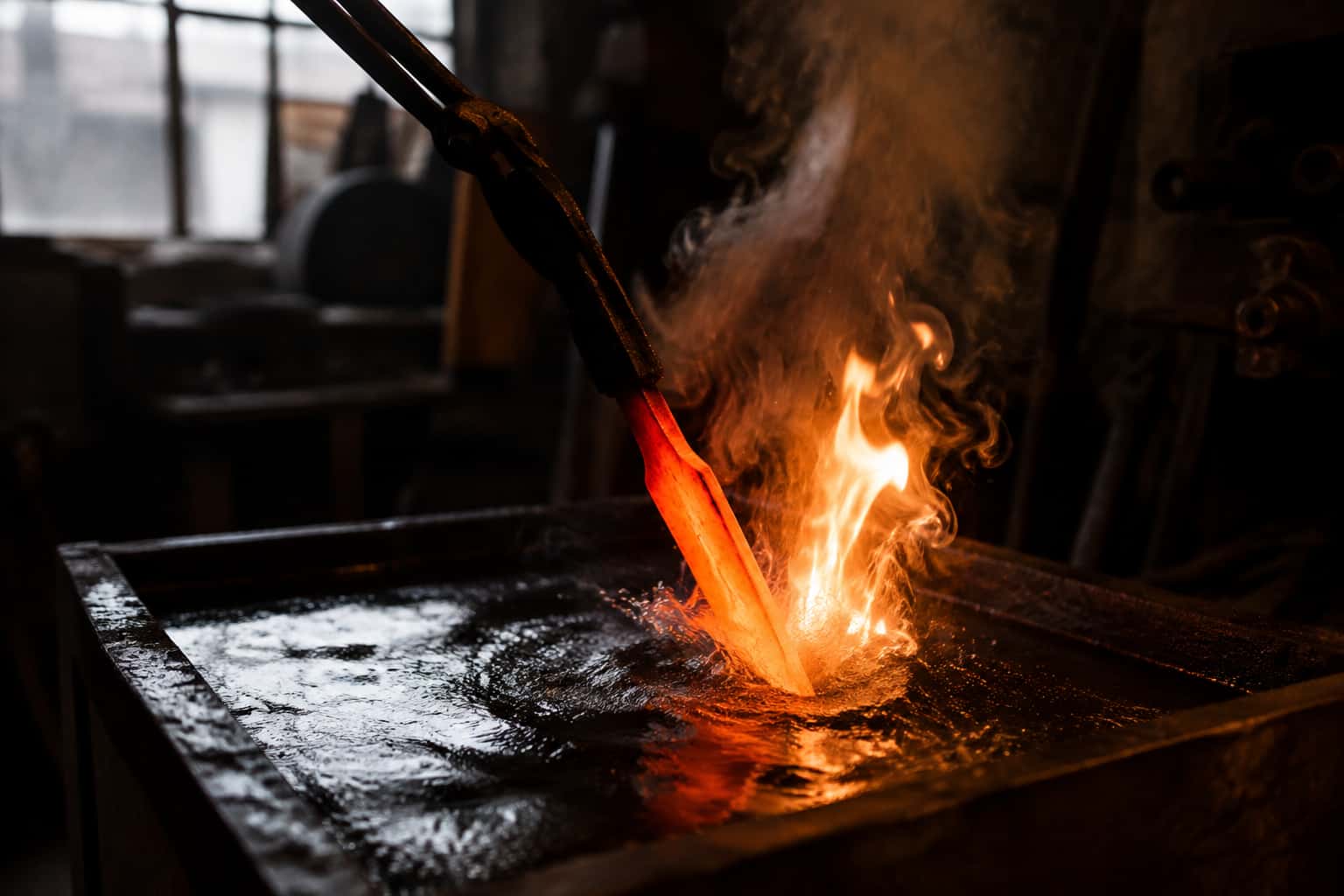
Heat Treat
Heat Treating Knife Steel: Complete Guide
Heat treating is what turns a piece of flat bar stock into a functional knife blade. Done correctly, it transforms the steel’s internal crystal structure…
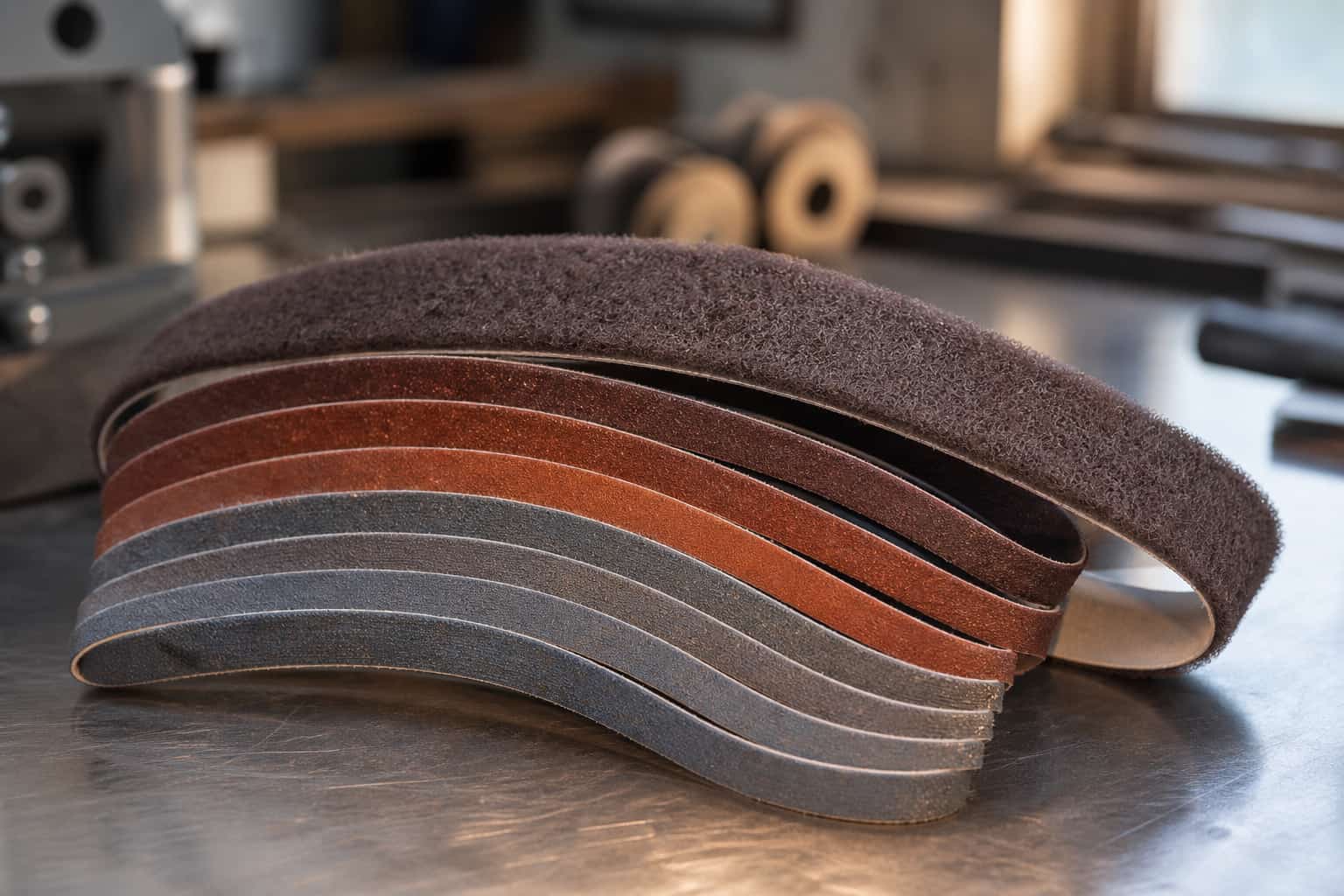
Abrasives
Belt recommendations, grit progression, and sharpening tips for grinding MagnaCut on a 2x72 belt grinder. Free guide from Torus CNC's ForgeBrain.
2 min readWritten by Rich LinvilleFree to read
MagnaCut is one of the more demanding steels to grind on a 2×72 platform. Its heavy carbide load, the same chemistry that gives it excellent toughness and wear resistance, also means it dulls and loads abrasive belts faster than simple steels like AEB-L or 52100. Most makers report going through roughly double the belts compared to easier stainless steels, so it pays to know what actually works before you start profiling a blank.
Ceramic belts are the clear choice for stock removal on MagnaCut. They hold their cut rate far longer than zirconia or aluminum oxide belts when working hard, high-carbide steel, even though they cost more up front. Experienced MagnaCut grinders consistently point to VSM ceramic belts (880, 885, or XK870 series) as a strong freehand option, generally outperforming aggressive belts like 3M Cubitron 984F in freehand work, since those need very high speed and heavy pressure to perform well and are better suited to automated grinding setups.
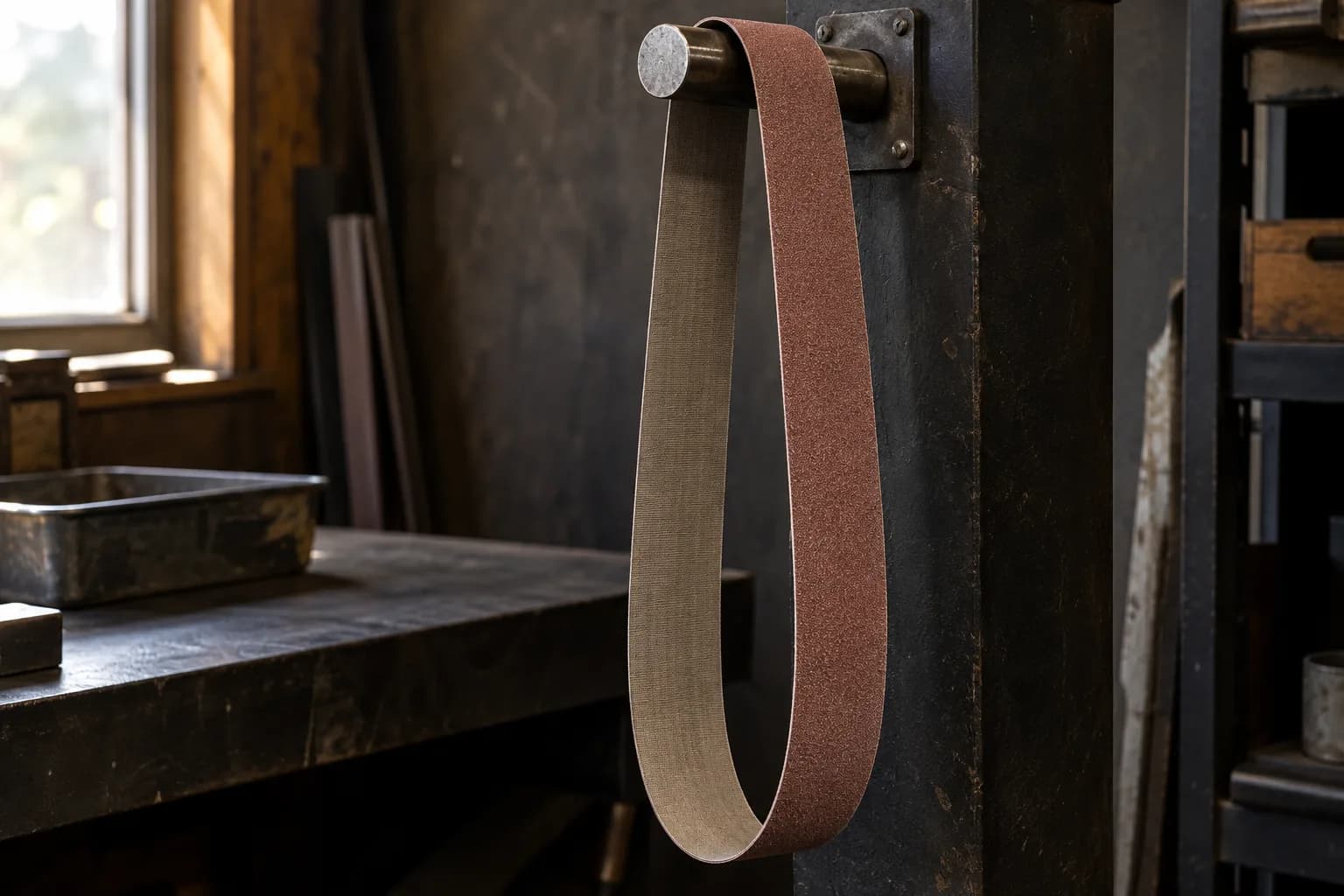
Start coarser than you might expect: 50 grit is a better starting point than 36 grit for freehand profiling, since it holds an aggressive edge longer under lighter, controlled pressure. A practical progression after heat treat looks like:
| Stage | Grit |
| Profiling / heavy stock removal | 50 |
| Bevel refinement | 60 |
| Pre-finish | 80 |
| Finish grinding | 120 |
Some makers pre-grind bevels at 50 grit before heat treating, then do final finish work afterward, which spreads the belt wear across two easier grinding sessions instead of one long push on fully hardened steel.
Run higher belt speed with short, light passes rather than trying to force material off with heavy, slow strokes. MagnaCut tends to clump and load belts quickly, so keep a belt eraser or dressing stick within reach and clean the belt often rather than waiting until it feels dull. A generous coolant mister is worth running throughout the grind, both to prevent overheating the edge and to help keep the belt from loading up with swarf.
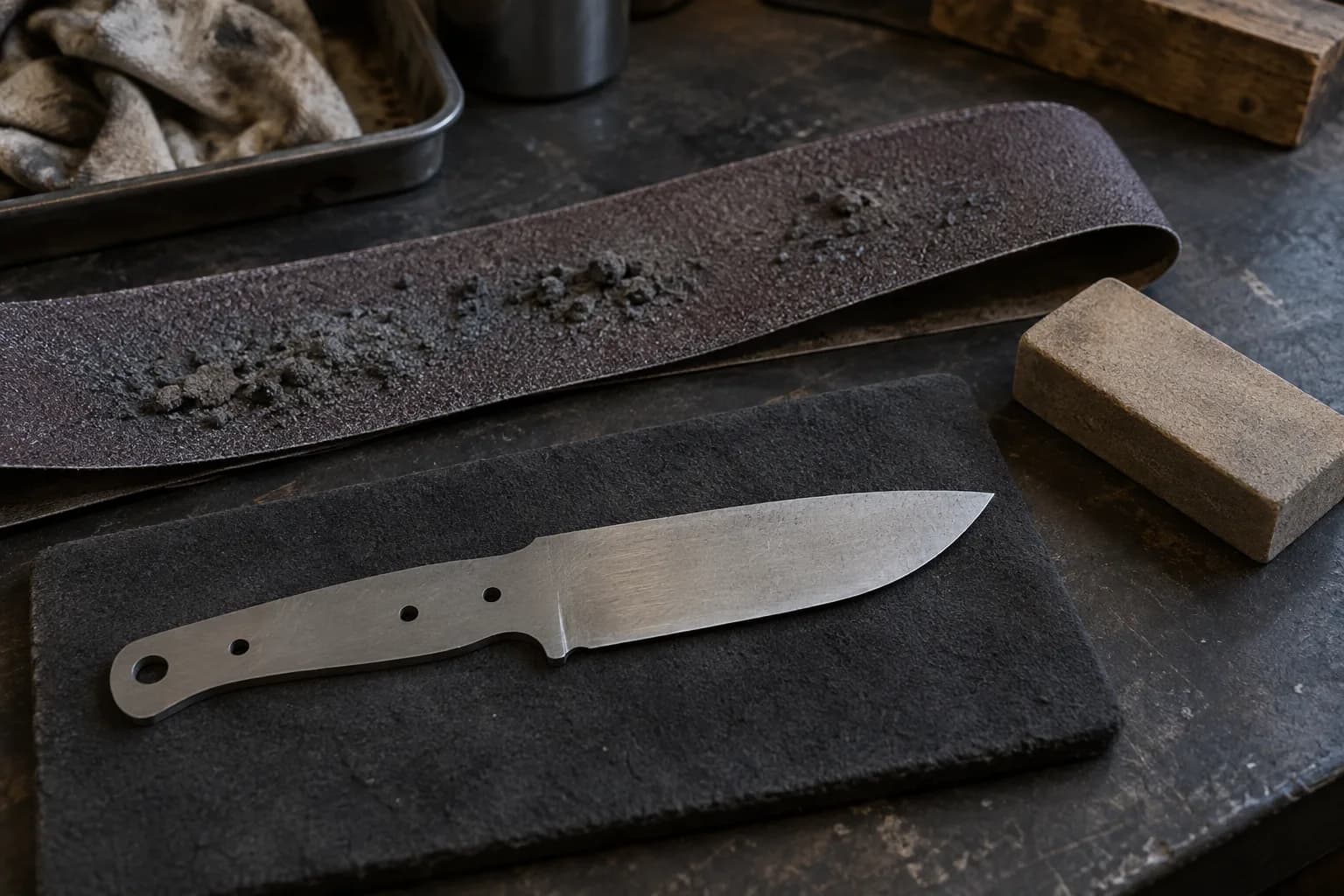
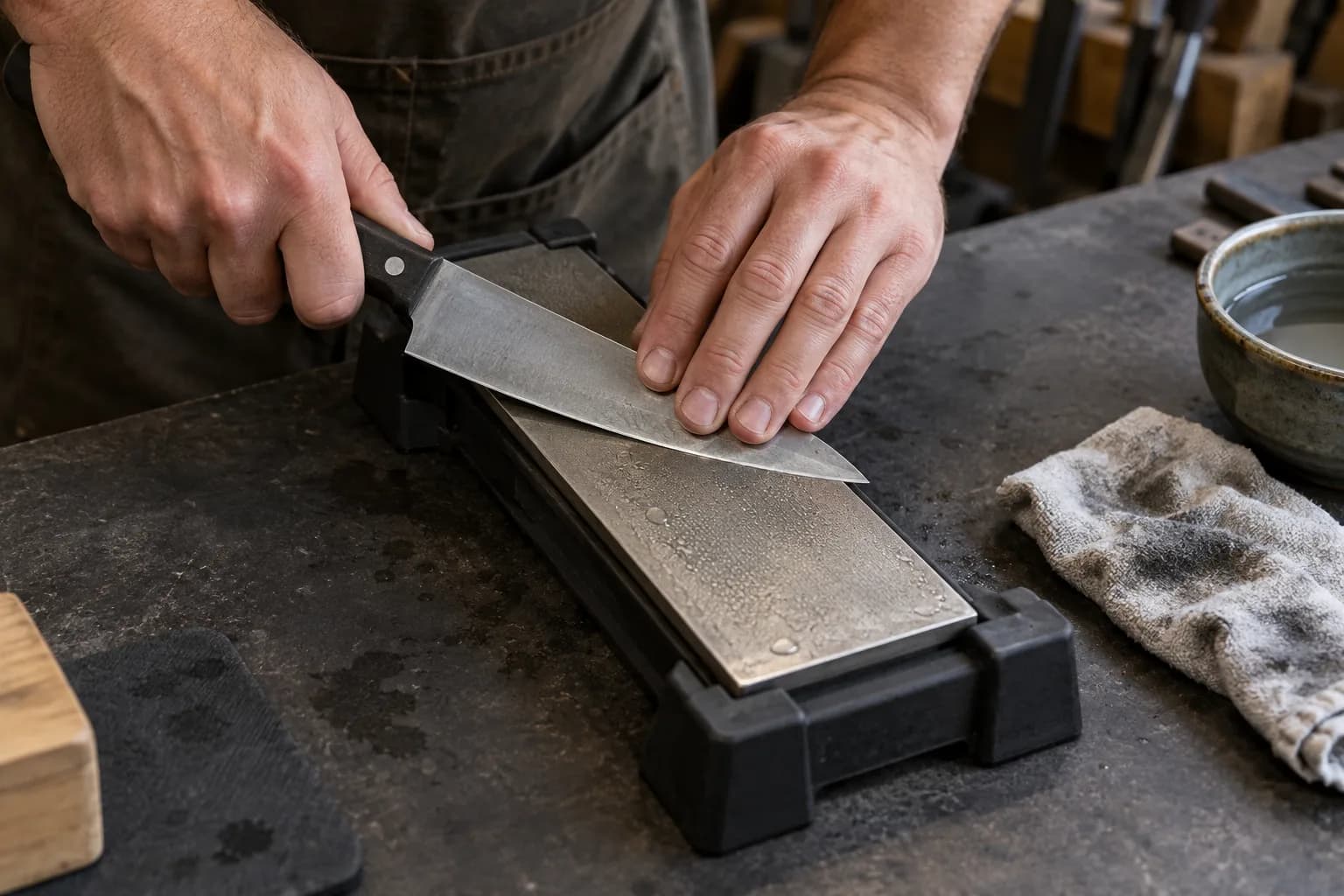
Once MagnaCut is heat treated to typical working hardness, standard aluminum oxide stones struggle to cut its carbides efficiently. Diamond or CBN sharpening stones and strops are strongly recommended for maintaining a MagnaCut edge; they cut through the carbide structure cleanly instead of just burnishing over it, and hold up far longer than conventional abrasives when used regularly on this steel.
Keep reading
Three more from the same bench.
Heat treating is what turns a piece of flat bar stock into a functional knife blade. Done correctly, it transforms the steel’s internal crystal structure…
Belts are the single biggest recurring cost in this hobby, and buying the wrong ones wastes money twice: once on belts that wear out fast, and again on…
Every Torus ships as a complete assembled chassis with the motor sold separately — which hands you the one decision that shapes the machine’s personality…
Same bench
I machine the parts, hand-assemble, track and test Torus grinders in Sterling, Illinois. Most orders ship in seven to ten business days from time of order.
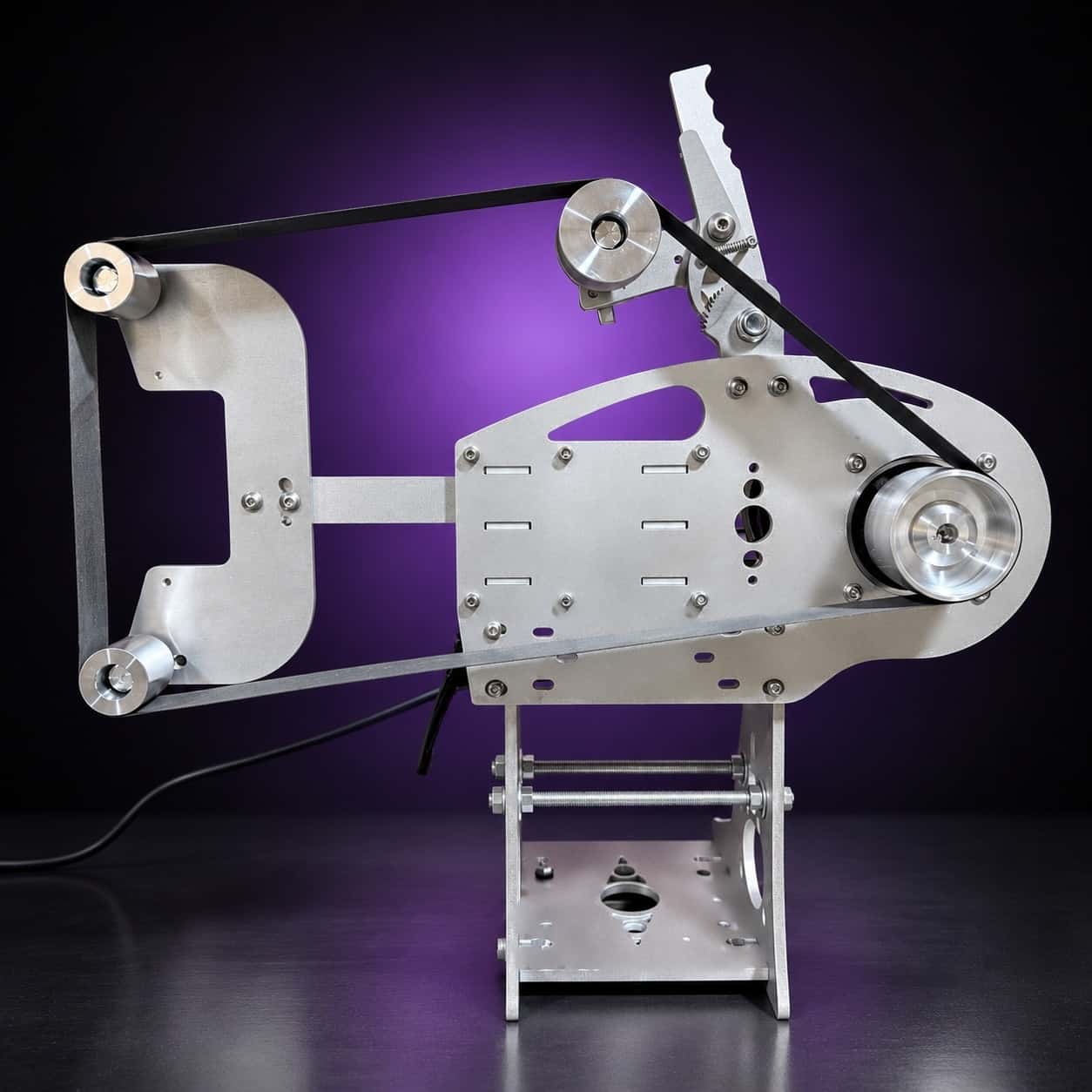
Current dual-axis platform with a fiber-laser-cut 6061 chassis and single-knob tracking.
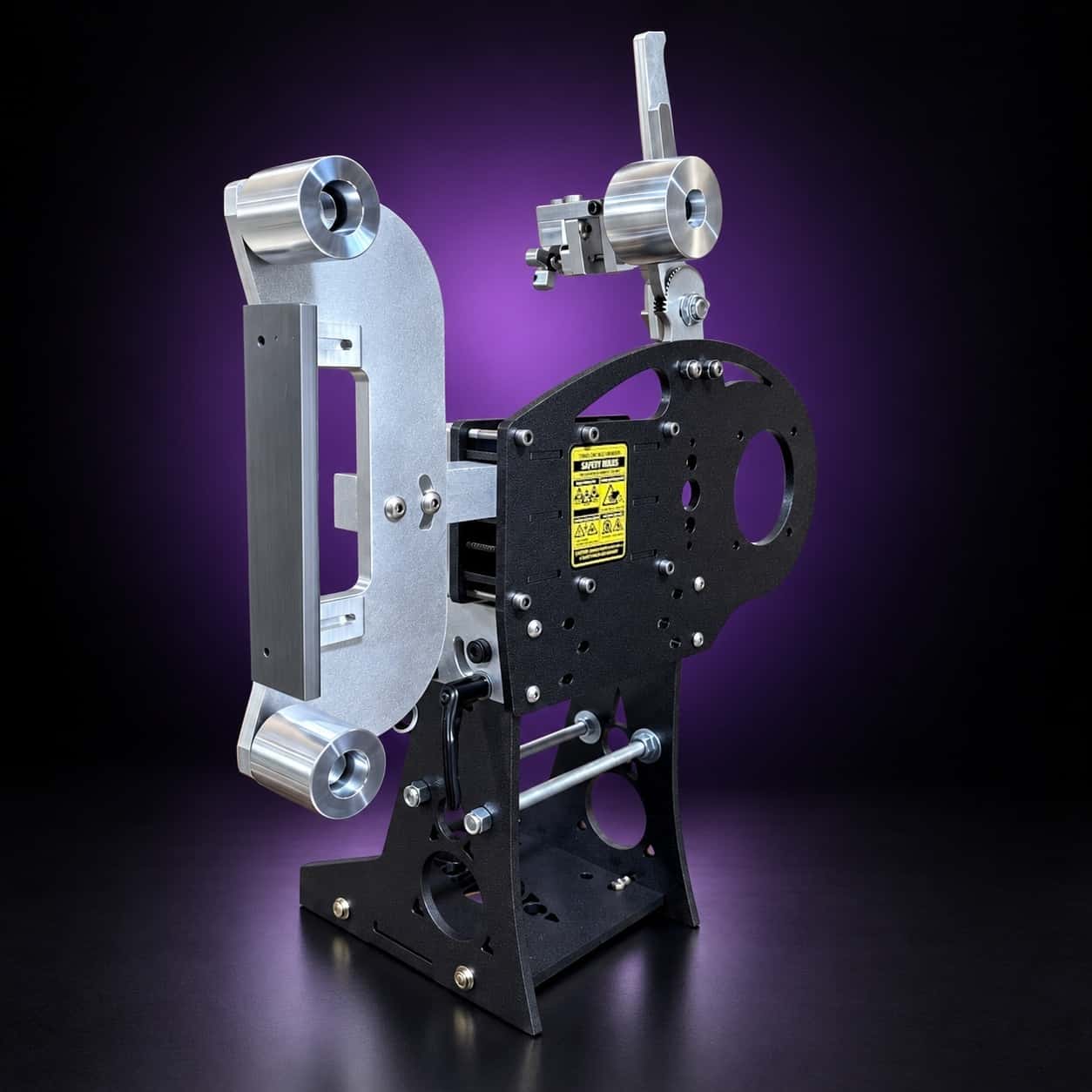
Current dual-axis platform with a steel chassis, more mass and less vibration.
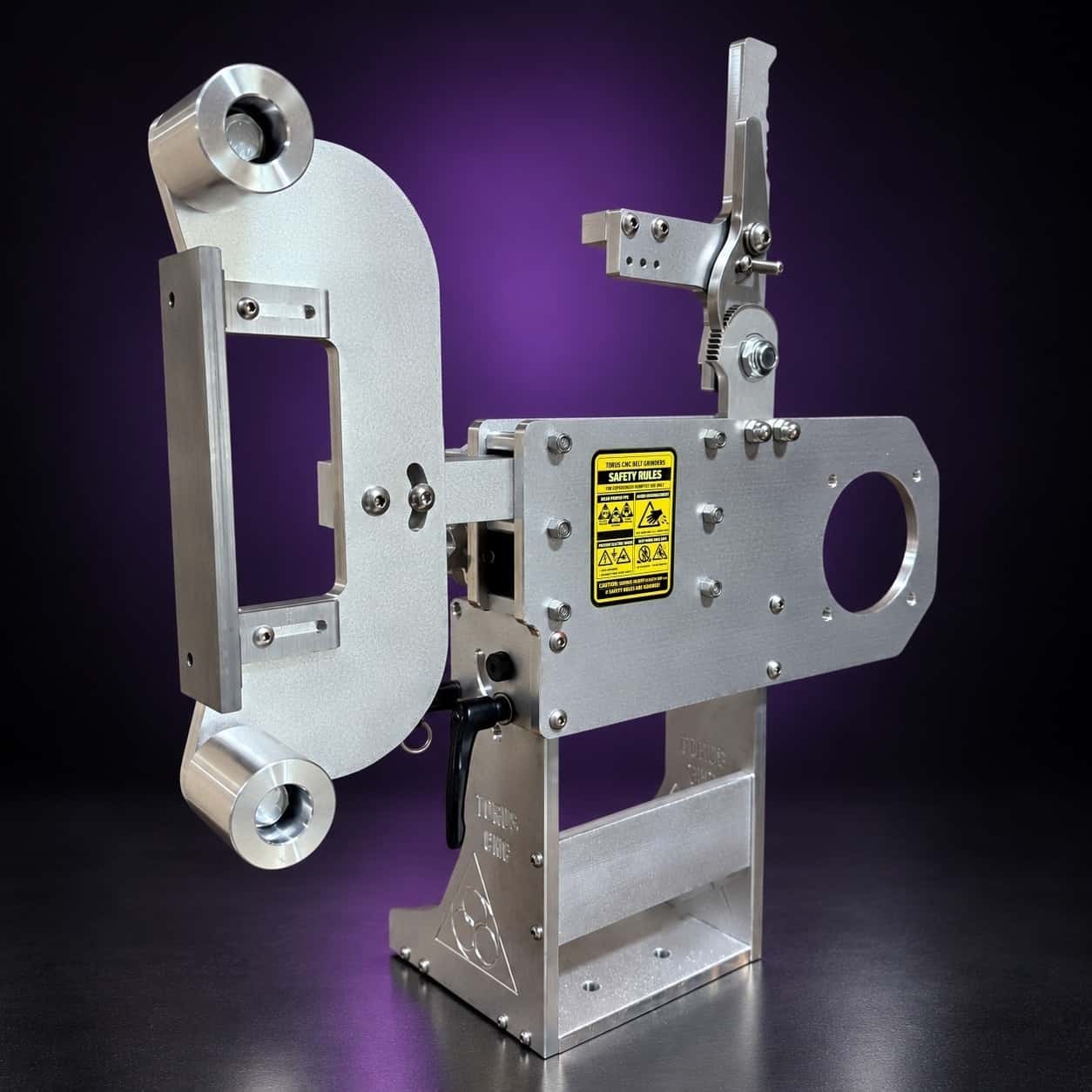
Prior-design aluminum chassis, 90-degree tilt and 1.5-inch tooling arms.
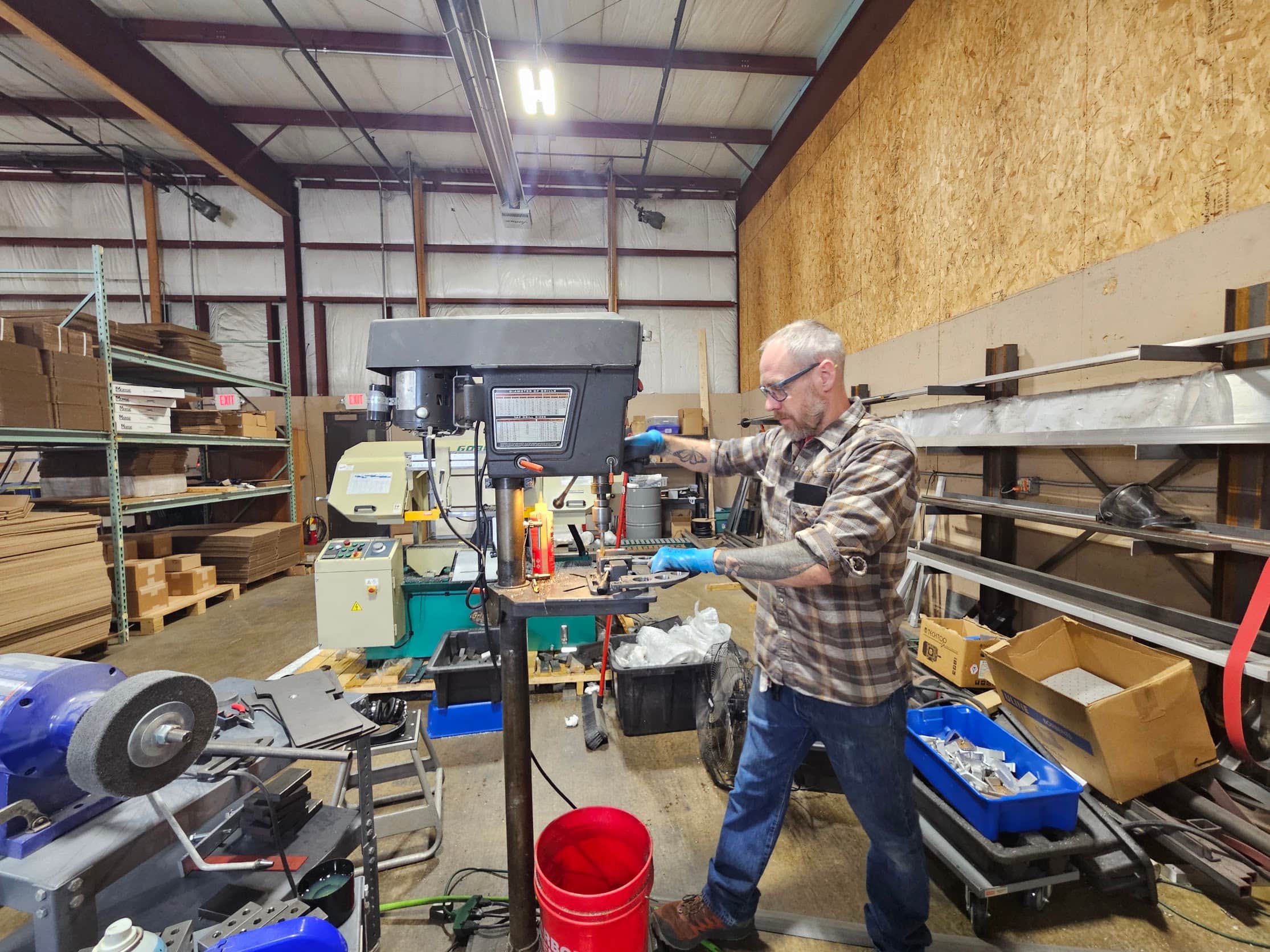
One-man shop
I answer my own email. Tell me the steel, the machine and what it is doing, and I will tell you what I would try next.