
Heat Treat
Heat Treating Knife Steel: Complete Guide
Heat treating is what turns a piece of flat bar stock into a functional knife blade. Done correctly, it transforms the steel’s internal crystal structure…
Abrasives
Belt recommendations, grit progression, and diamond sharpening tips for grinding CPM M4 on a 2x72 belt grinder. Free guide from Torus CNC's ForgeBrain.
1 min readWritten by Rich LinvilleFree to read
CPM M4 sits at the top of this database’s “hardest to grind” list, alongside CPM 20CV and CPM S30V. Its heavy vanadium and tungsten carbide load, adapted from industrial high-speed steel applications, gives it extreme edge retention but makes belts load and dull faster than on any tougher, easier-grinding steel in this database.
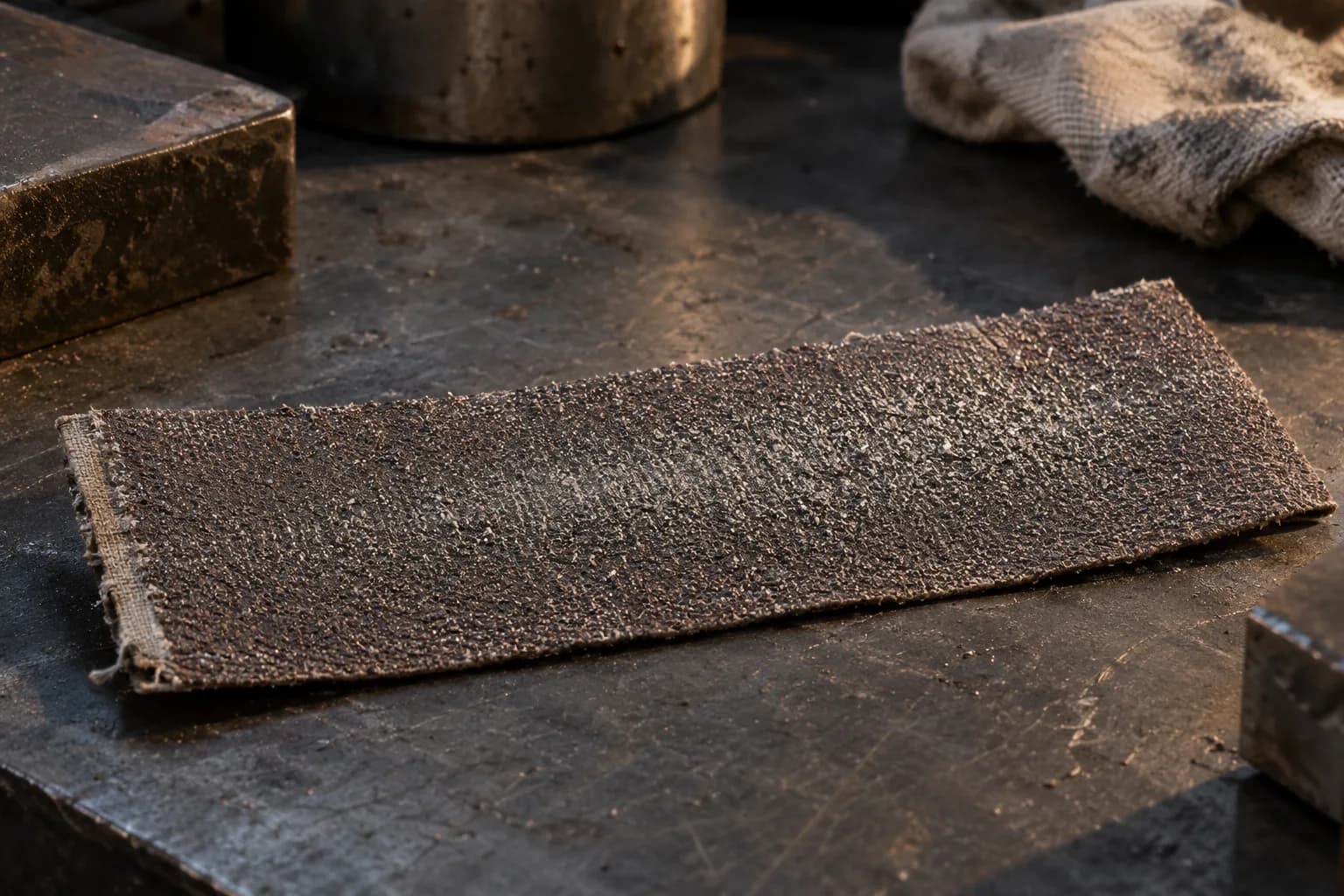
Ceramic belts are essentially mandatory for CPM M4. Zirconia or aluminum oxide belts will work but wear out noticeably faster and cut more slowly on this steel’s very dense carbide structure. Budget for more belts per knife than almost any other steel in this database.
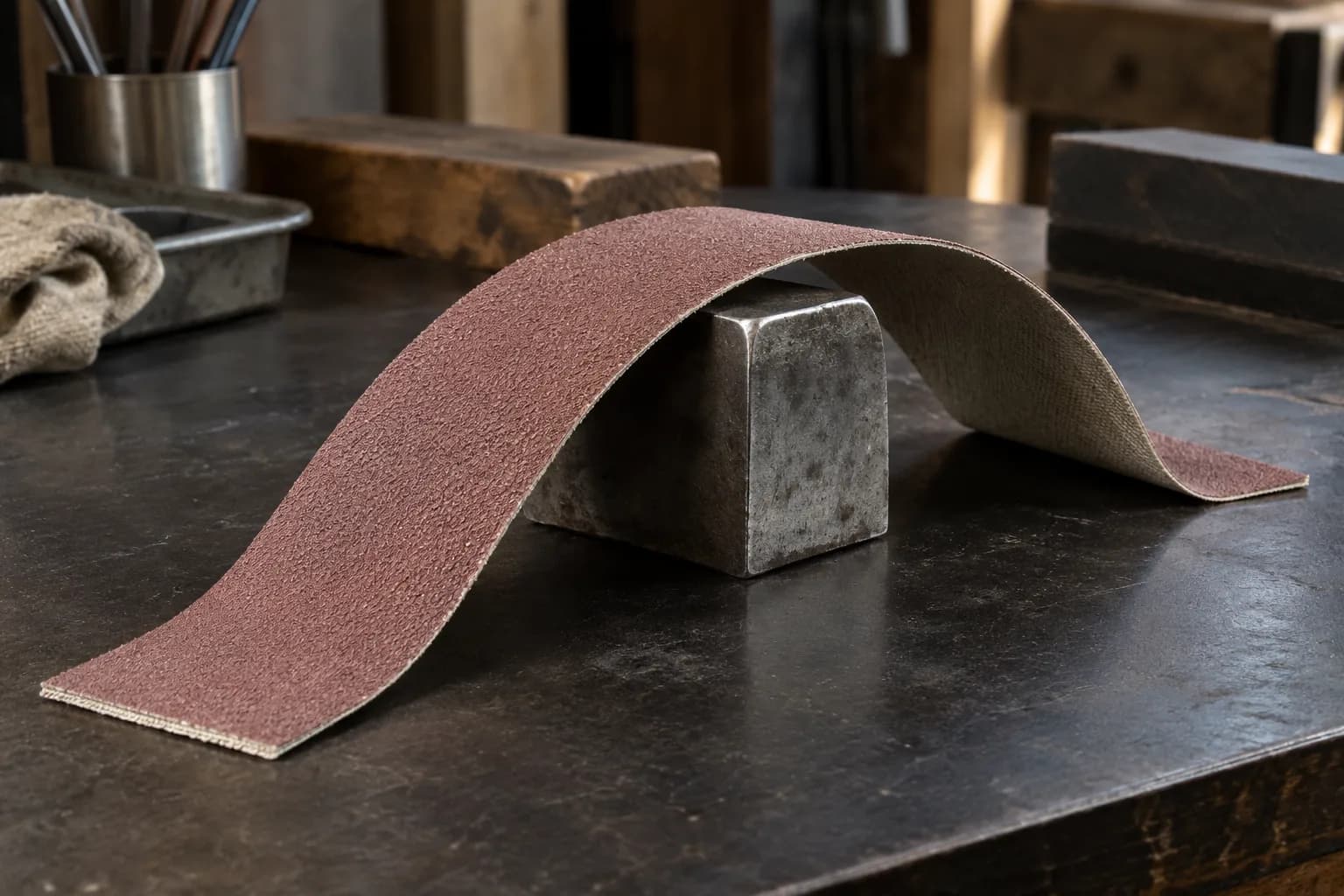
| Stage | Grit |
| Profiling / heavy stock removal | 50 |
| Bevel refinement | 60 |
| Pre-finish | 80 |
| Finish grinding | 120 |
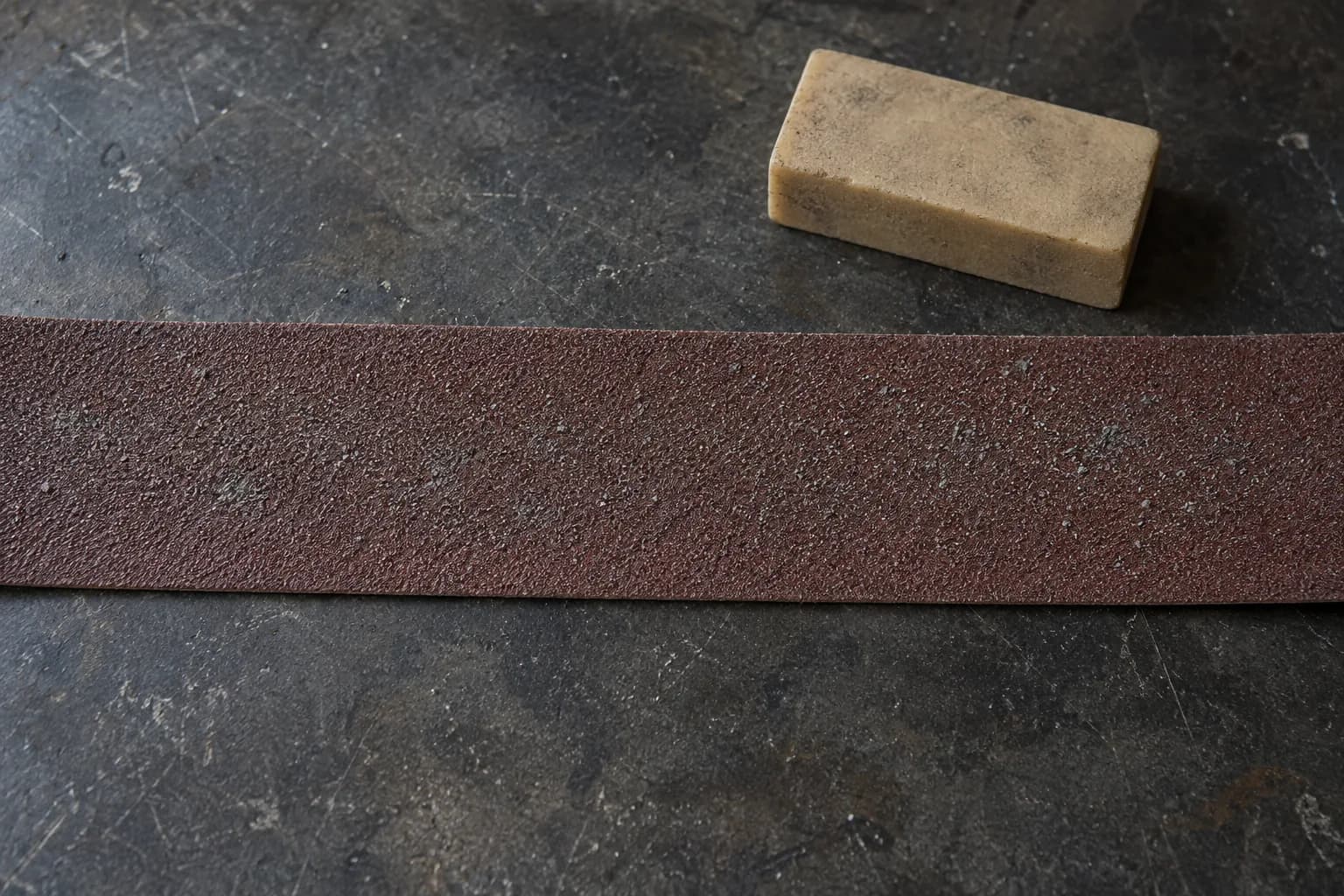
Use higher belt speed with short, light passes rather than heavy, slow pressure. Keep a belt eraser or dressing stick close by and clean the belt often. A generous coolant mister is essential, both to protect the edge and to help keep the belt from loading up with swarf, especially important given CPM M4’s demanding high-temperature heat treat.
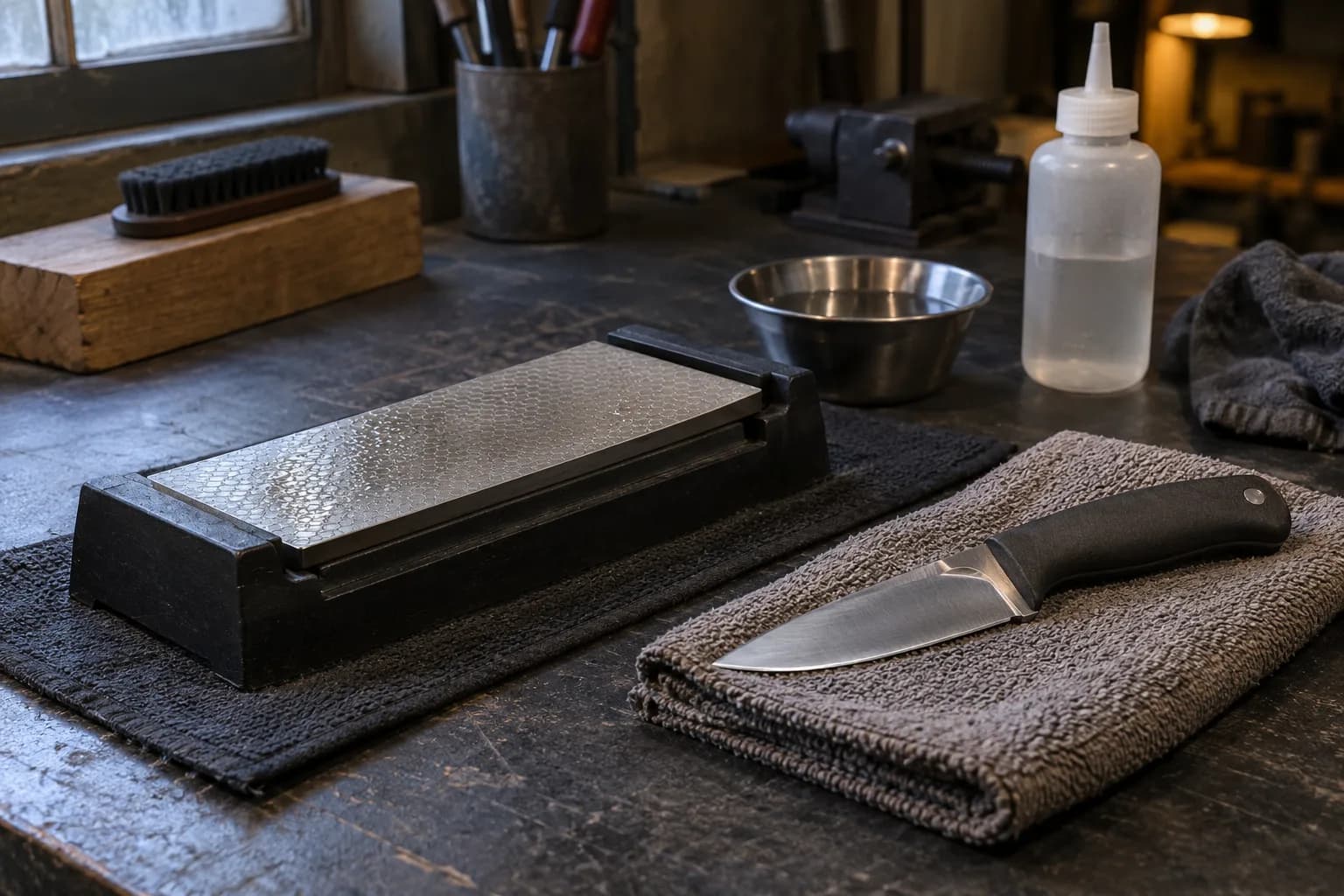
Standard aluminum oxide or ceramic stones struggle badly with CPM M4’s carbide structure once hardened. Diamond stones are the clear recommendation for reprofiling and touch-ups. Expect sharpening sessions to take noticeably longer than with tougher, lower-carbide steels, this is the tradeoff for M4’s exceptional edge retention.
Keep reading
Three more from the same bench.
Heat treating is what turns a piece of flat bar stock into a functional knife blade. Done correctly, it transforms the steel’s internal crystal structure…

Belts are the single biggest recurring cost in this hobby, and buying the wrong ones wastes money twice: once on belts that wear out fast, and again on…

Every Torus ships as a complete assembled chassis with the motor sold separately — which hands you the one decision that shapes the machine’s personality…
Same bench
I machine the parts, hand-assemble, track and test Torus grinders in Sterling, Illinois. Most orders ship in seven to ten business days from time of order.

Current dual-axis platform with a fiber-laser-cut 6061 chassis and single-knob tracking.

Current dual-axis platform with a steel chassis, more mass and less vibration.

Prior-design aluminum chassis, 90-degree tilt and 1.5-inch tooling arms.

One-man shop
I answer my own email. Tell me the steel, the machine and what it is doing, and I will tell you what I would try next.