| Toughness | 2/5The tradeoff for its extreme wear resistance: hardened to 60+ Rc with a heavy carbide load, it is more prone to micro-chipping than tougher steels like CPM 3V or CruWear. | 3/5The weakest point of an otherwise excellent steel; a heavier vanadium carbide load than S35VN makes it more prone to chipping, which is the main reason Crucible developed S35VN as a tougher successor. | CPM S30V has a modest toughness advantage, though neither steel is known for exceptional toughness among premium stainless steels; both are hardened to a level where chipping resistance takes a back seat to wear resistance. |
|---|
| Edge retention | 5/5Exceptional wear resistance from a very heavy chromium and vanadium carbide load, among the best edge retention available in a knife steel. | 5/5Rated around 149% CATRA edge retention versus 440C, among the best in its class and the main reason it remained the benchmark premium stainless steel for years. | Essentially tied. Both are among the best edge-holding stainless steels available, with CPM 20CV's heavier chromium-vanadium carbide load matching CPM S30V's long-proven wear resistance. |
|---|
| Corrosion resistance | 5/520% chromium gives it excellent, top-tier stainless performance, a strong choice for wet, humid, or marine environments. | 4/5Good stainless performance from 14% chromium, comparable to S35VN and suitable for everyday-carry and outdoor use. | CPM 20CV holds a real advantage here, with roughly 20% chromium versus S30V's 14%, making it the better choice for wet, humid, or marine environments. |
|---|
| Heat treat | A validated recipe from independent toughness testing: austenitize at 2140 F, plate quench, apply a cryogenic treatment, then temper at 365 F. Most knifemakers target the 60-62 Rc range. Because this steel demands precise, high-temperature equipment and a controlled quench, it is best suited to makers with a programmable oven or a professional heat-treating service. | Austenitize at 1900-2000 F for 15-30 minutes, then quench with air or positive pressure quench (or an interrupted oil/salt quench) to below 125 F. A cryogenic treatment is commonly added for maximum properties. Double temper at 400-750 F, holding at least 2 hours per cycle: temperatures near 400 F favor maximum edge retention and hardness, while higher temper temperatures trade some hardness for improved toughness. Most knife applications land in the low-to-mid 60s Rc. | CPM 20CV requires a notably higher, more precise austenitizing temperature than CPM S30V, and generally benefits more from professional-grade heat-treating equipment to reach its full potential. |
|---|
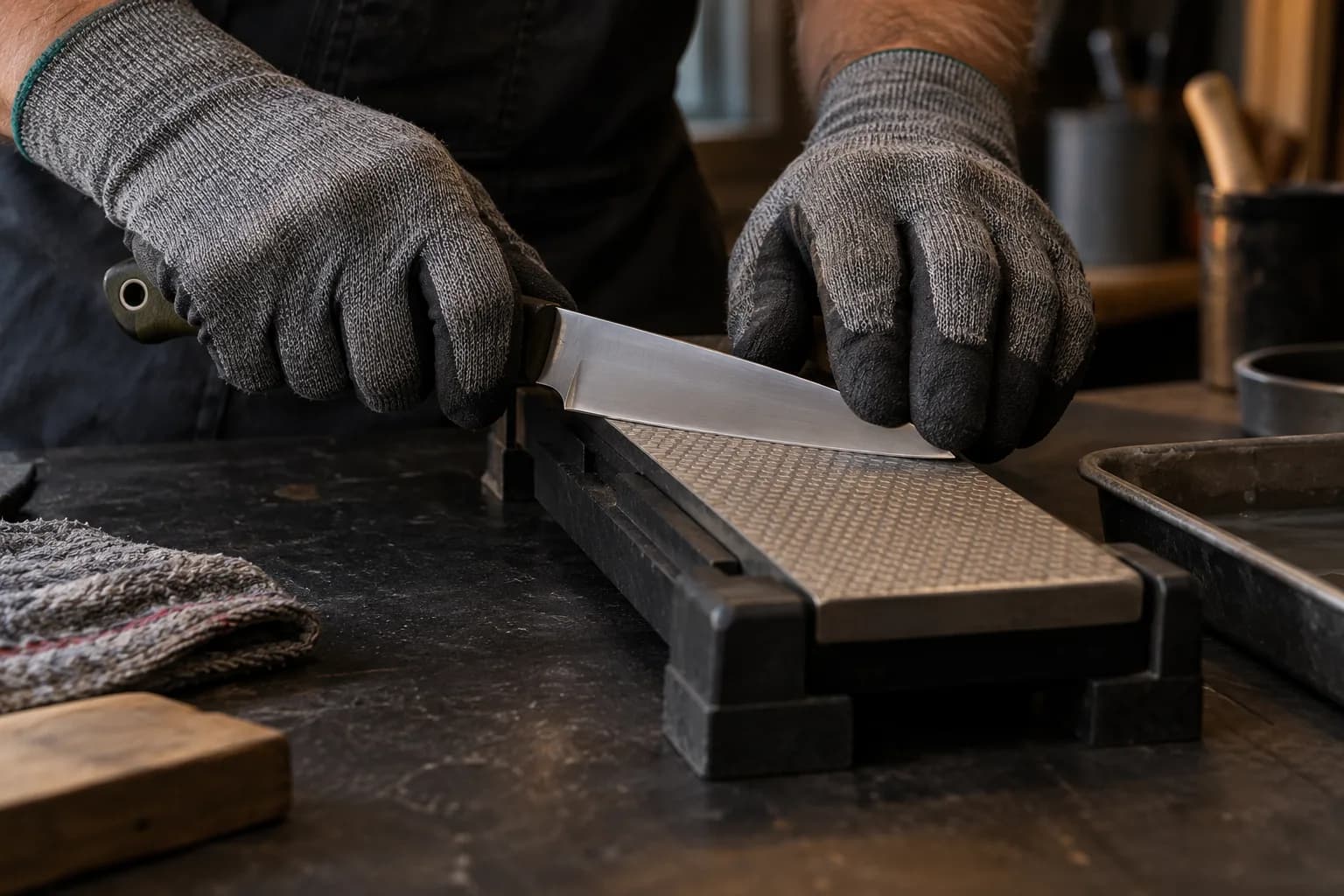
| Grinding | 2/5Demanding to grind and sharpen; typically requires diamond or CBN abrasives to sharpen efficiently once fully hardened, more challenging than most other steels in this database. | 2/5Notably harder to grind than S35VN due to its higher vanadium carbide content; expect faster belt wear and slower stock removal. | Comparable. Both are demanding, high-carbide steels that are slower to grind and sharpen than most other steels in this database, generally requiring diamond or CBN abrasives to sharpen efficiently. |
|---|